Florida surf breaks are a different animal. Between the Gulf’s softer rollers, the Atlantic’s punchier beach breaks, and the occasional sandbar firing at Sebastian or Ponce, your bodysurfing gear needs to match the conditions. But here’s the catch: most handplanes are designed by West Coast or Hawaiian shapers who test in colder, heavier water. That means the average board you find online might actually work against you in the Sunshine State. The key is understanding how water temperature, wave speed, and sandbar depth affect planing performance. This guide breaks down exactly what to look for in a handplane for Florida waves, from rail shape to the materials that survive shallow reef and rock jetties.
Key Takeaways
- Florida waves are generally slower and softer than Pacific breaks, so a handplane with a wider nose and forgiving rocker is easier to ride.
- Fiberglass and wood planes offer good stiffness but require more maintenance in warm, salty water; injection-molded plastic is nearly indestructible for beach-break beatings.
- Align your hand size to the deck footprint—too large a plane creates drag in mushy waves, too small a plane lacks lift.
- An adjustable wrist strap matters more than you think, especially when you hit 3–5 foot gutless waves near the jetties.
- Price doesn’t always equal performance; a mid-range handplane often outperforms an expensive one in Florida’s typical waist-to-shoulder-high conditions.
What Makes Florida Waves Different for Bodysurfing?
Florida doesn’t give you a lot of steep, dredging barrels. The Gulf tends to produce rolling, crumbly waves with long shoulders. On the east coast, you get more punch from winter swells, but the angle and sandbars rarely create the hollow, down-the-line speed you find in California or Puerto Rico. For a bodysurfer, those conditions mean you rarely need to generate speed on a super-steep face. Instead, you need lift and glide on waves that lose energy quickly. A handplane with too much rocker (curvature from nose to tail) will plow and slow you down. A flatter plane, or one with a subtle nose lift, will hold the surface better and run down those slower shoulders without sinking.
The Impact of Water Temperature and Neoprene
You’re also dealing with water temperatures from the mid-60s in winter (with a wetsuit) to the high 80s in summer (skins fishing). This affects your handplane choice more than you’d expect. In summer, with bare hands, a slightly larger plane can feel cumbersome in small waves. In winter, when your hand is wrapped in a 3/2mm glove, you need more strap adjustability and a thicker rail to grip. If you regularly bodysurf year-round, consider a handplane that offers strap slots wide enough to accommodate gloves, or choose a model with a webbed strap that doesn’t lose tension when wet.
Core Handplane Features for Florida Conditions
Most bodysurfers overlook the fact that the Florida wave is a knee-high or waist-high roller most of the year, not a hurricane swell. That means your handplane must generate speed from a flatter paddling angle and produce lift even at lower velocities. The shape, material, and rail design are the three pillars that determine whether you’re getting a good ride or just swimming with a piece of plastic on your hand.
Rocker, Nose Shape, and Rail Profile
Your nose profile determines how easily the plane catches the wave face. For Florida, look for a nose that is slightly squared or rounded, not sharply pointed. A pointed nose is great for steep, fast waves, but in Florida’s lumpy conditions, it tends to dig in and pearl. A wider nose, alternatively, helps you keep the front of the plane on top of the water even when you hit a flat spot.
The rail (the side edge of the plane) should be beveled or rounded, not sharp. A sharp 90-degree rail is useful for gripping a steep face in Hawaii, but in Florida’s mushy sections, it creates turbulence rather than speed. You want a rail that deflects water smoothly. Hold the plane at eye level from the tail and look down the nose; you should see a subtle “V” or a rolled edge that breaks the surface tension cleanly.
Material: Plastic, Wood, or Fiberglass?
This is the biggest decision. In Florida, you are often paddling over sandbars and dragging your hand on the bottom if you push yourself into a ride. You also have frequent showers and constant salt exposure.
- Injection-Molded Plastic: These are usually the best value for Florida. They are durable, don’t delaminate, and don’t require oiling or varnishing. They are also flexible enough to absorb slight impacts if you bump a sandbar or a piece of shell.
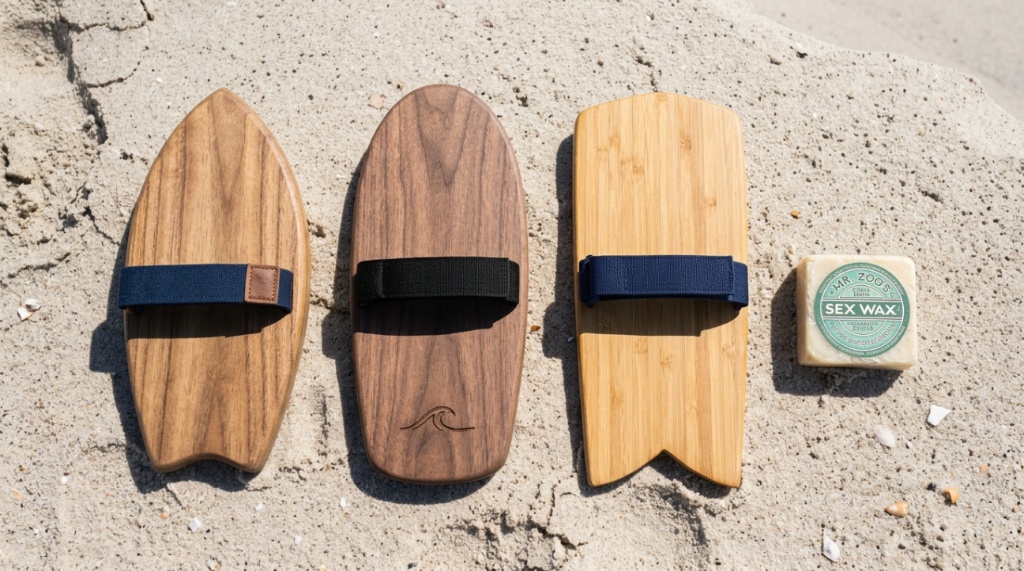
- Wood: Beautiful and fast, wood planes require a proper waterproof casing (like epoxy resin). If you drop one or hit the bottom hard, the wood core can crack. You must rinse and dry them after every session to stop rot. In Florida’s hot sun, the resin can also yellow over time.
- Fiberglass: Stiff and fast, fiberglass offers good pop, but it is brittle. Hitting a shallow sandbar or a rocky jetty can chip the rail, and those chips will absorb water and weaken the structure if not sealed promptly.
For most people surfing between Jacksonville and Miami, a high-density plastic or soft-touch composite is the most practical purchase.
Sizing: Hand Length vs. Deck Width
You might think the bigger the plane, the more lift you get. That’s not true. Lift is a factor of surface area against water speed. If the plane is too big for your hand, you can’t actually press it flat against the water without losing leverage. A good rule is that the deck (the part your hand sits on) should roughly match the length of your palm plus the length of your fingers spread out naturally. If you have a larger hand, you need a wider tail to push against.
When testing the plane, do this: place your hand on the deck and curl your fingers under the far edge. Your fingertips should touch the rail, but not wrap completely over the top side. If your fingers bend around the edge entirely, the plane is too small. If you can’t feel the edge with your fingers, it’s too large and will create drag in slower waves.
Strap System: Don’t Underestimate It
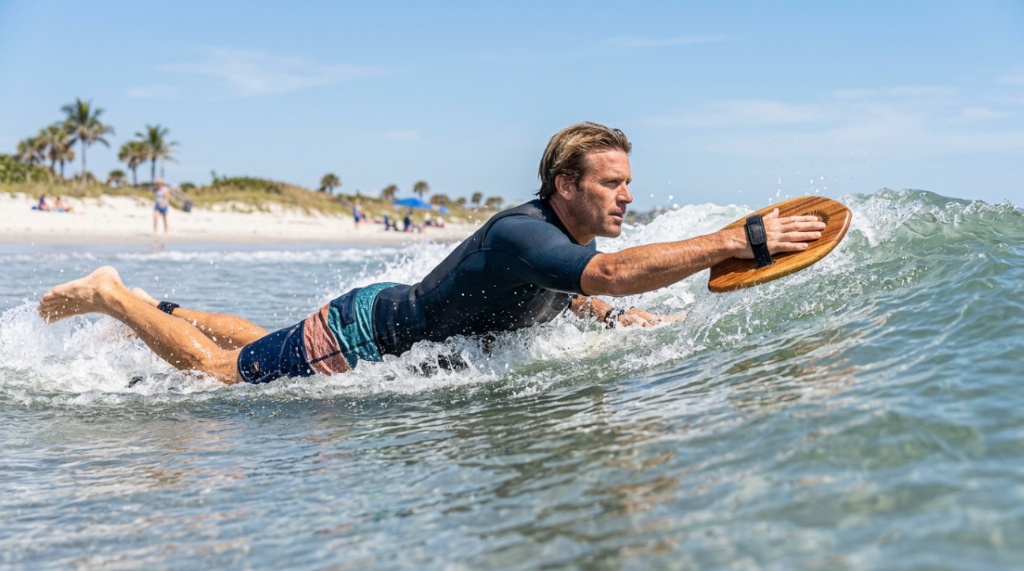
The strap is the control mechanism. In Florida, you often paddle through chop to get outside. Your hand is constantly moving, so the strap must prevent any shifting. Look for a strap with two anchor points (at the base of the index finger and the pinky) and one at the heel of the palm. This creates a “bucket” that keeps the plane planted.
Adjustability is crucial if you use wetsuit gloves. A strap with velcro and a flexible neoprene section allows you to tighten it over gloves in winter and loosen it over bare skin in summer. Avoid rigid web straps that pinch the skin after repeated paddling.
How Much Should You Spend?
You can find handplanes from $20 to over $200. The expensive ones often use aerospace materials or complex 3D printing, which is unnecessary for Florida conditions. If you mostly bodysurf in waist-to-shoulder-high waves, a plane in the $60–$90 range will give you the best combination of durability and performance. These mid-range models typically use a solid molded core with a slick bottom layer that reduces friction.
You do need to avoid the cheapest generic foam knock-offs. They are often too thick and lack the beveled rails required for speed. They work in pool noodle waves but fail when you need to drive down a line.
Match the Plane to the East Coast vs. Gulf Coast
The wave type differs drastically between the coasts. A single handplane can work for both, but if you have to choose, consider where you ride most.
| Location |
Wave Character |
Recommended Handplane |
| East Coast (Cocoa, Sebastian, NSB) |
Punchier, faster, more hollow on sandbars |
Medium nose, slightly more rocker, stiffer material for speed |
| Gulf Coast (Clearwater, Sarasota) |
Softer, slower, long wind swell periods |
Wide nose, flatter profile, more surface area for float |
| Panhandle (Destin, Panama City) |
Clear water, steep sandbars, occasional reef |
Durable plastic with thick rails to avoid dings |
Common Mistakes Bodysurfers Make in Florida
A few errors repeat themselves among locals who end up frustrated with their gear:
- Going too small: Because some internet bodies are ripped, they ride tiny handplanes. In Florida’s less powerful swells, you need surface area to catch the wave early.
- Ignoring the wrist angle: If the plane does not allow your wrist to bend at a natural 45-degree angle, you’ll get shoulder fatigue quickly in a 2-hour session.
- Not considering the leash: Florida waves are shallow, and a handboard leash is a lifesaver. Many good handplanes don’t come with one, so check if the plug is included. If not, you are risking losing your board in rippy currents near the pier.
- Buying for aesthetics: A glossy wooden board looks great in photos but performs the same as plastic in ankle-high slope. Function over form is the rule here.
Practical Tips for Testing Your New Handplane
Once you have a candidate, don’t buy it without simulating the motion. If you’re in a store, place the plane on your hand and feel the balance. The center of balance should be directly over your middle knuckle. If it sits too far forward, it will pearl. If it sits too far back, you lose application of force.
In the water, use this test: paddle for a wave, and when you take off, don’t try to ride it immediately. Just place your hand at the 2 o’clock position (if you’re right-handed) and feel how the plane tracks. If it skips or vibrates, the rail is too sharp. If it slides, the bottom is not smooth enough. A good ride will feel like the plane is “attached” to the surface of the water, not gliding over bubbles.
Frequently Asked Questions
Do I need a handplane leash for small Florida waves?
Yes, absolutely. Even in small waves, Florida has strong rip currents along the beaches, especially near inlets. If you drop your handplane while trying to punch through a wave, it will be at the beach before you catch it. Always use a leash.
Are wooden handplanes worth it in Florida’s humid climate?
Wood is fine if you are disciplined about drying it. However, the humidity and salt can absorb into a tiny crack and cause it to delaminate. For most Florida surfers, a molded composite is easier to maintain and performs nearly identically in slow waves.
Should I get a handplane with a thumb grip?
Not necessarily. Thumb grips help with steep drops where you need to force the rail into the wave. In Florida, you often surf flatter sections; a thumb grip can force your wrist into an unnatural position, causing strain. Try a plane with a simple contoured palm rest before you commit to a thumb groove.
Can I use a bodyboard handplane for bodysurfing?
Technically you can, but they are usually too thick and stiff. Bodyboard handplanes are designed for prone paddling, not for riding waves on your side. They lack the hydrodynamic rail edge needed for bodysurfing, so they slow you down significantly.
What’s the best size handplane for a beginner?
Start with a larger surface area (around 180 square inches) and a flat rocker. It’s more forgiving. You can always move to a smaller, more responsive plane once you understand how to angle your body and hand.
Conclusion
Finding the right handplane for Florida waves isn’t about buying the most expensive or the most aggressive-looking board. It’s about matching the shape and material to the reality of our lower-energy surf. Focus on a wider nose, a beveled rail, and a strap system that works with both bare skin and winter gloves. A mid-range composite model with a leash will serve you for years, whether you’re sliding down a Sebastian sandbar or cruising a Gulf Coast roll. Test the balance in the water, dry your gear after the session, and you’ll get more speed and control than the guy next to you who just picked the flashiest board.