
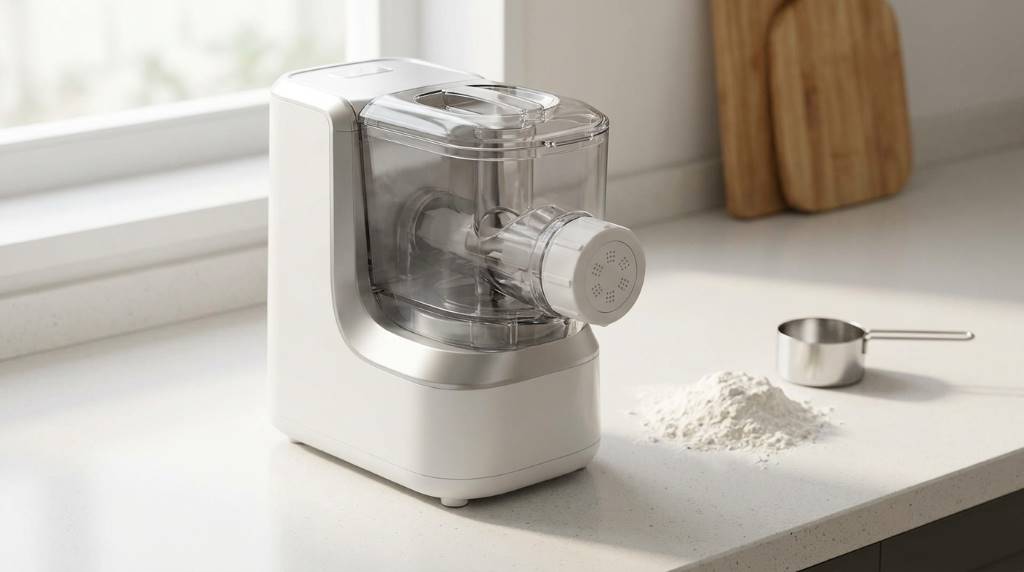
If you want fresh pasta without constant hand cranking, the Newhai Electric Pasta Maker deserves serious consideration. Its 135W motor, stainless-steel construction, and eight thickness settings make home pasta preparation considerably easier. This home pasta machine review also examines its limitations, including cleaning concerns and its narrow noodle selection.
Key Takeaways:
- 135W motor supports convenient electric rolling and cutting.
- Eight thickness settings provide useful control from 0.5mm to 3mm.
- Stainless-steel construction gives the machine a sturdy countertop presence.
- Two primary noodle options limit creativity compared with premium alternatives.
- Initial factory oil requires careful preparation before making edible pasta.
- The machine suits regular home cooking better than commercial production.
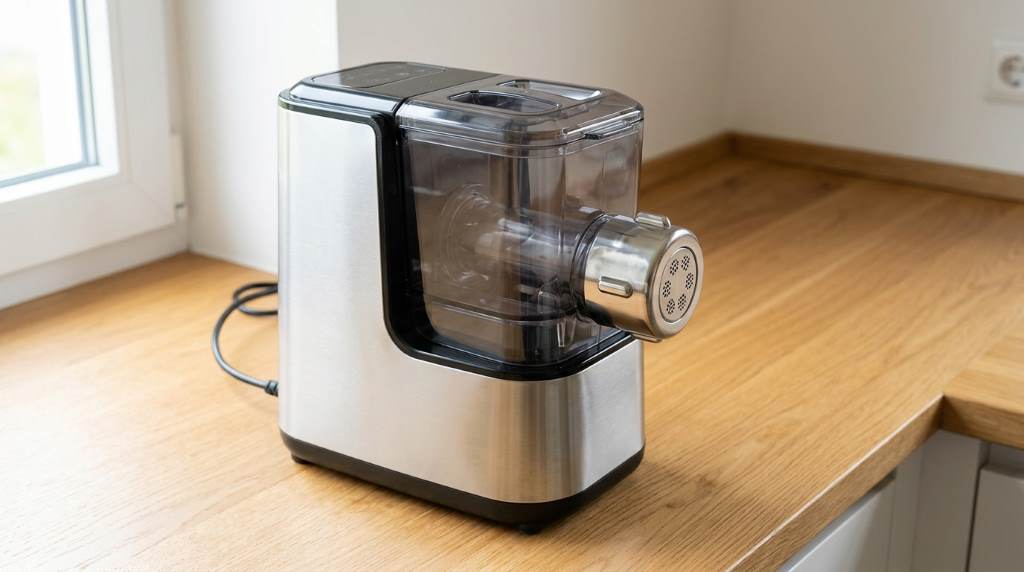
What Is the Newhai Electric Pasta Maker?
The Newhai Electric Pasta Maker combines dough pressing and noodle cutting in one countertop appliance. Its 135W motor reduces the physical effort required from traditional hand-operated pasta rollers. Therefore, beginners can focus more on dough consistency and less on repetitive manual work.
The machine uses stainless steel throughout much of its construction, which gives it a substantial feel. Its listed dimensions measure about 8.66 by 6.88 by 8.26 inches. At roughly 16 pounds, it also stays relatively stable during normal countertop operation.
Newhai offers two main cutting configurations with this model. One produces approximately 1.5mm round noodles, while another creates approximately 4mm flat noodles. Consequently, the machine handles familiar pasta styles well but does not provide unlimited noodle shapes.
Newhai Electric Pasta Maker Features That Matter
The most useful feature involves its adjustable dough thickness system. Eight gear positions cover approximately 0.5mm through 3mm, giving cooks meaningful control over sheet thickness. Meanwhile, the kitchen island trends show why compact countertop appliances increasingly need practical footprints.
135W Electric Motor
The 135W motor handles rolling and cutting without requiring manual cranking. This design becomes particularly useful when preparing several portions for family meals. However, users should avoid treating the machine like a continuous-duty commercial appliance.
Adjustable Thickness Control
The eight thickness settings provide more flexibility than the two cutting options might suggest. You can gradually reduce dough thickness instead of forcing a thick sheet through a narrow setting. As a result, beginners can develop better control over pasta texture.
Stainless-Steel Construction
The stainless-steel body gives the Newhai a more substantial feel than many lightweight countertop alternatives. It also provides a rigid platform while dough passes through the rollers. Still, stainless steel does not eliminate the need for careful cleaning and drying.
Pressing and Cutting Functions
The machine can press dough into sheets before switching to noodle cutting. This two-stage approach simplifies the workflow because one appliance handles both major tasks. Therefore, users need less countertop equipment for routine pasta preparation.
Two Noodle Sizes
The included cutting options focus on approximately 1.5mm round and 4mm flat noodles. These sizes cover popular spaghetti-style and fettuccine-style preparations effectively. However, cooks seeking lasagna cutters, specialty shapes, or numerous noodle widths may want another machine.
How Well Does the Newhai Pasta Maker Perform?
Performance depends heavily on dough preparation rather than motor power alone. Dough that contains excessive moisture can become sticky, while overly dry dough can strain the rolling process. For consistent results, prepare firm dough and allow adequate resting time before processing.
Start with the widest roller setting and gradually decrease the thickness. This approach gives the rollers better control and produces smoother sheets. Similar principles apply when using a 3 in 1 pasta maker attachment for home preparation.
The machine should perform particularly well for spaghetti and fettuccine-style meals. Its stable construction also helps reduce unwanted movement while processing dough. Nevertheless, users should work in manageable batches rather than pushing excessive dough through continuously.
What About Noise?
The 135W motor receives positive attention for relatively quiet operation. That characteristic matters when you prepare pasta early in the morning or during busy family meals. Still, perceived noise can vary depending on the countertop and dough firmness.
Can It Handle Different Doughs?
The Newhai can accommodate common homemade pasta dough when you achieve the right consistency. Egg pasta, semolina-based mixtures, and similar firm doughs can work well with proper preparation. However, extremely wet or unusually stiff mixtures can make operation harder.
Newhai Electric Pasta Maker Pros and Cons
A useful buying decision requires more than highlighting attractive specifications. The Newhai offers several practical advantages, but certain limitations deserve attention before purchase. Comparing those tradeoffs also helps shoppers evaluating compact pasta makers for smaller kitchens.
Pros
- Electric operation: Reduces repetitive hand cranking during pasta preparation.
- Solid construction: Stainless steel provides a sturdy and substantial countertop design.
- Adjustable thickness: Eight settings provide useful control over pasta sheets.
- Dual functionality: Rolling and cutting functions reduce the need for separate equipment.
- Simple workflow: Beginners can learn the basic process without complicated controls.
- Useful everyday sizes: The included noodle options suit several familiar pasta dishes.
Cons
- Limited noodle variety: Two primary cutter options restrict specialty pasta choices.
- Initial oil concerns: Some owners report noticeable factory oil during early preparation.
- Cleaning challenges: Flour can accumulate around difficult-to-reach mechanical areas.
- Not commercial equipment: Heavy continuous production exceeds its sensible home-use role.
- Large weight: Moving a 16-pound appliance around the kitchen can become inconvenient.
What Should You Know Before First Use?
Do not immediately prepare edible pasta after unpacking the machine. First, inspect the rollers, cutters, seams, and accessible mechanical areas for manufacturing residue. This preparation step matters because some users have reported oil smells or residue during initial operation.
Follow the manufacturer’s cleaning and break-in instructions carefully before processing food. Run appropriate sacrificial dough through the rollers if the instructions recommend that method. Most importantly, discard any dough that shows visible residue or carries an unusual mechanical odor.
Next, prepare a firm dough and divide it into manageable portions. Flatten each portion enough for the rollers to grip without forcing the motor. Then begin at the widest setting and gradually work toward your desired thickness.
How to Get Better Pasta From the Newhai
The machine cannot compensate for poorly balanced dough, so recipe preparation remains crucial. Measure ingredients accurately and adjust flour or liquid gradually when the dough feels unsuitable. A slightly firm dough generally gives rollers better control than a sticky mixture.
Keep the work surface lightly floured, but avoid excessive flour around the machine. Too much loose flour can create unnecessary residue inside mechanical areas. Instead, dust the dough lightly whenever sticking becomes noticeable.
For thin pasta, reduce the thickness gradually instead of jumping between extreme settings. This method gives the dough time to stretch evenly without sudden mechanical resistance. Additionally, allow rolled sheets to rest briefly before cutting when the dough feels overly soft.
Cleaning Strategy
Cleaning deserves special attention because pasta dough can hide inside small mechanical spaces. Remove loose flour promptly and follow the manufacturer’s cleaning instructions for removable components. Never introduce water into enclosed mechanical sections unless the manufacturer specifically permits it.
Dry every washable component thoroughly before storage. Then inspect the rollers and cutters for remaining dough fragments. Regular cleaning prevents old flour from becoming a stubborn residue during future sessions.
Who Should Buy the Newhai Electric Pasta Maker?
The Newhai makes the most sense for households that regularly enjoy fresh pasta. It also suits beginners who dislike hand-cranking but still want control over dough thickness. Families can benefit from its electric workflow when preparing several servings together.
It also works well for cooks who prioritize durable construction over extensive noodle customization. The stainless-steel build feels more substantial than many basic countertop machines. Therefore, occasional pasta makers can gain a sturdy appliance without entering commercial equipment territory.
Who Should Skip It?
Skip this model if you want dozens of noodle shapes from one machine. Premium pasta systems with interchangeable cutters offer substantially broader creative possibilities. Likewise, commercial kitchens should choose equipment specifically engineered for sustained production.
You may also want another option if easy cleaning ranks above every other feature. The Newhai requires more attention to mechanical residue and flour buildup than some simpler machines. Consequently, maintenance-sensitive buyers should compare alternative designs carefully.
Is the Newhai Electric Pasta Maker Worth Buying?
Yes, the Newhai Electric Pasta Maker can be worthwhile for frequent home pasta preparation. Its strongest advantages include electric operation, adjustable thickness, stable construction, and straightforward pressing and cutting. However, its limited cutter selection and first-use cleaning concerns prevent it from being an automatic choice.
Think of it as a practical roller-style pasta machine rather than an all-purpose pasta factory. If you mainly make spaghetti, fettuccine, or similar noodles, its capabilities cover the essentials. If experimentation matters more, a model with more cutter attachments deserves closer consideration.
Final Verdict
The Newhai Electric Pasta Maker delivers a useful combination of convenience, durability, and adjustable dough control. Its 135W motor removes much of the repetitive work associated with traditional pasta machines. Meanwhile, the stainless-steel construction gives the appliance a reassuringly substantial countertop presence.
Nevertheless, buyers should understand its boundaries before committing. The machine provides only two primary noodle styles, while initial preparation and cleaning require patience. Overall, it earns consideration from home cooks who value reliable everyday pasta making over maximum versatility.
Ready to make fresh pasta at home? Compare the Newhai’s features with your cooking habits, available counter space, and preferred noodle styles. If those priorities match its strengths, the machine can become a practical addition to your kitchen routine.
Frequently Asked Questions
Is the Newhai Electric Pasta Maker good for beginners?
Yes, its electric operation and simple thickness controls make the basic pasta-making process approachable for beginners.
How many noodle sizes does the Newhai make?
The commonly listed model includes approximately 1.5mm round and 4mm flat noodle options.
Does the Newhai Pasta Maker have adjustable thickness?
Yes, its roller system provides eight thickness settings covering approximately 0.5mm to 3mm.
Is the Newhai Pasta Maker easy to clean?
Cleaning requires care because flour and manufacturing residue can collect around mechanical areas.
Can the Newhai Electric Pasta Maker replace a commercial machine?
No, it suits home cooking better because its 135W motor and design target household pasta preparation.