
If you play golf in Washington, you already know the struggle. One minute you’re facing a dry, firm fairway in the eastern part of the state. The next, you’re standing on a soggy, misty tee box west of the Cascades, trying to squeeze out extra carry over wet rough. The best driver for your bag isn’t just about raw distance—it’s about versatility. The Pacific Northwest’s unique climate demands a club that performs in soft conditions, resists rust, and forgives off-center hits on cold mornings. This guide breaks down exactly how to compare your options so you can find a driver that matches Washington’s unpredictable courses.
Key Takeaways
- Prioritize high MOI (Moment of Inertia) and forgiveness over raw distance, as damp conditions and thick rough punish mishits more than in warm, dry states.
- Pay attention to stock shaft weight and torque; heavier shafts help control the club in wet wind, while lighter shafts add needed swing speed when muscles are cold.
- Choose a driver with a higher loft (10.5° or more) to maximize launch angle and reduce spin in Seattle’s dense, damp air.
- Consider adjustable hosels a must-have, not a luxury, because you’ll need to switch trajectory settings between links-style eastern courses and tree-lined western layouts.
Why Washington Courses Are Different
Washington golf isn’t uniform. On the west side of the state, courses like Chambers Bay and Gold Mountain soak in marine moisture. The air is heavy, low clouds linger until noon, and fairways tend to stay soft. On the east side, places like Wine Valley and the courses near Spokane play firmer and faster, with more roll. A driver that works well in both environments needs to launch the ball high enough to stop on wet greens but low enough to run on hard summer fairways. That combination is harder to find than most golfers realize, which is why the best drivers for Washington fairways generally feature adjustable weights and a broad sweet spot.
Key Criteria for Choosing a Driver
When you start comparing drivers for this region, don’t get caught up in marketing claims about “maximum bomb distance.” Instead, focus on four specific performance areas that matter for Pacific Northwest play.
Moisture Resistance and Durability
Washington golfers play in the rain. A lot. Stock driver faces are usually made of titanium or high-strength steel alloys, but the finish matters more than you might think. Look for drivers with a PVD (Physical Vapor Deposition) coating or a matte finish. These resist water spotting and oxidation better than glossy paint jobs. Also, check the screw weights on the sole. If they’re not torqued down properly, water can seep in and add unwanted grams to the head. Most modern drivers handle occasional rain fine, but models that boast dedicated “moisture-resistant” internals or sealed weight ports are worth paying extra for if you play year-round.
Head Size and Forgiveness
Standard driver heads are 460cc, which is the legal maximum. That’s almost always the right choice for Washington golfers. A larger head shifts the center of gravity (CG) lower and deeper, which raises launch and reduces spin—exactly what you need for wet, heavy air. More importantly, a large head offers more forgiveness on heel and toe strikes. On cold mornings, your body just doesn’t rotate as fast. You’ll catch more balls thin or toward the toe. A high-MOI head minimizes distance loss on those misses, keeping your ball in play on narrow, tree-lined fairways.
Shaft Weight and Profile
This is one of the most overlooked variables. Many golfers simply buy a driver off the rack without thinking about how the shaft behaves in cold, dense air. A shaft that is too light (under 50 grams) can feel whippy and unstable when you’re trying to hold off a hook in a crosswind. A shaft that is too heavy (over 70 grams) can be hard to turn over when your muscles are tight in 45-degree weather. Look for a mid-weight shaft in the 55–65 gram range with a mid-launch profile. This gives you the flexibility to elevate the ball when you need it, while still allowing you to punch low bullets under tree branches.
Loft and Spin Adjustability
Most players in the Pacific Northwest benefit from more loft, not less. The standard 9.5° or 10.5° head can be tuned, but you should consider starting with the 10.5° version and adjusting down if you’re getting too much spin. In the cool, damp air, spin tends to be higher because the ball doesn’t compress as efficiently. A higher-lofted head with a low-spin CG will give you a penetrating ball flight that actually holds its line in wind. If you choose a driver with an adjustable hosel, you can dial the loft up to 11.5° for a soft-conditions day, then drop it back down to 9° when the fairways harden in July.
Low Spin vs. High Launch: What’s Right?
A common mistake is assuming that all Washington golfers need a low-spin driver. That’s not true. Low-spin heads, typically marketed to fast swingers, reduce backspin to maximize roll. But on wet, soft fairways, there isn’t much roll anyway. You lose the benefit of low spin, and you might even see the ball dive out of the air and fall short of the green.
High launch, on the other hand, uses the moisture in the air to your advantage. When you hit the ball high with a steep descent angle, it plugs into the soft ground and stops quickly. That’s a huge advantage on approach shots—and even off the tee when you’re aiming at a specific corner of a dogleg. For most amateur golfers (swing speeds under 100 mph), a higher-launching driver is more forgiving and produces more consistent carry distances in Washington’s typical weather.
How to Match Driver Setting to the Course
Before each round, think about the course you’re playing. If you’re at a links-style course like The Home Course in DuPont, where the ball runs for days, set your driver to lower loft and maximize roll. If you’re playing a parkland course like Sahalee Country Club, where you need to carry water and place the ball on narrow cuts, set the driver to higher loft and focus on soft landings. The best drivers offer the ability to make these changes in less than a minute without affecting the club’s feel.
Testing Drivers in Authentic Pacific Northwest Conditions
Indoor simulators in dry, desert climates like Arizona fail to capture the physics of wet turf, dense moisture-laden air, and heavy damp morning soil. To make an investment that actually performs on local courses, evaluate clubheads outdoors under realistic conditions—ideally on an overcast day with a mild breeze and light ground dampness. Ground interaction, carry distance, and ball roll change dramatically when humidity rises and fairways soften.
By evaluating spin rates, launch angles, and turf interaction in the environments you actually play, you ensure your tee shots hold up against local elements. Once you have dialed in your tee-shot strategy, complement your setup by exploring how to choose golf irons for Washington golfers to master soft fairways and maintain control from tee to green.
Track Your Carry, Not Total Distance
On a dry day, total distance is useful. But in Washington, you should track your carry distance. Carry is the distance the ball travels through the air before touching the ground. In wet conditions, you won’t get much rollout, so the ball that carries the farthest will eventually win. On the launch monitor, ignore the total number and focus hard on the carry reads and the descent angle. An ideal descent angle for stopping on a soft fairway or green is 40 degrees or higher.
Test Cold, Not Warmed Up
Your swing changes when the temp drops. Your hands are a bit numb, your shoulders are stiffer, and you can’t quite generate the same clubhead speed. If you test drivers indoors at a comfortable 70 degrees, you’ll likely pick a shaft that feels too stiff when you play in October. Ask the fitter if you can hit a few balls before you fully warm up. Compare the results to your fully-warmed swing. The driver that produces the most consistent carry numbers across both states is the one you should buy.
Common Mistakes When Buying a Driver in Washington
There’s a pattern of errors golfers make when purchasing a new driver for this region. Avoid these and you’ll save both money and disappointment.
- Ignoring the grip: Washington gets rain. A slick grip is a killer. Make sure you select a corded or hybrid grip that provides traction when wet. Standard rubber grips get dangerously slippery.
- Chasing “Tour” models: Tour heads often have lower spin and a more forward CG. They’re designed for elite players who hit the center every time. For a normal player, these heads are punishing on off-center hits and often result in a lower, ballooning ball flight in damp air.
- Using a bag towel that soaks: This isn’t about the driver itself, but it affects your performance. A soggy towel can’t dry your face properly before a shot, and leftover water acts as a lubricant, reducing friction and negating your spin. Keep a dry towel in a sealed pouch.
- Not checking the face angle: Some drivers sit square, some sit slightly open. In wet, heavy rough, a closed face can cause nasty hooks when you hit down on the ball. Look for a face that sits square to slightly open to help you fade the ball away from trouble.
Loft and Shaft Selection Guide
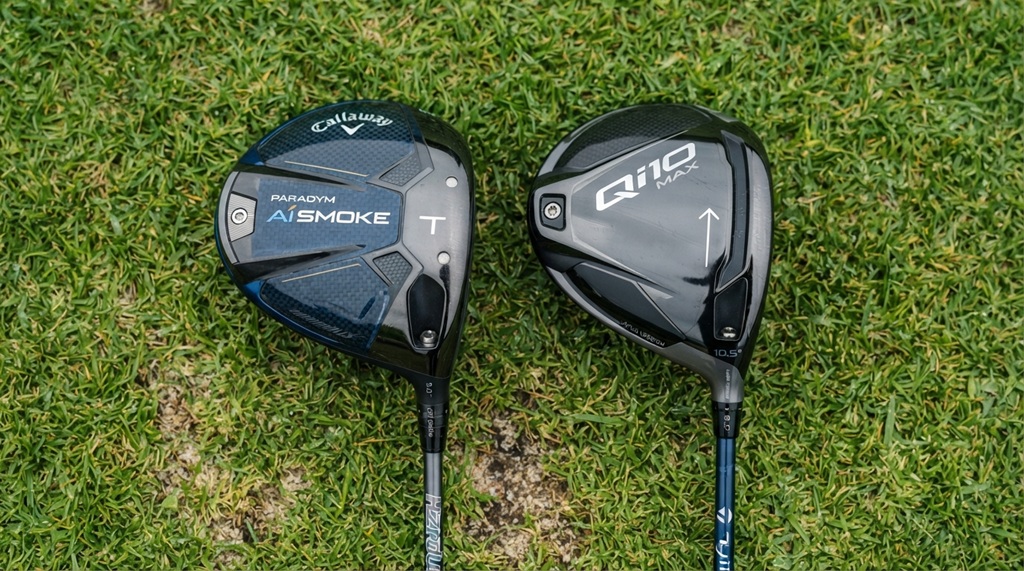
Here’s a practical guide to help you narrow down your choices based on your swing speed and typical playing conditions.
| Your Swing Speed | Recommended Loft | Shaft Weight | Best Playing Conditions |
|---|---|---|---|
| Under 90 mph | 11.5° – 12° | 45 – 55 grams | Soft, wet, early morning |
| 90 – 105 mph | 10.5° – 11° | 55 – 65 grams | Mixed conditions year-round |
| 105 mph and above | 9° – 10.5° | 65 – 75 grams | Firm, dry summer fairways |
If you fall into the middle category, you have the most flexibility. Use the adjustable hosel to swing between lofts. And don’t be afraid to use a heavier shaft in the winter. The added weight helps you feel the clubhead in wet weather and prevents you from swinging too aggressively out of tempo, which is a common issue when your layers of clothing restrict your turn.
Balancing Forgiveness and Workability
Workability is the ability to deliberately curve the ball. Forgiveness is the ability to minimize the curve on an off-center hit. In Washington, you need a mix of both, but leaning toward forgiveness is usually safer.
On tight, tree-lined courses like those on the Kitsap Peninsula, a miss into the woods is a lost ball. A forgiving driver keeps your mishit in the short grass or the first cut of rough. On open links courses east of the mountains, you have room to miss, but you’ll want to shape shots to avoid bunkers. A driver that is too forgiving will be hard to fade or draw on command. Look for a driver with a sliding weight that lets you shift the CG toward the toe (for fade bias) or the heel (for draw bias). This allows you to “turn off” the draw or fade when you need a straight ball, rather than having to manipulate your swing.
Care and Maintenance for Washington Weather
Even the best driver will underperform if you don’t care for it properly. When you play in wet conditions, take care of the club after your round.
- Wipe the face, sole, and crown completely dry with a microfiber towel immediately after your round.
- Remove the head cover and let the club air out in a dry room overnight. Never store a wet driver in a closed trunk.
- Check the hosel screw and weight port screws every few weeks. Moisture and temperature changes can cause them to loosen.
- Clean the grooves on the face with a soft brush to remove dirt, sand, and grass that get packed in during a wet round. Dirt on the face reduces friction and increases spin unpredictably.
These steps will extend the life of your driver and keep the performance consistent throughout the rainy season.
Frequently Asked Questions
Is a draw-bias driver better for wet conditions?
Not necessarily. A draw-bias driver promotes a right-to-left shot for right-handed players, which adds distance through roll. However, on soft, wet fairways, the roll is minimized. Additionally, a strong draw can easily become a hook when the ball is struck low on the face, which is common on cold days. A neutral or slightly fade-biased driver is often more manageable in wet conditions because it gives you a predictable cut that stops quickly on soft turf.
Should I use a heavier shaft in the winter?
It depends on your tempo and strength. Heavier shafts (over 65 grams) can help stabilize your swing in windy conditions and give you better feel when your hands are cold. However, if you already struggle to generate clubhead speed, a heavier shaft will slow you down. Stick with the weight you normally use unless you notice that your club feels too light to swing on a consistent plane in the first few holes.
Can I use the same driver for links courses and parkland courses?
Yes, if you choose a driver with adjustable loft and weights. You can set it to a lower loft with a forward CG for links courses to maximize roll. Then, you can move the weight to the back and increase the loft for parkland courses to get a higher, softer ball flight. This iswhy an adjustable driver is strongly recommended for Washington golfers. A fixed-loft driver is harder to adapt to the varied terrain.
How often should I replace my driver in this climate?
Most golfers should replace their driver every 3–5 years, depending on how often they play. In Washington’s damp climate, the face can wear faster due to repeated moisture exposure and cold impact stresses. If you notice your ball flight becoming suddenly inconsistent, or if you see visible marks or dents on the face, it’s time for a new one. Also, if the adapter loosens frequently, the internal integrity of the hosel may be compromised.
Does a higher loft reduce the chance of slicing?
A higher loft does not directly fix a slice, but it can mask the side-spin effects. A higher-lofted driver produces more backspin relative to sidespin. The increased backspin creates a more stable flight and reduces the severity of the curve. So, you’ll still hit a slice, but it won’t curve as dramatically, which can keep your ball on the fairway more often.
Conclusion
Finding the right driver for Washington fairways comes down to understanding the local environment more than chasing the latest distance records. The best clubs for this region are those that launch high, spin moderately, and forgive your misses on cold, wet days. Prioritize adjustability so you can adapt to the stark contrast between the damp western courses and the dry eastern links. Focus on carry distance on the launch monitor, not total yards, and don’t overlook shaft weight and grip selection. By following the comparison criteria covered here, you’ll make a confident purchase that performs throughout the unpredictable Washington golf season. Get out there, test a few options in real conditions, and pick the one that lets you forget about the weather and focus on your game.