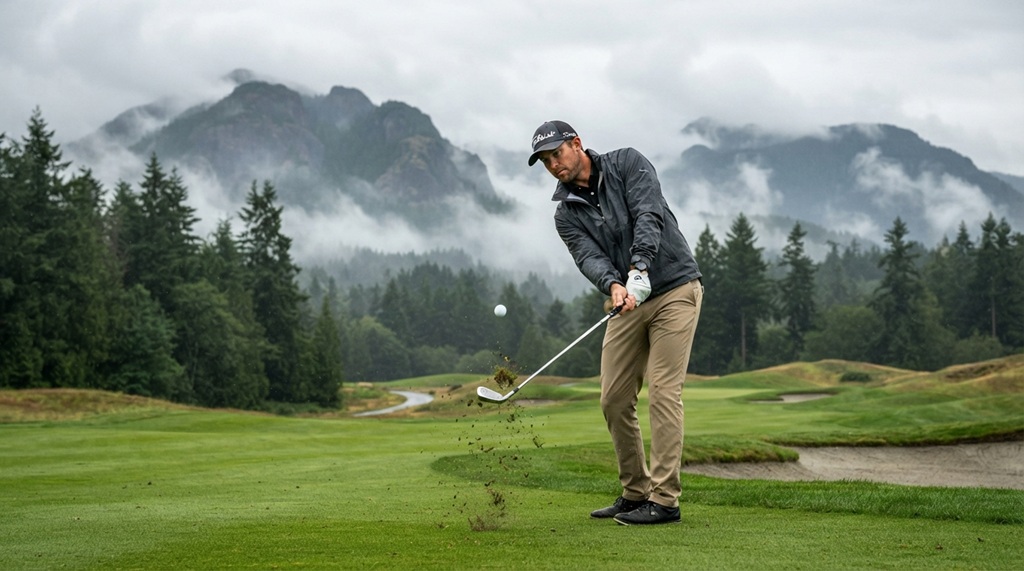
If you play golf in Washington, you already know the drill: one round can start in a downpour, shift to gusty coastal winds by the turn, and finish under bright, dry sunshine. The Evergreen State’s courses from Chambers Bay’s fescue-lined links to the tree-lined fairways of the Cascades demand versatility. The wrong set of irons can turn a manageable round into a frustrating scramble. Choosing the right set isn’t just about brand loyalty or looks; it’s about matching club design to the specific conditions you face week in and week out. This guide breaks down exactly what to look for in golf irons for Washington golfers, covering turf interaction, forgiveness, and the trade-offs you need to understand before spending your money.
Why Washington Course Conditions Change Everything
Washington golf is not Arizona golf. The Pacific Northwest’s climate creates unique playing surfaces that directly impact iron performance. The most significant factor is moisture. From October through May, courses in Seattle, Tacoma, and Spokane play soft and wet. Fairways absorb rainfall, which means the ball sits down in the turf more often than it does in drier states. This condition demands irons with lower bounce and a sharper leading edge to cut through the ground cleanly. A club that glides across hardpan in California will dig too deep or bounce awkwardly in Washington’s saturated soil.
Another factor is the prevalence of poa annua grass. This grass type creates a bumpy, uneven putting surface, but it also affects fairway lies. Poa annua grows in clumps, which can leave the ball sitting slightly above or below your feet even on seemingly flat fairways. Irons with a wider sole can help prevent the club from catching on the turf when the lie is uneven. Conversely, during the summer months, many Washington courses firm up considerably. Links-style courses like Chambers Bay and The Home Course play fast and hard, requiring a different approach. You need irons that perform in both extremes soft and wet, then firm and fast without forcing you to overhaul your swing.
Key Iron Characteristics for Pacific Northwest Play
When evaluating iron sets, focus on four primary characteristics: sole design, offset, forgiveness, and shaft selection. Each plays a distinct role in how the club performs in Washington’s conditions.
Sole Design and Turf Interaction
The sole of the iron is the part that interacts with the ground. For Washington golfers, this is arguably the most critical design element. A wider sole with a rounded leading edge provides more forgiveness on fat shots, which are common when the ground is soft. However, a sole that is too wide can cause the club to bounce off firm summer turf, leading to thin contact. Look for a “grind” or relief on the heel and toe of the sole. This allows the club to sit closer to the ground at address and helps it move through thick rough without getting stuck. Game-improvement irons typically have wider soles, while players’ irons have narrower ones. The right choice depends on your handicap and how often you practice.
Offset and Shot Shaping
Offset refers to how far the clubface is set back from the hosel. More offset promotes a higher launch and helps square the face at impact, which is beneficial for golfers who tend to slice. In Washington, where wind can be a factor, a higher launch can be a disadvantage. A ball that flies too high will get knocked down by a gust. However, for the average golfer, the forgiveness provided by offset is more valuable than the ability to hit low, piercing shots. If you are a mid-handicapper, a moderate amount of offset is a good compromise. If you are a low-handicapper who needs to control trajectory, look for irons with minimal offset and a thinner top line.
Forgiveness vs. Workability
This is the eternal trade-off in iron selection. Forgiving irons, often called game-improvement or super game-improvement, feature perimeter weighting and a low center of gravity. They are designed to minimize distance loss on off-center hits. This is hugely beneficial on wet days when your hands are cold and your swing is not at its best. Workable irons, typically forged blades or compact cavity backs, offer more control over shot shape and trajectory. The problem is that they punish mishits severely. For a Washington golfer who plays year-round, forgiveness is usually the smarter choice. You can still shape shots with a cavity-back iron, but you cannot fix a 15-yard miss on a cold, rainy day with a blade.
Finding the Balance: Game-Improvement Versus Players’ Irons
The traditional divide between game-improvement and players’ irons has blurred significantly with the rise of modern players’ distance categories, making it essential to evaluate your exact strike consistency and distance needs against the shifting Pacific Northwest turf conditions where moisture-heavy fairways demand both clean turf interaction and optimal launch forgiveness, while also keeping your lower-body anchored through the swing by pairing your iron selection with proper equipment like golf shoes that improve stability and balance.
Game-Improvement Irons
These are the best choice for golfers with handicaps above 15. They feature thick soles, significant offset, and hollow-body construction in many models. The goal is to get the ball in the air quickly and keep it flying straight. In Washington, these irons are particularly useful because they handle wet, heavy rough well. The wide sole prevents the club from digging too deep, and the high launch helps carry the ball over soggy fairways. The downside is that they can feel “mushy” at impact and offer little feedback on where you struck the ball.
Players’ Distance Irons
This category is ideal for single-digit to 15-handicappers. These irons look like a traditional blade at address thin top line, minimal offset but have internal weighting that provides more forgiveness than a true blade. They offer a balance of workability and playability. For Washington golfers, players’ distance irons are often the best fit because they allow you to flight the ball lower under the wind while still providing enough help on off-center hits. They typically have a slightly narrower sole than game-improvement models, which helps on firm summer fairways but requires a more consistent strike in wet conditions.
True Blades and Compact Cavity Backs
Only low-handicap players (5 or less) who play frequently should consider these. They offer the ultimate in feedback and workability but require a precise, repeatable swing. In Washington, these clubs are challenging to use in the spring and fall when conditions are soft. The narrow sole digs into wet turf, and the lack of forgiveness means every mishit costs you significant distance. If you are a skilled ball-striker, they can be rewarding, but they are not the best tool for year-round play in the Pacific Northwest.
Shaft Selection: The Overlooked Variable
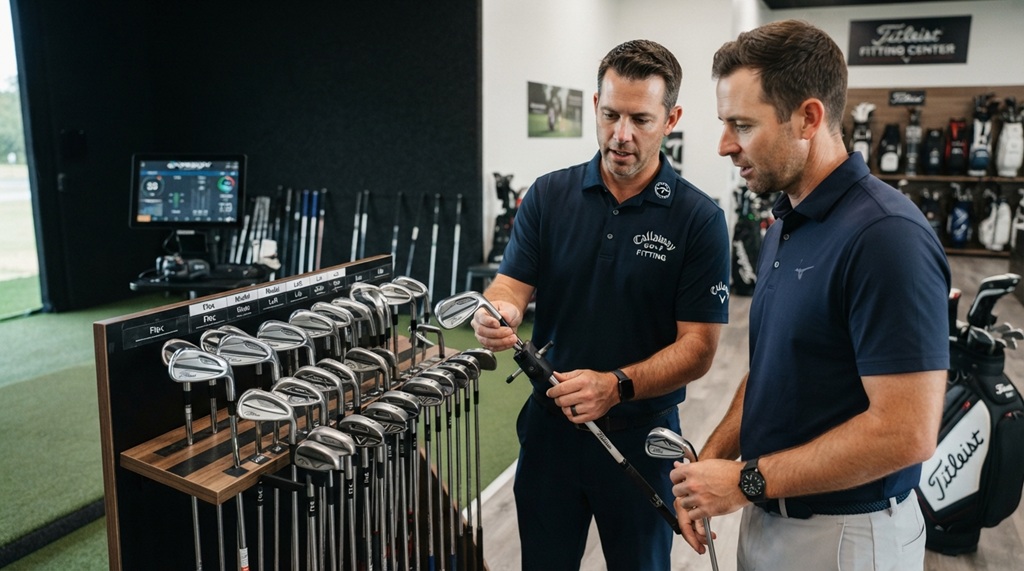
Many golfers focus entirely on the clubhead and ignore the shaft. This is a mistake, especially in Washington. The shaft flex and weight significantly affect trajectory and feel. In cooler temperatures, a stiff steel shaft can feel boardy and heavy. Graphite shafts, which are lighter, can help you maintain swing speed when you are bundled up in layers. If you have a moderate swing speed (around 85-90 mph with a 6-iron), a regular flex shaft is usually the right choice. If your swing speed is slower, senior or senior-light flex will help you get the ball airborne.
Another consideration is shaft weight. Heavier shafts (120-130 grams) provide more stability and control but require more effort to swing. Lighter shafts (85-110 grams) are easier to swing and help with launch. For Washington golfers, a slightly lighter shaft can be beneficial because it reduces fatigue over 18 holes in wet, heavy conditions. However, do not go too light, or you may lose control and start spraying the ball. The best approach is to get fitted by a professional who can measure your swing speed and launch angle.
Common Mistakes Washington Golfers Make
There are several recurring errors that golfers in this region make when purchasing irons. Avoiding these will save you money and frustration.
- Buying based on looks alone: A sleek, compact iron looks great in the bag but may not be suitable for your skill level. Be honest about your handicap and your consistency.
- Ignoring the bounce: As mentioned, bounce is critical. Irons with too much bounce will skip off firm summer turf, causing thin shots. Irons with too little bounce will dig into wet spring fairways.
- Choosing the wrong shaft flex: Playing a stiff shaft when you have a moderate swing speed will result in low, weak shots that are difficult to control in the wind. Get fitted.
- Not considering the rough: Washington rough is often thick and wet. If you play a blade, you will struggle to get out of it. A wider sole is your friend.
- Forgetting about resale value: If you are unsure about a set, consider buying a slightly used set from a reputable retailer. This allows you to test them on your home course without a huge financial commitment.
What About Wedges and Set Composition?
Most iron sets come with a pitching wedge and sometimes a gap wedge. In Washington, you should pay close attention to the loft of your set’s wedges. Many modern game-improvement sets have strong lofts (e.g., a 43-degree pitching wedge). This means you will have a gap between your pitching wedge and your sand wedge. You will likely need to purchase a separate gap wedge (around 50-52 degrees) to fill this gap. This is especially important on soft, wet courses where the ball does not roll out as much. You need to be able to stop the ball on the green, and having the right wedge gapping is essential.
Also, consider the set composition. Many sets offer a 5-iron through gap wedge. Some offer a 4-iron or even a 3-iron. For most Washington golfers, a 5-iron is a safe top end. The 3- and 4-irons are difficult to hit consistently, especially in cold weather. You are better off replacing them with a hybrid or a fairway wood, which are easier to launch and more forgiving on off-center hits.
How to Test Irons Before You Buy
You should never buy irons without hitting them first. The best way to test is on a launch monitor, but you should also take them to a course or range with real turf. Many big-box stores have indoor simulators, but these do not replicate the turf interaction you will experience in Washington. If possible, find a fitter with an outdoor practice facility where you can hit off actual grass.
When testing, pay attention to the following:
- Feel at impact: Does the club feel solid, or does it feel harsh? A forged club will feel softer, while a cast club will feel firmer.
- Trajectory: Are you hitting the ball too high or too low? You want a trajectory that is high enough to hold the green but low enough to cut through the wind.
- Dispersion: How close are your shots to the target line? Look at the pattern, not just the one perfect shot.
- Turf interaction: Does the club dig into the ground, or does it glide through? This is the most important test for a Washington golfer.
Take your time and hit at least 20 shots with each club you are considering. Do not make a decision based on a single swing.
Frequently Asked Questions
Should I buy forged or cast irons for wet conditions?
Cast irons are generally more durable and often feature more forgiveness due to their construction. Forged irons offer better feel but can be more susceptible to damage and are typically less forgiving. For wet, year-round play, a high-quality cast iron or a forged players-distance iron is a safer choice.
What is the best loft for a 7-iron in Washington?
Traditional lofts are around 34-35 degrees for a 7-iron. Modern game-improvement sets have stronger lofts (around 28-30 degrees). Stronger lofts mean more distance but also lower launch and less spin, which can make it harder to hold a green on a soft, wet course. A mid-loft (around 32 degrees) is a good compromise.
Can I use the same irons year-round in Washington?
Yes, you can, but you may need to adjust your expectations. A game-improvement or players-distance iron with a moderate sole width will work in both summer and winter conditions. You may need to alter your swing to avoid digging in the winter and to avoid thin shots in the summer.
Are graphite shafts better than steel for cold weather?
Graphite shafts are lighter and do not conduct cold as much as steel, which can feel more comfortable on cold days. They also help maintain swing speed when you are wearing extra layers. However, steel shafts offer more control and are often preferred by better players.
How often should I replace my irons?
If you play frequently (50+ rounds a year), you should consider replacing your irons every 3-5 years. Grooves wear out over time, reducing spin and control, especially in wet conditions. If you play less often, you can extend this to 7-10 years.
Conclusion
Choosing the right irons for Washington golf is about more than just picking a popular brand. It is about understanding how the region’s wet winters, firm summers, and unique grass types affect your ball flight and turf interaction. Prioritize forgiveness over workability, pay close attention to sole design and bounce, and do not overlook the importance of shaft flex and weight. A set of game-improvement or players-distance irons with a moderate sole and a regular flex shaft will serve the vast majority of golfers in this state well. Before you buy, get fitted and test your options on real turf. The right set will not only improve your scores but also make your rounds more enjoyable, no matter what the weather throws at you.