

Florida sleepers know the routine: you fluff the pillow, flip it to the cool side, and twenty minutes later it feels like a warm brick. Humidity makes it worse, because a pillow that traps heat also traps moisture, and that combination turns a supportive pillow into a soggy, flattened one by 3 a.m. Choosing well in this climate means looking past thread count and brand names and asking different questions — about airflow, fill behavior, and how firmness interacts with heat. If you have been searching for firm queen size bed pillows for Florida sleepers, the short version is that firmness alone will not save you; the material doing the firming matters just as much.
Quick Answer
Choose a firm queen pillow made from an open-cell, breathable material — latex, shredded foam with airflow channels, or a firm polyester or buckwheat fill — rather than a solid block of traditional memory foam, which holds heat and moisture. Look for a washable, moisture-wicking cover, a loft that matches your sleeping position, and a firmness that keeps its shape after compression. Firmness should come from structure and fill density, not from a dense, heat-trapping core.
Key Takeaways
- In Florida, heat retention matters as much as firmness — a firm pillow that traps humidity will soften, clump, and lose support within weeks.
- Firmness and loft are separate decisions: firmness is how much the pillow resists compression, loft is how thick it is. Side sleepers usually need more loft, back and stomach sleepers less.
- Solid memory foam is the worst common choice for a hot bedroom; latex, shredded foam, and hull fills breathe better while still feeling firm.
- A breathable, removable, washable cover does more for real-world comfort in humidity than most “cooling gel” marketing claims.
- Plan on replacing or refreshing fill more often in Florida than in a dry climate, because moisture degrades most fills faster.
Why Florida’s Climate Changes the Pillow Equation
Heat and humidity work together against a pillow. Heat makes you sweat; humidity slows evaporation, so that moisture sits in the fill instead of drying out. Over time, trapped moisture does three things: it compresses and clumps fibrous fills, it encourages odor and mildew in anything that cannot dry, and it makes a pillow feel warmer because damp material conducts heat away from your body less efficiently than dry material.
That is why a pillow that feels perfectly firm in an air-conditioned showroom can feel limp and clammy after a few humid weeks. The practical takeaway is to prioritize materials that dry quickly and allow air to move through the core, not just materials that feel dense and supportive on day one.
Firmness vs. Loft: Two Different Things That Get Confused
Firmness describes how much a pillow resists squishing. Loft describes how tall it is. You can have a low-loft pillow that is very firm, or a thick pillow that is soft. Getting one right and the other wrong is the most common reason people buy a pillow that seems correct and then wake up with neck pain.
Use your sleeping position as the starting filter:
- Side sleepers: need higher loft (roughly the height of the gap between your neck and the mattress) plus enough firmness to keep the head level. A firm, high-loft pillow is the classic match.
- Back sleepers: need moderate loft and moderate-to-firm support so the chin does not tilt toward the chest.
- Stomach sleepers: need low loft. A firm pillow is fine, but a thick one will push the head up and strain the neck.
- Combination sleepers: do best with an adjustable fill so the loft can be changed night to night.
In a hot climate, add one more filter: whatever loft you need, the fill should be able to hold that shape without becoming a solid, non-breathing block.
Which Fill Materials Hold Up in Heat and Humidity
No fill is perfect, but they behave very differently in a warm, damp bedroom. The table below compares the options most people actually consider.
| Fill Type | Firmness Feel | Heat Retention | Humidity Behavior | Best For |
|---|---|---|---|---|
| Solid memory foam | Firm to very firm | High — traps body heat | Slow to dry, can feel clammy | Cool, dry, air-conditioned rooms |
| Gel-infused or open-cell foam | Firm | Moderate | Better airflow than solid foam | Sleepers who want foam support in mild heat |
| Latex | Firm and springy | Low to moderate | Dries relatively well, resists clumping | Hot sleepers who want a firm, resilient pillow |
| Shredded foam | Adjustable, can be made firm | Moderate | Air moves between shreds; fill can be removed to dry | Combination sleepers, adjustable firmness |
| Polyester fiber | Firm when densely packed | Low to moderate | Absorbs moisture and compresses over time | Budget buyers willing to replace fill often |
| Buckwheat or hull fill | Very firm, molds to shape | Low — good airflow | Dries well, but heavy and noisy | Sleepers who want maximum firmness and airflow |
| Down and feather | Soft to medium | Warm — designed to insulate | Poor in humidity; slow to dry | Cooler climates, not hot bedrooms |
Notice the pattern: the fills that insulate best (down, solid foam) are the ones you want least in a Florida bedroom, while the fills that allow air movement (latex, shredded foam, hulls) tend to perform better even when they are firm.
Cooling Claims: What’s Worth Paying For
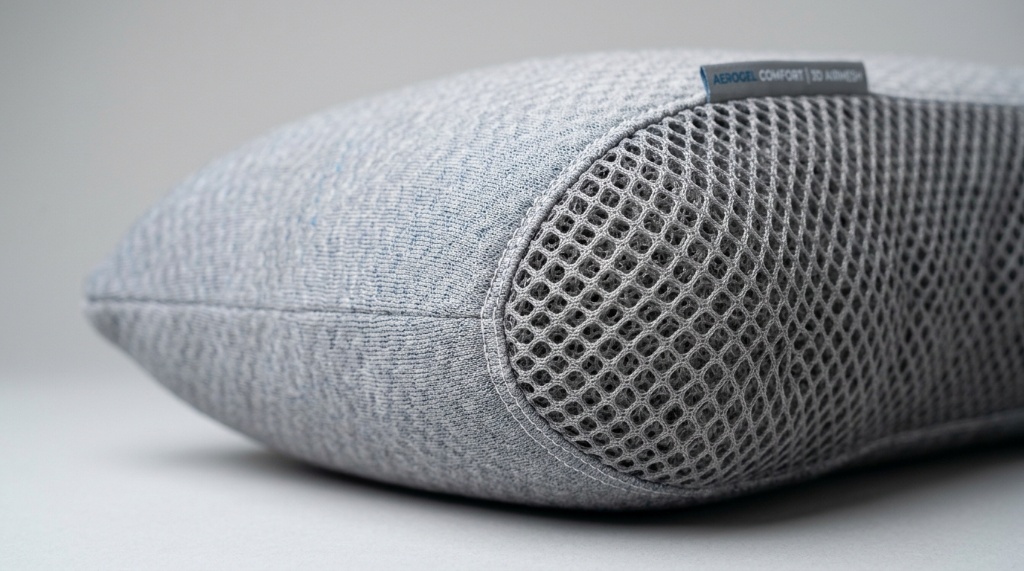
Most “cooling” pillow marketing falls into three categories, and they are not equally useful.
Genuinely helpful: an open, breathable structure that lets air pass through the pillow, a moisture-wicking or breathable cover fabric, and a removable cover you can actually wash. These address the real problem, which is trapped heat and moisture.
Sometimes helpful: phase-change materials and gel layers. They can create a cooler sensation at first contact, but that effect fades as your body heat equalizes with the material. They work best as a supplement to a breathable core, not a replacement for one.
Mostly marketing: “cool-touch” covers with no breathability behind them, and cooling sprays or pads that add moisture to a fill that already struggles to dry.
A simple test: squeeze the pillow and see whether air moves through it. If it feels like a solid, sealed slab, the cooling label on the packaging is unlikely to change how it sleeps in July.
How to Match a Firm Queen Pillow to Your Sleeping Position
Queen is the most common pillow size for a reason: it gives most adults enough width to shift position without falling off the edge, and it fits standard queen pillowcases. When shopping, check the actual dimensions rather than trusting the label, since “queen” varies slightly between manufacturers.
Then work through this order of decisions:
- Start with position. Side sleeper, back sleeper, stomach sleeper, or a mix. This sets your target loft.
- Choose a fill that breathes. Latex or shredded foam for firm support with airflow; hull fill if you want maximum firmness.
- Confirm the firmness holds. Press down hard with your palm and release. A good firm pillow springs back rather than staying compressed.
- Check the cover. Removable and washable is close to non-negotiable in a humid climate.
- Test it for a week, not a minute. Neck and shoulder comfort shows up after several nights, not after thirty seconds in a store aisle.
Common Mistakes Florida Sleepers Make
The most frequent error is buying firmness by density alone — choosing the heaviest, most solid pillow available because it feels supportive in the store. In a hot bedroom, that density becomes a heat sink.
Other recurring mistakes:
- Ignoring loft because the firmness felt right.
- Buying a pillow that cannot be adjusted, then discovering the loft is slightly off.
- Using a waterproof or non-breathable protector, which traps moisture directly under the pillowcase.
- Never washing or airing the pillow, allowing humidity to accumulate season after season.
- Assuming a high price guarantees better heat performance — material and structure matter far more than price.
Keeping a Firm Pillow Firm in a Humid Climate
Maintenance matters more here than in drier states. A few habits extend the useful life of a firm pillow considerably:
- Air the pillow in front of a fan or in direct sun for a few hours monthly to drive out accumulated moisture.
- Wash the removable cover every one to two weeks, and wash the pillow itself according to the manufacturer’s instructions.
- Dry thoroughly — a pillow that goes back on the bed slightly damp will clump faster.
- For shredded fills, top the pillow up or remove fill as it compresses, rather than replacing the whole pillow.
- Rotate between two pillows if you can, giving each one time to dry completely.
Expect to refresh or replace fill sooner than the general “every one to two years” guidance suggests if you sleep hot, sweat heavily, or keep the bedroom warm overnight, If you are shopping on a budget while dealing with joint support needs, you can check our guide on how to find cheap orthopedic pillows for side sleepers to improve your nocturnal posture without breaking the bank.
Frequently Asked Questions
Is memory foam a bad choice for Florida bedrooms?
Traditional solid memory foam is the least breathable common option, because it traps body heat and dries slowly. If you like the foam feel, look for shredded foam or an open-cell, gel-infused version, and pair it with a breathable, washable cover.
How firm should a pillow be for a side sleeper in a hot climate?
Firm enough to keep your head and neck level with your spine, with enough loft to fill the shoulder gap. Latex and shredded foam are good starting points because they stay firm without trapping as much heat.
Do cooling pillows actually work?
Partially. Breathable structure and moisture-wicking covers make a real difference. Phase-change materials and gel layers create a cooler sensation at first but fade as temperatures equalize. No pillow actively refrigerates your head overnight.
How often should I replace a pillow in Florida?
Sooner than the typical one-to-two-year guideline if you sleep hot or keep a warm bedroom. Check for clumping, loss of loft, lingering odor, or a pillow that no longer springs back after compression — any of those means it is time to replace or refill.
Are queen pillows big enough for most adults?
For most single sleepers, yes. If you move around a lot or share a bed, a king pillow gives more room to shift without losing support. Always check the listed dimensions, since sizing varies by brand.
Can I make a soft pillow firmer without buying a new one?
With shredded or adjustable fills, yes — add fill to increase firmness and loft. With a solid foam, down, or sealed fiber pillow, you generally cannot change firmness meaningfully, so replacement is the practical option.
Conclusion
In a Florida bedroom, the best firm pillow is one that stays firm without holding heat or moisture. Prioritize breathable fills such as latex, shredded foam, or hull fill; match loft to your sleeping position before you worry about brand; and treat a washable, breathable cover as essential rather than optional. If you already own a pillow you like, try airing and refreshing the fill before replacing it. If you are starting fresh, use the position-first, material-second approach and give the pillow a full week before deciding.