
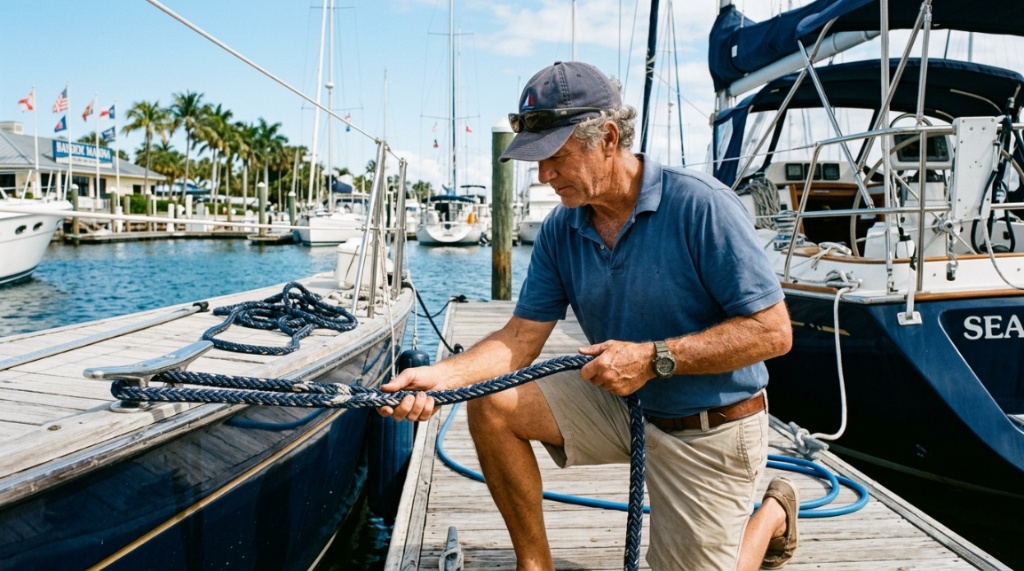
Docking a boat in Florida comes with its own set of challenges. Between the intense summer sun, sudden afternoon thunderstorms, and tidal currents that can shift your boat in seconds, the lines you use are your first line of defense. Choosing the wrong dock lines can lead to chafed ropes, popped cleats, or worse—a boat that drifts into a neighbor’s hull. Whether you’re a seasoned captain or a first-time boat owner, understanding what makes a dock line reliable in Florida’s unique environment is essential. This guide breaks down the key factors—material, diameter, length, and setup—so you can confidently select the best boat dock lines Florida has to offer for your vessel and docking style.
What Makes Florida Docking Conditions Unique?
Florida isn’t like the Pacific Northwest or the Great Lakes. The environment here actively works against your dock lines. The primary culprits are UV radiation, heat, and biological growth. The sun’s intense rays break down synthetic fibers over time, making lines stiff and prone to fraying. Heat accelerates that process, especially on lines that sit exposed on hot fiberglass gunwales. Additionally, Florida’s warm waters encourage algae and barnacle growth on lines left in the water, which can abrade the rope and make handling unpleasant.
Beyond the environmental factors, you also have to contend with tidal swings, especially on the Gulf Coast and the Intracoastal Waterway. A line that is too tight at low tide can snap or pull a cleat from the deck when the tide rises. Conversely, a line that is too loose at high tide can allow the boat to drift and bang against the dock. Understanding these conditions is the first step in choosing lines that will last more than a single season.
Material Matters: Nylon vs. Polyester vs. Polypropylene
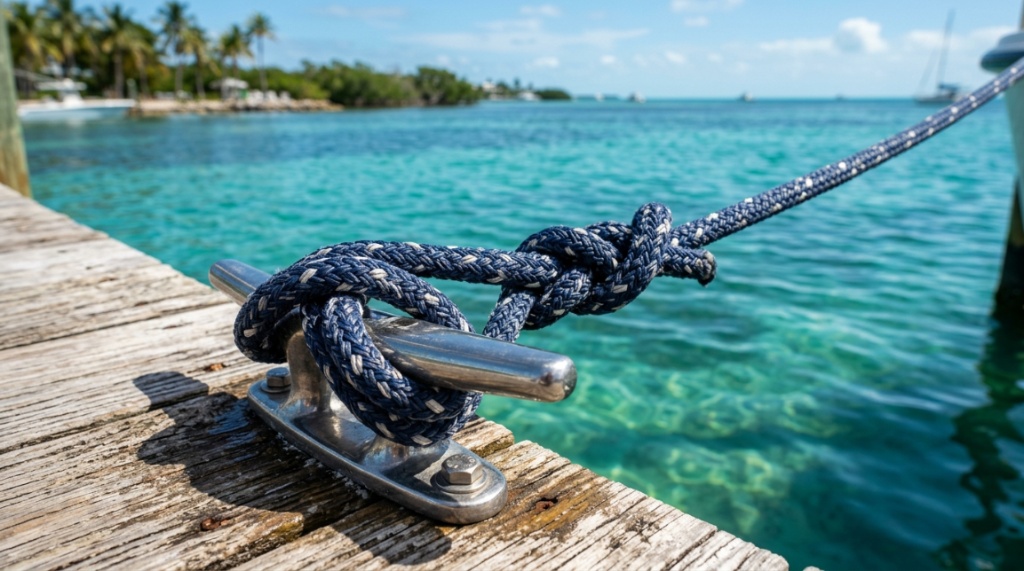
The material of your dock line determines its strength, stretch, and longevity. While there are several options on the market, three materials dominate the boating world. Each has distinct trade-offs that matter in a Florida setting.
Nylon: The Standard for Shock Absorption
Nylon is the most popular choice for dock lines because of its excellent elasticity. It can stretch up to 30% under load, which allows it to absorb the shock of waves, wakes, and wind gusts. This stretch is critical when a large cruiser passes by and sends a wake rolling into your slip. Nylon also has high tensile strength and resists abrasion well. However, nylon degrades faster than polyester when exposed to UV light, and it absorbs water, which can lead to mildew if not dried properly. For most Florida boaters, premium three-strand or double-braid nylon is the go-to choice.
Polyester: Low Stretch for Precision
Polyester lines have very little stretch compared to nylon. This makes them ideal for applications where you want the boat to stay exactly where you put it, such as in a tight slip or when using a mooring pendant. However, the lack of stretch means there is no shock absorption. In a rough chop, a polyester line will transmit the full force of the boat’s movement to the cleats and dock hardware, which can cause structural damage over time. Polyester is more UV-resistant than nylon, but it is generally not recommended for primary spring lines in open water.
Polypropylene: Lightweight but Risky
Polypropylene floats, which makes it useful for tow ropes or temporary lines. However, it is significantly weaker than nylon and degrades rapidly in sunlight. It also has a hard, slippery feel that makes knot tying difficult. For permanent or even seasonal dock lines in Florida, polypropylene is a poor choice. It is best left for fender lines or temporary tie-ups where weight is a concern, If you are planning an international boating trip or looking for great coastal vacation spots after exploring Florida waters, check out the Best Algarve Beaches for Swimming for crystal-clear Mediterranean shores.
How to Determine the Correct Dock Line Diameter
Choosing the right diameter is about matching the line’s breaking strength to your boat’s displacement and the forces it will face. A line that is too thin is a safety hazard; a line that is too thick is difficult to handle and may not fit through your cleats or chocks.
A general rule of thumb is to use a line diameter (in inches) that is roughly equal to 1/8 of an inch for every 9 to 10 feet of boat length. However, this is a starting point, not a definitive answer. For a more accurate selection, consider the weight of your boat. A heavy, full-displacement trawler will need thicker lines than a lightweight center-console of the same length.
Here is a practical guide based on common boat sizes:
| Boat Length (Feet) | Recommended Diameter (Inches) | Typical Use Case |
|---|---|---|
| Under 20 | 3/8″ | Small skiffs, bay boats, jet skis |
| 20 to 30 | 1/2″ | Center consoles, bowriders, small cruisers |
| 30 to 40 | 5/8″ | Express cruisers, sportfishers, trawlers |
| 40 to 60 | 3/4″ | Large motor yachts, offshore sportfishers |
| 60+ | 1″ or larger | Mega yachts, commercial vessels |
Remember that these are minimum recommendations. If you dock in an area with strong crosswinds or significant boat traffic, stepping up one size provides an extra margin of safety.
Selecting the Right Length and Number of Lines
Having the right length is just as important as the material. A line that is too short cannot be tied off properly, and a line that is excessively long creates a trip hazard and allows too much movement. The standard approach is to have a set of lines that includes two bow lines, two stern lines, and two spring lines.
Understanding Line Roles
- Bow and Stern Lines: These run from the bow and stern cleats directly to the dock. They keep the boat from moving forward and backward.
- Spring Lines: These run at an angle from the bow or stern to a mid-ship cleat on the dock. They prevent the boat from surging forward or backward and are essential for controlling the boat in currents.
For a typical 30-foot boat, you will want bow and stern lines that are about 1.5 times the length of the boat. Spring lines should be about the same length as the boat. This gives you enough rope to work with while keeping the excess manageable. It is always wise to carry at least one spare line of each length in case of breakage or changing conditions.
Construction Types: Three-Strand vs. Double-Braid
The way the rope is constructed affects its handling, strength, and stretch characteristics. The two most common types for dock lines are three-strand and double-braid.
Three-Strand Nylon
This is the classic twisted rope. It is easy to inspect for wear, splices well, and has excellent shock absorption. Three-strand is also more affordable than double-braid. The downside is that it can be stiff when new and may kink if not coiled properly. For many Florida boaters, three-strand nylon is the best value for money.
Double-Braid Nylon
Double-braid has a braided core inside a braided cover. It is softer, easier on the hands, and does not kink as easily as three-strand. It also has slightly less stretch than three-strand but is still very elastic. Double-braid is stronger than three-strand of the same diameter, but it is more expensive and harder to splice correctly. If you have a larger boat or simply prefer a cleaner look, double-braid is an excellent upgrade.
Key Features to Look For in Florida Dock Lines
Beyond the basic material and size, several features can extend the life of your lines and make them safer to use in Florida’s specific environment.
UV-Resistant Coatings
Some manufacturers treat their nylon lines with UV inhibitors. While no treatment makes a line immune to the sun, these coatings can significantly slow down the degradation process. Look for lines that specifically mention UV protection in their specifications.
Pre-Spliced Eyes
A dock line with a pre-spliced eye loop on one end is incredibly convenient. You can drop the loop over a dock cleat or piling without having to tie a knot. This speeds up docking and reduces wear on the line. When choosing a pre-spliced line, ensure the splice is tight and well-finished, as a loose splice is a weak point.
Chafe Protection
Chafing is the enemy of dock lines. Where the line passes through a chock or rubs against a rough dock edge, the outer fibers will wear down. You can add chafe guards—which are typically tubular sleeves made of nylon or leather—to your lines. Some premium dock lines come with built-in chafe protection in high-wear areas. This is a worthwhile investment, especially if you dock in a marina with older, rougher pilings.
Common Mistakes to Avoid When Buying Dock Lines
Even experienced boaters make errors when purchasing new lines. Being aware of these common pitfalls will save you money and prevent frustration.
- Buying all lines the same length: Different positions require different lengths. A one-size-fits-all approach leads to excess rope on the dock or lines that are too short to tie properly.
- Ignoring the cleat size: A thick line may not fit under a small cleat. Check the throat size of your cleats before buying thick lines.
- Using anchor rope as dock lines: Anchor rope is often made of nylon but may have different construction or lack the same UV resistance. It is best to use lines designed specifically for docking.
- Forgetting about the tide: If you are docking in an area with a significant tidal range, you need lines that allow for vertical movement. Spring lines are essential here, and you must adjust them as the tide changes.
Frequently Asked Questions
How often should I replace my dock lines in Florida?
Inspect your lines every few months. If you keep your boat in the water year-round in Florida, plan to replace your dock lines every 2 to 3 years. If you notice fraying, stiffness, or discoloration, replace them sooner.
Can I leave my dock lines in the water?
Leaving lines in the water accelerates growth of algae and barnacles, which can cut into the fibers. It also hides wear. It is best to remove lines from the water when not in use, but if you must leave them, check them frequently for abrasion.
Is a thicker line always better?
No. A thicker line is stronger, but it may be too stiff to handle easily and may not fit your cleats. Use a line that matches your boat’s weight and the cleat size, not just the maximum strength you can find.
What is the best knot for a dock line?
The cleat hitch is the most reliable and easy-to-release knot for dock lines. For attaching to a piling, a clove hitch or a rolling hitch works well. Avoid knots that are difficult to untie when wet.
Should I use snap-back protectors?
Snap-back protectors are foam sleeves that cover the line near the cleat. They are a good safety addition because they reduce the risk of injury if a line snaps under tension. They are inexpensive and worth adding to your lines.
Conclusion
Choosing the right dock lines for your Florida boat comes down to balancing stretch, strength, and durability against the harsh local environment. Prioritize premium nylon for its shock absorption, select a diameter that matches your boat’s size, and invest in lines with UV protection and chafe guards. Remember to consider the specific docking conditions you face daily—whether that is strong tidal currents, open water exposure, or tight marina slips. By avoiding the common mistakes of buying the wrong length or ignoring UV damage, you will ensure your boat stays secure and your lines last for years. Take the time to inspect your current lines today and replace any that show signs of wear. A small investment in quality lines is the cheapest insurance you can buy for your vessel.