Kitesurfing and kiteboarding are thrilling water sports that involve using a large, controllable kite to propel yourself across the water while standing on a board. Both sports offer an exhilarating experience that lets you feel the wind’s power as you glide across the waves. The kite is controlled by a bar that is connected to the kite via lines, allowing you to steer and maneuver the kite as needed.
With kitesurfing and kiteboarding, you can achieve high speeds and perform all sorts of tricks, such as jumps, spins, and flips, using the kite’s power to launch yourself into the air. These sports require a good sense of balance, coordination, and strength, making them excellent workouts for your body and mind alike. Overall, kitesurfing and kiteboarding are exciting and rewarding activities that offer a unique way to experience the beauty of the ocean while also pushing your limits. However, there are some critical differences between kitesurfing vs kiteboarding.
What is Kitesurfing?
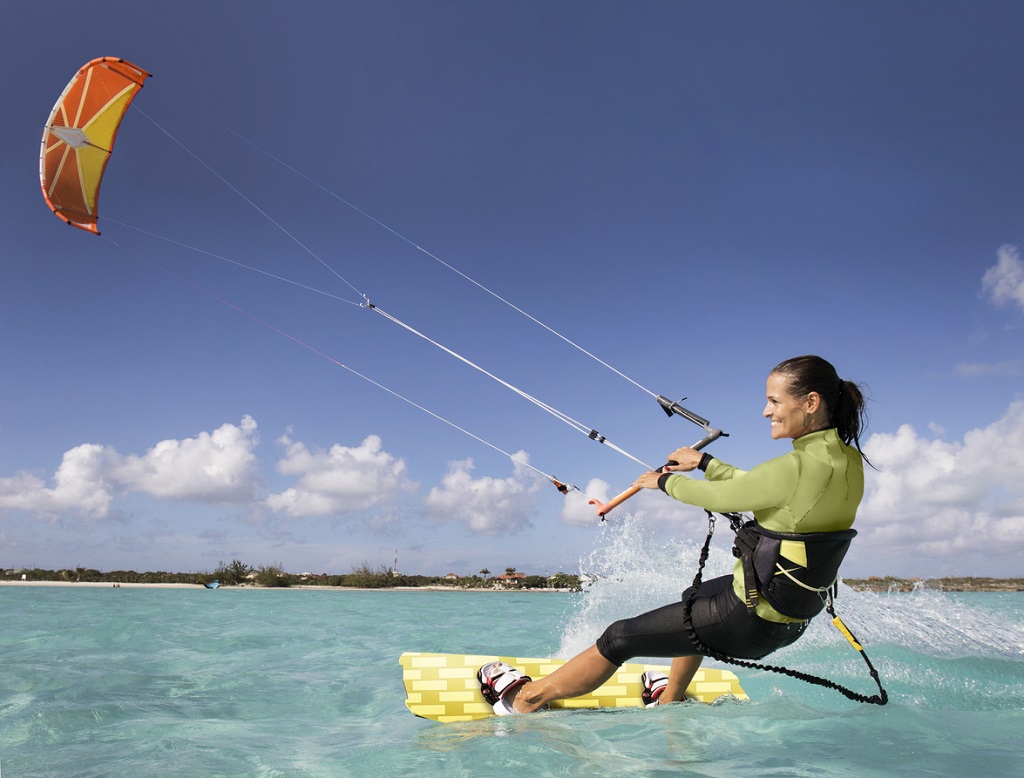
Kitesurfing, known as kiteboarding, is a surface water sport combining wakeboarding, windsurfing, surfing, paragliding, and gymnastics into one extreme sport. A kitesurfer uses a large, controllable kite to harness the power of the wind and propel themselves across the water while riding a small surfboard or wakeboard.
The origins of kitesurfing trace back to the 1980s when windsurfing pioneers began experimenting with using parachute-style kites to increase their speed and boost big airs. In the mid-1990s, the first inflatable tube kites were explicitly designed for kitesurfing. This allowed for better control and safety compared to early rigid-framed kites.
The sport has increased since the early 2000s, with companies developing kites and boards tailored for kitesurfing. It has also spawned several sub-disciplines focused on different riding styles, such as waves, freestyle tricks, big air jumps, speed racing, and foilboarding.
How Kitesurfing Works
Kitesurfing uses an inflatable power kite controlled via lines wrapped around a bar connected to the kite’s harness. The kite controls the kite by pulling on the left or right side of the bar to steer it and adjusting the angle of attack to manage power. Most kitesurfing kites are bow kites, which means they are shaped like an arch and are fully inflatable with no rigid structure.
The kite can generate significant pull by steering it in a patterned motion across the sky. This pull from the kite provides the power to propel across the water at high speeds while also allowing the kite to jump in the air for tricks and stunts.
Kitesurfers wear a harness around their waist or seat, which connects to the control bar via a series of lines. This allows them to hook into the kite’s power and direct all the force into controlling the board instead of holding onto the bar. Most kitesurfers wear a helmet and impact vest and carry a knife for safety to cut lines if needed quickly.
The board used in kitesurfing is similar to a wakeboard but is usually lighter and has foot straps to allow riders to perform tricks unhooked from the board. Beginners often start riding with a giant directional board before progressing to a smaller twin-tip board designed for tricks. Fins help provide stability and upwind drive when riding upwind.
Types of Kitesurfing
Some of the most popular styles of kitesurfing include:
- Waves: Riding ocean waves using the kite’s power for speed and lift. Wave kites are designed to drift quickly to allow riding along the wave face.
- Freestyle: Focus on performing technical flatwater tricks like handle passes, kite loops, and rodeos. Freestyle kites provide huge pop for big air.
- Big Air: Riders focus on getting substantial hangtime jumps by sending mega kite loops and front rolls. Giant air kites generate massive lift.
- Foilboarding: Riding a hydrofoil board for upwind ability, stability, and smooth glide. Foil kites provide constant power and traction.
- Course Racing: Speed racing on a course using efficient hydrodynamic race boards. Race kites focus on straight-line speed.
- Downwinders: Riding downwind along a coastline from point A to B, using prevailing onshore winds.
- Strapless: Riding unhooked from the board with no foot straps, allowing jumps and tricks with a skimboard style.
- Kite Landboarding: Riding a mountainboard on land using a kite for power and jumps.
What is Kiteboarding?
Kiteboarding is an action water sport that uses a kite as a power source to propel a rider across the water on a small board, similar to kitesurfing. It is often used interchangeably with kitesurfing, although some consider kiteboarding to refer to twin-tip skimming-style directional boards versus wake-style boards.
Kiteboarding emerged as the original name in the mid-1990s when the first inflatable kites were explicitly developed to be pulled across the water on a board. Pioneers like Lou Wainman and Laird Hamilton helped develop early kiteboarding, control systems and boards.
At first, kiteboarding differed from most early kitesurfing in that riders would not use foot straps, instead opting for a surf-style experience of riding unhooked from the board. However, as the sport progressed, wake-style boards with foot straps became more popular in kiteboarding for increased control and jumping ability.
Nowadays, kiteboarding and kitesurfing are essentially synonymous terms. However, some riders distinguish the two based on their preference for board style or their backgrounds in wakeboarding, surfing, windsurfing, or other watersports that influenced the early sport.
Kitesurfing vs Kiteboarding: Key Differences
While kitesurfing and kiteboarding share obvious similarities and are often used interchangeably, there are some critical differences between the two sports:
Here is a comparison chart summarizing some of the key differences between kitesurfing and kiteboarding:
| Kitesurfing | Kiteboarding | |
| Origins | Emerged from windsurfing in the 1980s using early ram-air kites. | It evolved in the mid-1990s as kites were developed specifically for being pulled across the water. |
| Board Style | Originally used wake style boards with foot straps. Now also uses twin tips. | Started with surf-style directional boards. Now also uses twin tips. |
| Technique | Leans more towards a wakestyle approach. | Leans more towards a surf-style approach. |
| Primary Focus | Wave riding, freestyle tricks, big air jumping. | Wave riding, strapless freestyle, downwinders. |
| Learning Curve | Slightly steeper initially due to board control. | It was slightly easier at first using surfboard-style boards. |
| Conditions | Onshore choppy conditions suit twin-tip boards. | Side-onshore wind swell favors directional surfboards. |
| Kite Style | Optimized for boosting big air and drift ability for waves. | Emphasis on stability and constant power for wave riding. |
| Community | Originated more from wakeboarding and windsurfing backgrounds. | Influenced more by surfing and waterman styles. |
| Competitions | PKRA, GKA, and King of the Air – focus on freestyle/big air. | KSP, GKA Surf – emphasis on wave riding performance. |
| Risks | Vulnerable to fatigue from aggressive edging. Hard crashes are common. | It is challenging to relaunch the surfboard in heavy surf conditions. |
History
- Kitesurfing originated as an offshoot of windsurfing using parachute kites in the 1980s. Kiteboarding emerged in the mid-1990s as kites were explicitly developed for being pulled across the water.
Boards
- I was kitesurfing. I initially used wake-style boards with foot straps similar to wakeboarding. Kiteboarding focused more on surf-style directional boards without foot straps. Now, both sports use twin tips with footstraps.
Approach
- Kitesurfing grew out of windsurfing and a focus on speed and jumping. Kiteboarding had more of a surfing background and an emphasis on wave riding.
Style
- Kitesurfing leans more towards a wake-style approach. Kiteboarding leans more towards a surf-style approach. But there is enormous overlap now between the two sports.
Terminology
- Some use the terms respectively based on board style – kitesurfing for wake-style boards, kiteboarding for surf-style directional boards. But often names are used interchangeably.
Community
- The kitesurfing community grew out of windsurfing circles and often utilized wakeboarding-style gear. The kiteboarding community originated more from surfing, watermen, wave sailors, and windsurfers.
Competitions
- Kitesurfing competitions like the PKRA Tour and Kite Park League focus on freestyle/big air. Kiteboarding comps like the KSP World Tour are more wave-riding-focused. But now sports share the most significant competition.
Learning
- Complete beginners often find learning on kiteboarding surf-style boards slightly easier before progressing to shorter kitesurfing twin-tips.
So, in summary, kitesurfing historically came more from a wakeboarding/windsurfing background, while kiteboarding originated more from surfing. But the sports have converged over the past 15+ years, so kitesurfing and kiteboarding are now used interchangeably in casual conversation. The main difference is riders’ backgrounds and technical preferences for board styles.
How to Choose Between Kitesurfing and Kiteboarding
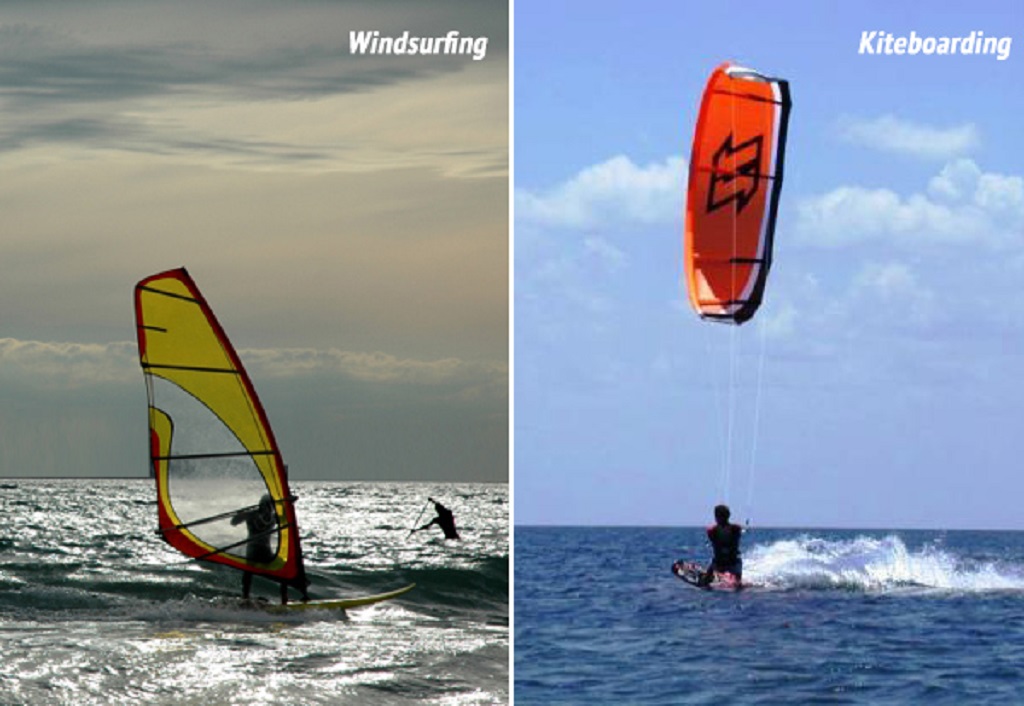
For new riders looking to get into kiting sports, how do you decide between kitesurfing and kiteboarding? Here are some tips:
Consider your background
If you have experience with wakeboarding or windsurfing, the concept and techniques of kitesurfing may click faster for you initially. If you have a surfing or skimming background, kiteboarding may initially feel more intuitive.
Try both board styles.
Most good kite schools will teach on both surf-style and wake-style boards. Spend time on each to see which board best suits your balance and athletic abilities.
Focus on twin-tip boards.
For versatility in freeriding, jumping, and tricks, a twin-tip board with foot straps is recommended for kitesurfing or kiteboarding. Directional surf-style boards limit you to riding waves only.
Don’t get hung up on labels.
Ultimately, you’ll likely swap between boards, kites, and disciplines. Don’t get too stuck on labeling yourself a kitesurfer or kiteboarder – the sports have mostly merged today.
Consider local conditions
You may want to start on a surf-style board if you live near waves. For flat water freestyle, a twin-tip board may be better. If both are available, spend time on each.
Talk to others
Chat with experienced kiters in your area to see if kitesurfing or kiteboarding is more popular. Learning is more accessible when you have a local community and conditions suited to your gear.
The most important thing is to get proper kite control skills before choosing a board style. An instructor can guide you on the best approach based on your ability, experience, and local conditions. With practice, you’ll likely develop skills for both kitesurfing and kiteboarding over time.
Kitesurfing vs Kiteboarding: Learning and Progression
The basics of learning to ride are very similar to kitesurfing and kiteboarding. Here’s an overview of the typical learning progression:
1. Kite Control Skills
- Flying and steering the kite
- Launching and landing
- Power management
- Relaunching safely
She usually learned on land using a trainer kite—an essential foundation before moving onto the board.
2. Body Dragging
- Controlling the kite while suspended in water
- Maintaining the correct edge and position
- Develops balance and board feel
Body dragging gets you used to using the kite for power on the water before attempting to ride.
3. Riding Upwind
- Generates board speed by edging appropriately
- First rides are directly upwind to maintain position
Learning to ride upwind is a pivotal skill before being able to swing freely.
4. Riding Downwind
- Easier than riding upwind
- Turning the board to remain positioned correctly
- Controlling speed by depowering kite
It allows you to get a broad feel and balance before riding freely.
5. Freeriding
- Once able to ride upwind, you can ride in any direction
- Carving turns and varying speed by powering kite
- Jumping and loading the board for pop
The ability to ride anywhere on the water opens up riding waves, learning tricks, and more.
The main differences in progression arise in the type of board used while learning.
For kitesurfing, riders generally learn on:
- Large training kite (4m to 7m) for kite skills
- Wakeboard with boots and straps for early riding
- Intermediate twin-tip board for freeriding
For kiteboarding, beginners usually ride:
- Large foil kite (5m to 9m) for kite handling
- Surfboard or foam board without foot straps at first
- Then, progress to a twin-tip board with straps
The principles are the same, only the equipment progresses differently. An experienced instructor can guide you on the ideal gear based on your ability.
Kitesurfing and Kiteboarding: Rules and Etiquette
As with any watersport, there are some rules of etiquette and right-of-way to follow when kitesurfing or kiteboarding to ensure safety and avoid conflicts on the water:
- Look before launching – don’t rig up or launch your kite if someone is riding towards you.
- Call your intentions loudly to other riders when launching, jumping, or landing.
- Avoid crossing lines of riders when sailing out or jumping.
- Give the right of way to riders ahead of you.
- Don’t jump near swimmers or non-powered watercraft.
- Be aware of weather/water conditions and ability level – don’t endanger others if conditions are beyond your limits.
- Body dragging has the right of way over riders. Don’t jump or force body draggers to move.
- Uphill riders have the right of way over downhill riders.
- Avoid riding too close to shorelines, docks, or congested areas.
- Be respectful when riding waves – take turns on sets and avoid snaking other surfers.
- Look before turning or switching directions – avoid collisions.
- Keep 100m distance from anchored vessels, ships, swimmers, etc.
- Respect beach access points – launch and land carefully without interfering with beachgoers.
- Secure and stow gear properly when not riding to avoid it blowing downwind.
- Pick up any trash on the beach. Leave the area cleaner than you found it.
The most important rule is to control your kite and board to avoid endangering or interfering with others. With consideration for fellow riders, following right-of-way protocol, and safe riding practices, we can all safely and responsibly enjoy the sports of kitesurfing and kiteboarding together.
Kitesurfing vs Kiteboarding: Risks and Dangers
While enjoyable activities, kitesurfing and kiteboarding have inherent risks that all riders must be aware of. Some of the main risks include:
Powerful Kite Forces
- Unexpected strong pulls or slack in lines could lead to loss of control of the kite and board. This can cause crashes, impact with gear, or forcefully drag through the water.
- Gusty, offshore, or stormy winds can lead to kite instability, making flying and power difficult to control.
- Knowing your limits in wind strength, you can safely handle it is critical. Overpowered kites can lift riders uncontrollably or drag them rapidly into danger.
Speed and Impact
- High speeds combined with crashes can lead to water impact injuries, concussions, broken bones, or back injuries.
- Riding at top speed near shore, docks, or other objects leaves little reaction time if control is lost.
- Jumping risks landing off-balance or impact with surface, equipment, or other riders.
Dehydration and Fatigue
- Physical exertion required to control the kite and board leads to dehydration, overheating, and muscle fatigue. This reduces reaction time, decision-making, and performance over extended sessions.
- Exhaustion increases the likelihood of losing kite control or board balance, leading to accidents and injury. Monitoring hydration and rest is essential.
Drowning
- Impact vest helps keep you buoyant to reduce the risk of drowning in deep water. But powerful kite forces could overpower a vest.
- While knocked unconscious, entanglement in lines could make it impossible to surface.
- Release systems ensure kite depowers if unconscious but may not prevent drowning. Having rescue craft nearby is ideal.
Weather and Water Conditions
- Offshore storm winds, gusty/shifty conditions, and choppy surf should be avoided as they make kite control extremely challenging.
- Downwinders in strong winds need proper navigation and timing to avoid being caught off-shore with winds too strong to return.
- Cold water temperatures increase the risk of hypothermia after falling, which saps energy and leads to loss of motor skills. Wearing wetsuits helps reduce this risk in colder conditions.
The best way to manage risks is proper training, wearing safety gear, checking conditions constantly, knowing your personal ability limits, and not riding alone. But the risks can never be eliminated. Using mature judgment to avoid potentially dangerous scenarios is critical to remaining safe while kitesurfing or kiteboarding.
Kitesurfing vs Kiteboarding: Costs and Gear Needed
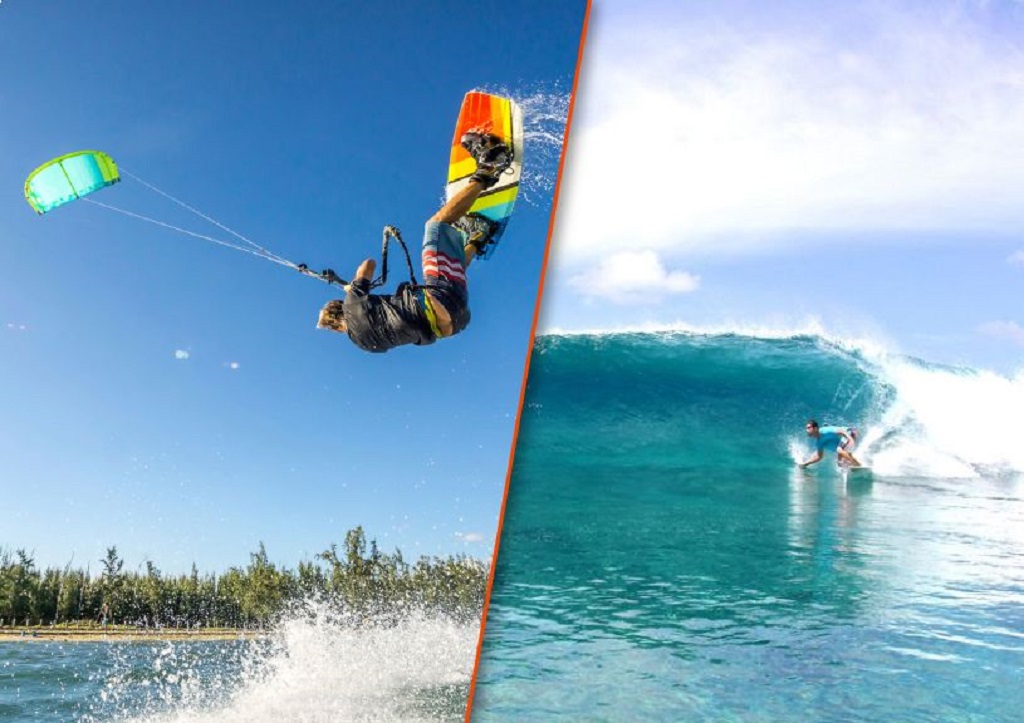
The costs to start in either sport are roughly comparable. You’ll need gear like:
- Kite: Main power source. Costs $1,200-$2,500+ depending on size and quality.
- Board: Twin-tip, surfboard, or raceboard. $500-$1,500 for a beginner board.
- Harness: Connects you to the kite lines and bar—$ 150-$300.
- Impact vest: Helps you float if knocked unconscious—$ 180-$300.
- Helmet: Protects your head—$ 60-$150.
- Wetsuit: Insulation in cool water. $200-$500+ depending on thickness.
- Gloves: Save your hands while handling lines—$ 30-$100.
Other accessories, like pumps, repair kits, bags, etc, will cost around $300-$500.
So total gear costs range from around $3,000 to $6,000+ for high-end kites, board, and wetsuits.
The main cost differences:
- Kitesurfing: Usually has dedicated wakeboots ($200). We may have a more expensive molded wake-style board ($800+).
- Kiteboarding: Typically uses neoprene booties ($60). The board is often surf-style, which is cheaper ($600).
- Hybrid Approach: Have one twin-tip board with straps. One surf-style directional board. It will allow you to kitesurf or kiteboard in waves.
I recommend buying used kite gear to save money when starting. Take lessons before purchasing anything, then look for lightly used 1-3-year-old gear sold by riders upgrading their quiver. This allows you to create at around half the price of all new gear.
Lessons will also add $200-$600+ to initial costs depending on several sessions needed to learn safely.
After the initial investment in gear and instruction, continuing costs are low, requiring only occasional kite/board repairs, replacement parts, and additional kites or boards you may want to add to your quiver. But compared to the hourly enjoyment and adrenaline kitesurfing and kiteboarding provide, the cost is well worth it for most riders.
Kitesurfing and Kiteboarding Locations
Prime locations for kitesurfing and kiteboarding share similar features:
- Consistent side or side-onshore winds between 10-25 knots
- Large open bodies of water with no obstructions
- Warm air and water temperatures, if possible
- Sandy or shallow bottoms for safe crashes/relaunches
Some of the most popular global destinations include:
Maui, Hawaii – Warm water and steady cross-onshore trade winds make Maui a legendary kitesurfing and kiteboarding destination. Wave riding at Hookipa and Honolua Bay, freestyle at Kanaha, and foiling at Kite Beach provide incredible diversity.
Cabarete, Dominican Republic – Boasting 300+ days a year of smooth side-onshore winds, Cabarete is one of the premier spots for freestyle jumping and wave riding in the Caribbean.
Tarifa, Spain – Located at the Strait of Gibraltar, where the Atlantic meets the Mediterranean, Tarifa is known as the kitesurfing capital of Europe, thanks to epic side winds funneled through the strait.
Columbia River Gorge, Oregon – Consistent thermal winds through the Gorge make this an epic kitesurfing and kiteboarding playground with flat water, waves, and speed riding.
Cape Town, South Africa – Surrounded by the Atlantic and Indian Ocean, Cape Town has phenomenal kite spots offering waves, flat water, and speed. Blouberg Beach is a popular kiteboarding hangout.
Mui Ne Bay, Vietnam – Miles of tropical beaches with side shore winds nearly every day from October to April make Mui Ne a top Asian destination for learning and freeriding.
Kitesurfing vs Kiteboarding: Competition and Events
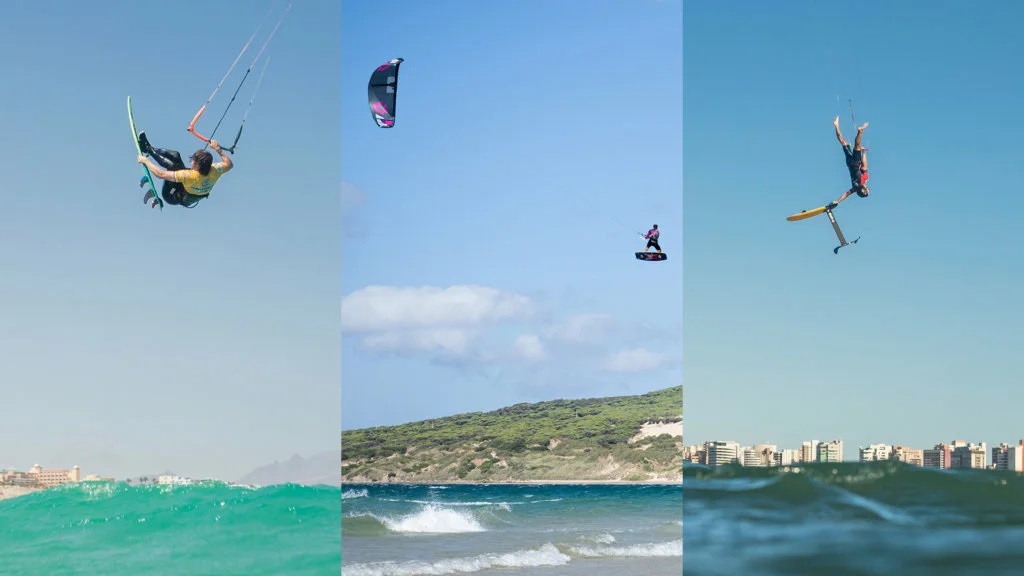
There are vibrant competition scenes for kitesurfing and kiteboarding showcasing top pros pushing the limits of what’s possible.
Kitesurfing Competitions
- PKRA World Tour – Freestyle kitesurfing tour with men’s, women’s, and junior divisions.
- GKA Kite-Surf World Cup – Global kite race series with foiling and surf disciplines.
- Red Bull King of the Air is a legendary big air event held in Cape Town since 2012, and it won by the most significant, most technical jump.
- Kite Park League – Freestyle events at cable and inland kite parks worldwide.
Kiteboarding Competitions
- GKA Kite-Surf World Tour – World championship tour focused on wave riding judged performance.
- Red Bull Megaloop Challenge – Specialty big air sailing event pushing the limit of high-scoring kite loops.
- KSP World Tour – Global kiteboarding tour with waves, freestyle, and foil events.
- PKRA Wave Tour – Professional kiteboarding competition circuit focused on surf wave riding.
As the sports continue to converge, athletes and events in kitesurfing and kiteboarding are helping drive evolution through friendly competition and progression at the top levels.
Kitesurfing and Kiteboarding: Communities and Culture
Kitesurfing and kiteboarding share a common community culture of adventure, freedom, respect for nature, and strive for being powered across the water by the wind.
Core values necessary in the global kiting community include:
- Living an adventurous lifestyle and seeking new challenges.
- Protecting the oceans, waves, and natural environments is critical for sports.
- Progressing skills through practice while avoiding recklessness.
- Supporting and encouraging new riders.
- Developing fitness, balance, and mental focus.
- Appreciating sustainability, allowing future generations to enjoy the sports.
- Building friendships with fellow kiting enthusiasts in your local area and worldwide.
Passion for harnessing the power of the wind and waves bonds the worldwide kitesurfing and kiteboarding tribes together. While the sports have different backgrounds, communities today share the common stroke and lifestyle attraction of riding the wind and water.
FAQs
Which is easier to learn – kitesurfing or kiteboarding?
For most people, kiteboarding is a bit easier to learn initially. The small twin-tip board and boot bindings allow you to focus on flying the kite and jumping immediately. Learning to balance and control a giant directional kitesurfing board takes more time.
What’s the difference between kiteboarding and kitesurfing?
There is very little difference between most kitesurfing and kiteboarding kites today. They are both inflatable leading-edge tube kites. Kiteboarding kites may be more optimized for light winds and drifting, while freestyle kitesurf kites focus more on boosting air. But most kites can be used for either sport now.
Can you use a twin-tip kiteboard in the waves?
While twin-tip kiteboards are best for flat water freestyle, advanced riders can take them in the surf by edging aggressively and using the kite for power to carve. But most riders will prefer steering a directional surfboard in waves.
Is kitesurfing or kiteboarding more dangerous?
With proper precautions, kitesurfing and kiteboarding are both safe beginner sports. Using certified kite control systems, helmets, and lessons from schools and choosing safe conditions makes them very manageable. Either sport can be dangerous if proper training and safety gear is ignored.
How high can you jump in kitesurfing vs. kiteboarding?
On flat water with giant kites, kiteboarders may get more air since the board fully releases, allowing the kite to pull you upwards. But in waves, kitesurfers can boost massive air using the wave ramp for launch power. Advanced riders in either sport can get over 10 meters of air under the right conditions.
In Summary
Kitesurfing and kiteboarding have far more similarities today than differences. While each sport originated differently from various watersport backgrounds, their evolution brought them together in one exciting arena.
Most riders now incorporate elements of both disciplines into their riding, using twin-tip boards with foot straps to enjoy freestyle tricks, big air, and surf wave riding, all with the same gear. The exact board style matters less than time on the water honing skills.
Embark on an exhilarating journey through nature’s breathtaking landscapes with The 10 Most Beautiful Treks in the World, and just as new riders explore surfboard and wakeboard styles to discover their intuitive preferences, adopt an open-minded approach on these trails to unveil the diverse abilities of each mesmerizing destination.
By respecting the power of the wind, riding within your limits, and being considerate of others, kitesurfing and kiteboarding provide unique experiences. Just get out on the water, choose your weapon, and embrace the freedom of harnessing the wind!