

You are staring at a mountain bike, and the first question that hits you isn’t about suspension or brakes—it is about the wheels. Should you go big, small, or somewhere in between? The truth is, picking the wrong size can make a capable bike feel like a burden on the trail. Whether you are a weekend warrior or a seasoned shredder, understanding the nuances of wheel diameter is the single most impactful decision you can make for your riding experience. This is not just about rolling faster; it is about matching your bike to your body, your terrain, and your ambition.
What is the difference between 26, 27.5, and 29 inch wheels?
The primary difference lies in the diameter of the wheel, which directly affects how the bike rolls over obstacles, accelerates, and handles corners. A 26-inch wheel is the smallest and most nimble, a 29-inch wheel is the largest and fastest over rough terrain, and the 27.5-inch (650b) sits in the middle as a compromise between agility and momentum.
Here is a breakdown of how each size performs:
- 26 Inches: These were the standard for decades. They are light, accelerate quickly, and are incredibly agile in tight, technical turns. However, they struggle to roll over large rocks and roots without getting hung up.
- 27.5 Inches (650b): This size offers a sweet spot. It rolls over obstacles better than a 26-inch wheel but remains more playful and easier to maneuver than a 29-inch wheel. It is currently the most popular size for all-mountain and enduro riding.
- 29 Inches: Often called “29ers,” these wheels have the best rollover capability. They maintain momentum efficiently and provide excellent traction on climbs. The trade-off is slower acceleration and a less nimble feel in tight switchbacks.
Why Does Wheel Size Matter for Trail Performance?
Wheel size matters because it dictates your bike’s “attack angle” on obstacles. A 29-inch wheel contacts a rock or root at a shallower angle than a 26-inch wheel, allowing it to roll over the top rather than smashing into it. This translates directly to speed and stability at the cost of maneuverability.
Consider the physics of a 4-inch rock on the trail. A 26-inch wheel hits that rock almost head-on, jarring the rider and slowing momentum. A 29-inch wheel glides over it with minimal effort. For technical climbing, this is a lifesaver. For downhill stability, the larger wheel provides a longer “contact patch” of rubber on the ground, giving you more confidence at speed. However, if your local trails are tight, rooty, and require constant direction changes, the smaller wheel will feel like a scalpel compared to the 29er’s sledgehammer.
How Do You Match Wheel Size to Your Height?
Your height is the most critical factor in wheel size selection. As a general rule, riders under 5’4″ should stick with 26-inch or 27.5-inch wheels, while riders over 5’10” will benefit most from 29-inch wheels. Riders in between can choose based on riding style.
Here is a simple guide:
| Rider Height | Recommended Wheel Size | Reason |
|---|---|---|
| Under 5’0″ | 26 inch | Small wheels fit the frame geometry better and allow for proper standover height. |
| 5’0″ – 5’4″ | 26 inch or 27.5 inch | 27.5 offers better rollover, but 26 inch is easier to handle on steep descents. |
| 5’5″ – 5’10” | 27.5 inch or 29 inch | Personal preference. 27.5 for agility, 29 for speed and stability. |
| Over 5’10” | 29 inch | Larger riders leverage the wheel’s momentum best; fits frame geometry ideally. |
Riding a 29er when you are too short can lead to toe overlap with the front wheel and a cramped cockpit. Conversely, a tall rider on a 26-inch bike will look and feel like a circus clown, with the suspension working harder to compensate for the smaller wheel diameter.
Which Wheel Size is Best for Beginners?
For beginners, the 27.5-inch wheel is the safest and most forgiving choice. It provides enough stability to inspire confidence on descents while remaining agile enough to correct mistakes in corners. It is the “do-it-all” size that will not punish you for bad line choices.
Many new riders are tempted by the speed of a 29er, but this can be a trap. A 29er requires more body English to throw around, and a beginner often lacks the core strength to handle it in tight spots. The smaller 26-inch wheel is fun and flickable, but it will require more pedaling effort to maintain speed on flat sections. The 27.5-inch wheel offers a forgiving ride that lets you focus on learning proper technique rather than wrestling with the bike.
Can You Upgrade Wheel Sizes on an Existing Mountain Bike?
Yes, you can often upgrade, but it is rarely a simple swap. You must consider frame clearance, fork rake, and bottom bracket height. Going from 26 inch to 27.5 inch is the most common upgrade, known as “26+ conversion,” but it requires careful measurement.
If you upgrade to a larger wheel, you generally need:
- Frame Clearance: The new wheel must fit between the chainstays and seatstays without rubbing the frame.
- Brake Reach: Most disc brakes can accommodate the change, but rim brakes will almost always fail to reach the new radius.
- Bottom Bracket Height: Larger wheels raise the bike, which can make the geometry feel unstable for climbing.
For a safe and predictable upgrade, consult your bike manufacturer or a trusted mechanic. A haphazard swap can ruin the handling of your bike. If you are looking for a reliable bike that comes ready to ride with a standard size, a 26 inch mountain bike can help you understand what fits your specific budget and riding needs without the headache of a conversion.
Is a 29-Inch Wheel Slower to Accelerate?
Yes, a 29-inch wheel is objectively slower to accelerate than a 26-inch wheel due to its greater rotational mass. However, it holds speed much better once you get moving. The “slow to turn, hard to stop” nature of the 29er makes it ideal for cross-country racing and long, flowy descents.
Think of it like a light sports car versus a heavy truck. The 26-inch bike is the sports car—snappy and responsive off the line. The 29er is the truck—once it gets going, it takes a lot to slow it down. For short, punchy climbs where you are constantly accelerating out of corners, the smaller wheel wins. For long, sustained climbs or high-speed open terrain, the 29er dominates.
When Should You Choose a 26-Inch Mountain Bike in 2025?
You should choose a 26-inch mountain bike if you prioritize playful riding, dirt jumps, pump tracks, or if you are a shorter rider looking for the best fit. The 26-inch wheel is not dead; it has simply found its niche in the modern world.
Specific scenarios where 26-inch wheels excel include:
- Dirt Jumping: The smaller wheel spins up faster for tricks and is easier to rotate in the air.
- Slopestyle: Maximum maneuverability for technical courses.
- Kids and Youth: Proper geometry scaling for smaller bodies.
- Budget Bikes: 26-inch bikes are often the most affordable option on the market, making them a great entry point.
While the 26-inch wheel has been largely replaced for general trail riding, its specific advantages in the park and pump track remain unmatched.
How Does Wheel Size Affect Tire Width?
Larger wheels generally allow for wider tires without adding excessive rotational weight. A 29-inch wheel often accommodates tires up to 2.5 or 2.6 inches wide, giving you massive traction. Smaller 26-inch wheels typically top out around 2.3 or 2.4 inches for clearance.
The relationship is important for traction. A wide tire on a 29er floats over loose soil and sand. On a 26-inch wheel, a wide tire can feel sluggish because the smaller diameter makes the sidewall taller and more prone to squirm. When choosing tires, match the width to the wheel size for the best balance of grip and rolling resistance. A 2.2-inch tire on a 29er will feel fast, while a 2.4-inch tire on a 26er will feel aggressive and heavy.
Choosing between a nimble 27.5-inch wheel and a fast-rolling 29er drastically changes how your bike handles rough terrain. However, larger wheels and rugged trails put extra stress on your drivetrain. If you are tackling dry, dusty destinations, ensuring your gear is prepped is just as critical as your wheel choice—make sure to use the Best Mountain Bike Chain Lube for Long Rides in Utah to keep your components spinning smoothly through the grit.
What is the “Mullet” Setup and Should You Try It?
A “mullet” setup combines a 29-inch wheel in the front with a 27.5-inch wheel in the back. This gives you the rollover advantage of a big wheel up front for steering and the snappy acceleration of a smaller wheel in the rear for climbing and cornering.
This setup has gained massive popularity in enduro racing. The front wheel rolls over rocks while the rear wheel allows you to snap the bike around tight corners. However, it changes the geometry significantly—it slackens the head angle and steepens the seat angle. It is a specialized setup best suited for aggressive riders who are willing to trade some stability for maneuverability. Beginners should stick with matching wheel sizes until they understand how the bike handles standard geometry.
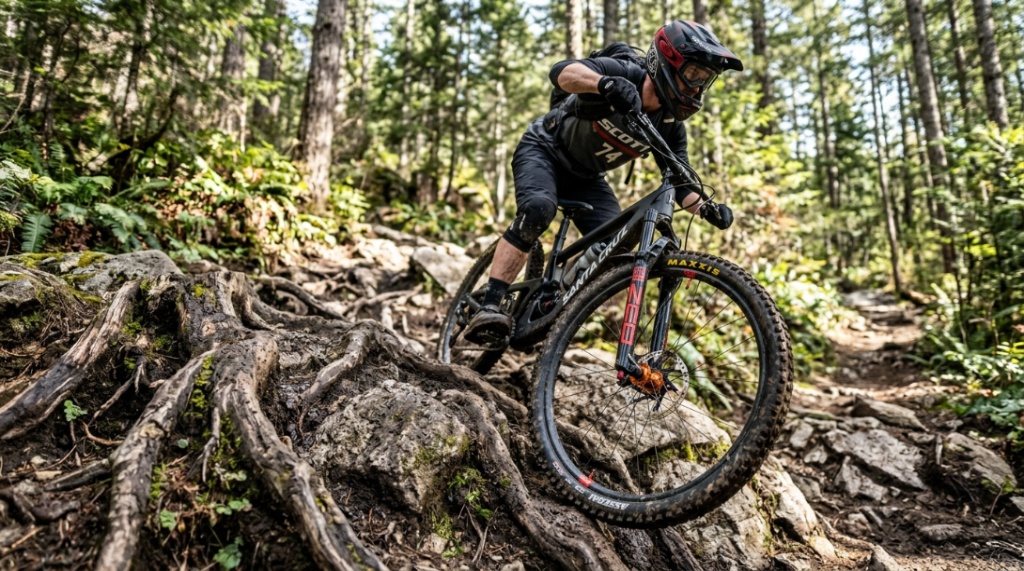
How Do You Choose Between Speed and Agility?
You choose by honestly assessing your local trails and your riding style. If your trails are full of tight, switchback climbs and technical rock gardens, prioritize agility with a 27.5-inch wheel. If you ride long, open fire roads and flow trails, prioritize speed with a 29-inch wheel.
A simple checklist to determine your priority:
- Terrain: Tight and twisty? Go smaller. Open and fast? Go larger.
- Climbing: Technical climbing benefits from 29-inch rollover. Steep, punchy climbs benefit from 26-inch acceleration.
- Fit: Do you feel cramped on the bike? Larger wheels require larger frames.
- Aggression: Aggressive riders often prefer the stability of 29ers. Playful riders prefer 27.5 or 26.
Is There a “Best” Wheel Size for Mountain Biking?
No, there is no single “best” wheel size for everyone. The best wheel size is the one that matches your height, terrain, and riding goals. The industry has settled on 27.5 and 29 inches as the dominant sizes, but 26 inches remains relevant for specific applications.
The modern consensus is that 29-inch wheels are superior for cross-country and high-speed racing, while 27.5-inch wheels are superior for all-mountain, trail, and enduro riding. The “best” size is the one you do not have to fight against. A bike that fits you perfectly with the right wheel size will feel like an extension of your body, allowing you to ride faster and longer with less fatigue.
Frequently Asked Questions
Can I put 27.5 wheels on a 26-inch mountain bike?
It is possible but requires checking for frame clearance and going with a smaller tire volume. You may also need to adjust the brakes. It is not a plug-and-play upgrade and can alter the bike’s geometry significantly.
Are 29-inch wheels harder to jump?
Yes, generally. The larger diameter and heavier weight make it harder to manual and boost off jumps. However, once you adjust your technique, many riders find the stability of a 29er makes landing more predictable.
What size wheels do professional mountain bikers use?
Most professional cross-country racers use 29-inch wheels. Enduro and downhill racers are split, but many use 29-inch wheels or mullet setups. Very few pros use 26-inch wheels outside of dirt jumping.
Do fat tires count as a wheel size?
No, fat tires refer to tire width (usually 3.8 inches or wider), not wheel diameter. You can have fat tires on 26, 27.5, or 29-inch rims. The wheel diameter still affects handling regardless of tire width.
Is it easier to crash on a 29er?
Not necessarily. The 29er is more stable at speed, which reduces the chance of a high-speed crash. However, it is harder to correct a mistake at low speeds, so beginners may feel more prone to tip-overs in technical terrain.
What is the best wheel size for a woman rider?
Wheel size is based on height, not gender. Women with an average height of 5’4″ often find 27.5-inch wheels to be the best fit, while taller women will benefit from 29-inch wheels. Always prioritize standover height and reach.
Conclusion
Choosing the right wheel size for your mountain bike is not about following trends—it is about understanding how you ride. The 26-inch wheel offers unmatched playfulness for jumping and tight trails, the 27.5-inch wheel provides a balanced platform for all-around riding, and the 29-inch wheel delivers relentless speed and stability for covering ground. Measure your height, assess your local terrain, and be honest about your skill level. The perfect wheel size is waiting for you. Start your search by exploring a reliable 26 inch mountain bike + mountain bike wheel size guide to see what fits your budget and trail ambitions today. Do not just buy a bike—buy the bike that turns your rides into adventures.