Halfway through a 40-mile ride on the Whole Enchilada trail in Moab, my chain started screaming that dry metal-on-metal grinding that tells you the lube burned off twenty minutes ago and every pedal stroke is now eating your drivetrain alive. By the time I reached the truck, my chain had stretched measurably and my cassette teeth looked visibly worn. One ride. One bad lube choice. $180 in premature drivetrain replacement. The right mountain bike chain lube for Utah’s conditions is not just about smooth shifting — it is about protecting hundreds of dollars in drivetrain components from the fine red dust, extreme temperature swings, and bone-dry air that destroy inadequate lubricants within hours of application. Proper mountain bike maintenance in desert and mountain environments demands lubricants specifically engineered for these conditions, not generic all-purpose products that fail when conditions get extreme. This guide identifies exactly what works in Utah’s unique riding environment and why most popular chain lubes fall short here.
Why Does Utah’s Climate Demand Special Chain Lube?
Utah’s combination of fine silica-based dust, extreme aridity (10–20% humidity), wide temperature swings (40°F mornings to 100°F afternoons), and abrasive trail surfaces creates conditions that break down standard chain lubricants 3–5 times faster than moderate climates.
The specific challenges:
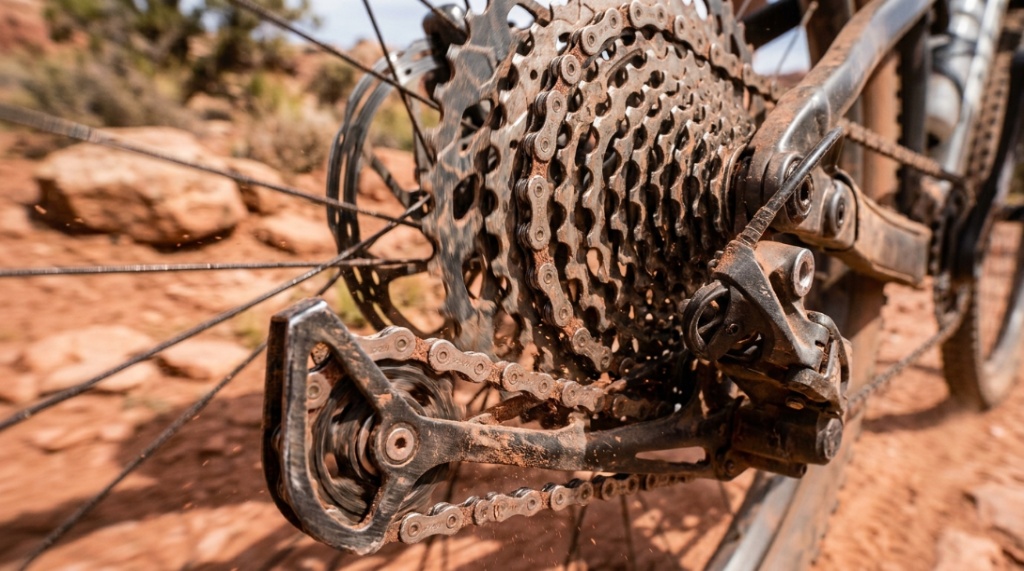
- Fine red dust (silica particles): Utah’s iconic red dirt is essentially fine sandpaper. It penetrates chain roller gaps and acts as an abrasive compound that grinds metal. Wet lubes attract and hold this dust, accelerating wear rather than preventing it.
- Extreme dryness: Humidity below 20% causes liquid-based lubricants to evaporate rapidly. What should last 50+ miles in moderate climates lasts 15–25 miles in Utah’s dry air.
- Temperature extremes: Morning rides start cold (40–50°F) where thick lubes perform poorly, then heat to 90–100°F where thin lubes evaporate. The lube must perform across a 50°F+ temperature range within a single ride.
- UV exposure: High altitude and clear skies mean intense UV radiation that degrades petroleum-based lubricants faster than at sea level.
- Abrasive trail surfaces: Slickrock, sandstone decomposition, and desert hardpack kick up fine particles that conventional chain guards and seals cannot exclude.
Standard all-purpose lubes fail in Utah because they are designed for moderate conditions — occasional rain, moderate dust, and temperature ranges of 20–30°F variation. Utah breaks all those assumptions simultaneously.
What Types of Chain Lube Work Best in Desert Mountain Biking?
Dry wax-based lubricants and advanced ceramic dry lubes perform best in Utah’s desert conditions because they create a solid or semi-solid protective film that does not attract dust particles — unlike wet lubes that create a sticky surface that bonds with silica dust to form an abrasive grinding paste.
Lube type comparison for Utah conditions:
| Lube Type | Utah Performance | Dust Attraction | Longevity in Dry Heat | Best For |
|---|---|---|---|---|
| Dry wax-based | Excellent | Very low | 25–40 miles | Desert trails, dusty conditions |
| Ceramic dry | Excellent | Low | 30–50 miles | Long rides, extreme heat |
| Dry PTFE (Teflon) | Good | Low-moderate | 20–35 miles | Moderate dust, shorter rides |
| Wet lube | Poor | Very high | 50+ miles (but attracts all dust) | NOT recommended for Utah |
| Wax immersion (hot melt) | Outstanding | Extremely low | 100–200 miles | Serious riders willing to invest prep time |
The clear winner for Utah: dry wax-based or ceramic dry lubricants for drip application, or hot-melt wax immersion for maximum performance and longevity. Wet lubes should be avoided entirely in Utah’s dusty conditions — they create the exact problem you are trying to prevent.
How Does Dry Lube Differ From Wet Lube for Mountain Biking?
Dry lube uses a wax or PTFE carrier that evaporates after application, leaving a thin solid film on the chain — while wet lube remains liquid on the chain surface, providing continuous lubrication but attracting and holding every dust particle it contacts.
Mechanical differences:
- Dry lube mechanism: Liquid carrier (usually alcohol or light solvent) delivers wax/PTFE particles into chain rollers. Carrier evaporates in 5–15 minutes. Remaining solid particles coat metal surfaces with a dry, slippery film. Dust cannot bond to this dry surface — it simply falls off during movement.
- Wet lube mechanism: Oil-based liquid stays on the chain surface permanently. Provides constant lubrication through fluid film between metal surfaces. However, the sticky oil surface acts like flypaper for dust, creating an abrasive paste of oil + silica that accelerates wear rather than preventing it.
In Utah specifically:
- Dry lube + Utah dust = clean chain that sheds particles
- Wet lube + Utah dust = grinding paste that destroys drivetrain
The trade-off: dry lube requires more frequent application (every 25–40 miles in Utah) because the solid film wears away. Wet lube lasts longer between applications but causes accelerated component wear in dusty conditions. For Utah riding, the reapplication effort of dry lube saves hundreds in premature drivetrain replacement.
Which Specific Chain Lubes Perform Best in Utah Conditions?
Squirt Long Lasting Dry Lube, Smoove Universal Chain Lube, Rock N Roll Gold, Finish Line Dry, and Silca Super Secret Chain Lube consistently rank as the top performers for Utah’s dry, dusty mountain biking conditions based on real-world testing and rider feedback from local communities.
Top performers ranked:
- Squirt Long Lasting Dry Lube: Biodegradable wax emulsion. Dries to a clean waxy film. Sheds dust exceptionally well. Lasts 30–40 miles in Utah dust. The go-to choice for Moab and St. George riders.
- Silca Super Secret Chain Lube (drip): Advanced wax formula with tungsten disulfide. Near wax-immersion performance in drip format. Lasts 40–60 miles. Premium pricing ($25+/bottle) but exceptional longevity.
- Smoove Universal Chain Lube: Wax-based with additives for extreme conditions. Excellent dust resistance. Slightly slower to dry but forms a very durable film. 35–50 miles per application in dry conditions.
- Rock N Roll Gold: Self-cleaning formula that lifts dirt from the chain during riding. Not purely dry but minimal dust attraction. Good for riders who cannot commit to full dry-lube discipline. 25–35 miles.
- Finish Line Dry PTFE: Budget-friendly dry lube with Teflon. Adequate dust resistance at half the price of premium options. Shorter longevity (20–30 miles) but solid performance-per-dollar.
For detailed testing results of these and other chain lubes in Utah’s specific conditions, mountain bike chain lube tested on Utah trails provides real-world performance data from extended use in Moab, Park City, and St. George riding environments — the exact conditions your lube needs to handle.
How Do You Apply Chain Lube Correctly for Maximum Performance?
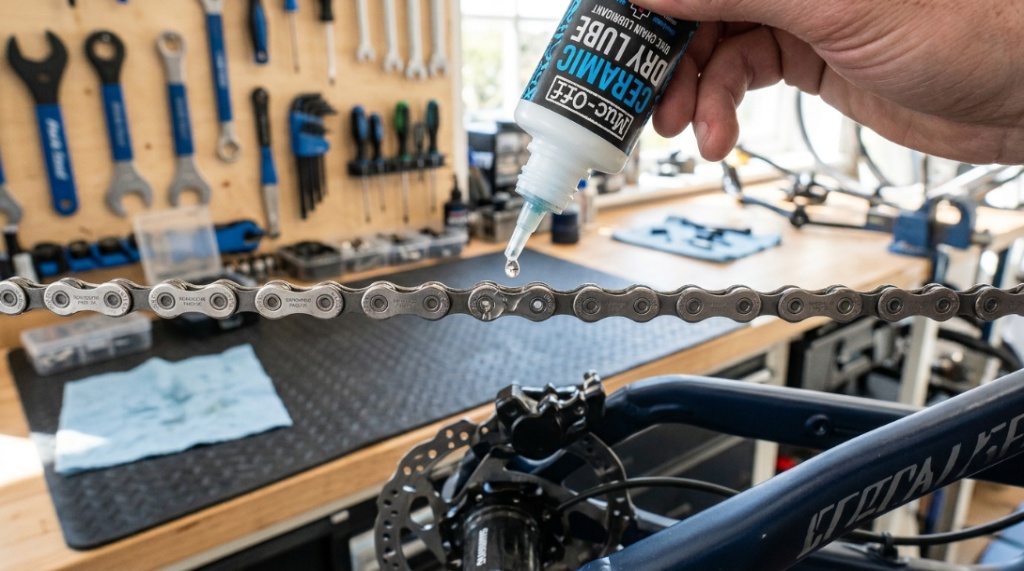
Apply chain lube to a clean, dry chain by dripping one drop per roller while slowly backpedaling, then allow full drying time (15–60 minutes depending on product) before riding — and always wipe excess from the chain exterior where it only attracts dust.
Step-by-step application for Utah conditions:
- Step 1: Clean the chain first. Apply lube to a dirty chain and you seal contaminants inside the rollers. Use a chain cleaner tool or degreaser rag to remove old lube and grit. The chain should feel dry and grit-free before new lube goes on.
- Step 2: Apply one drop per link. Position the lube bottle at the top of the lower chain run. Backpedal slowly, applying one drop per roller (not per link plate). One full revolution of the chain is sufficient.
- Step 3: Backpedal 20–30 revolutions. This works the lube into the roller bushings where it actually matters. The internal surfaces need lubrication — the exterior does not.
- Step 4: Wait for drying. Dry lubes need 15–60 minutes for the carrier to evaporate. Wax lubes need 2–4 hours for optimal film formation. Apply the night before your ride when possible.
- Step 5: Wipe the exterior. After drying, run a clean rag along the chain exterior to remove any excess. External lube serves zero purpose — it only attracts dust. A properly lubed chain should feel dry to the touch on the outside.
Critical Utah-specific tip: apply lube indoors or in shade. Utah’s heat and low humidity cause the carrier solvent to evaporate before it penetrates the rollers if applied in direct sunlight on a hot day. The lube dries on the surface without reaching the internal contact points.
How Often Should You Reapply Chain Lube in Utah?
In Utah’s dry, dusty conditions, reapply dry chain lube every 25–50 miles depending on trail dust levels, temperature, and the specific product used — significantly more often than the 100+ mile intervals suitable for moderate climates.
Reapplication frequency guide:
- Heavy dust (Moab slickrock, red dirt trails): Every 20–30 miles. Fine silica penetrates faster than coarse dirt.
- Moderate dust (Park City singletrack, mountain trails): Every 30–45 miles. Less fine dust but still drier than average conditions.
- Low dust (alpine trails, early morning damp): Every 40–60 miles. Best-case Utah scenario.
- Extreme heat (100°F+ summer rides): Reduce all intervals by 30%. Heat accelerates lube breakdown.
How to tell when reapplication is needed (without counting miles):
- Sound: Chain becomes audibly louder — any grinding, squeaking, or increased noise indicates lube depletion
- Feel: Shifting becomes less crisp, pedaling feels rougher or has increased resistance
- Visual: Chain appears dry and matte rather than having a slight sheen. Visible dust accumulation between rollers.
Carry a small lube bottle on any ride over 25 miles in Utah. Mid-ride application (even without cleaning) is better than riding on a dry chain. Apply, backpedal, wipe excess, and continue.
What Chain Maintenance Extends Drivetrain Life in Desert Conditions?
Beyond lubrication, desert drivetrain longevity requires regular chain cleaning (every 2–3 rides), chain wear measurement (monthly), proper chain tension, and timely replacement before a worn chain damages expensive cassettes and chainrings.
Complete desert maintenance protocol:
- Post-ride cleaning (every ride): Wipe chain with a dry rag immediately after riding. Remove surface dust before it works into rollers during storage.
- Deep cleaning (every 2–3 rides): Use a chain cleaning tool with degreaser to remove internal grit. Rinse, dry completely, then reapply lube. In Utah’s dust, internal contamination builds faster than in other environments.
- Chain wear measurement (monthly): Use a chain checker tool. Replace at 0.5% elongation for 11/12-speed drivetrains. A $7 chain at 0.75% elongation will destroy a $80+ cassette within rides.
- Cassette and chainring inspection (every chain replacement): Check for shark-finned teeth (worn to a point on one side). Replace if visible wear is present — a new chain on worn cogs accelerates chain wear dramatically.
- Derailleur pulley maintenance (every 500 miles): Clean and lube jockey wheels. Desert dust accumulates in pulley bearings, creating resistance and premature bearing failure.
The economics: a chain costs $25–$50. A cassette costs $50–$150. A chainring costs $40–$100. Replacing chains at 0.5% wear (every 1,500–2,500 miles in Utah) prevents the cascading failure that destroys the entire drivetrain simultaneously.
Choosing the correct formula prevents grit buildup from destroying your drivetrain mid-ride, but proper lubrication is only one part of the equation. If your drivetrain is properly coated and you still hear irritating noises under load, you might be dealing with alignment or wear issues. Check out our troubleshooting guide on Why Does My Bike Chain Keep Clicking to diagnose indexing misfires or stretched links before heading out onto the trails.
Conclusion
Choosing the best mountain bike chain lube for Utah requires understanding that standard products fail in these extreme conditions. Dry wax-based or ceramic lubricants outperform wet lubes dramatically by shedding the fine silica dust that destroys drivetrains. Apply to clean chains, allow full drying time, wipe exteriors clean, and reapply every 25–50 miles based on dust exposure. Combine proper lubrication with regular cleaning and timely chain replacement to maximize the lifespan of your entire drivetrain.
Utah’s trails are world-class — your maintenance should match. The riders who get 3,000+ miles from a drivetrain in Moab’s dust are not lucky; they simply use the right lube, apply it correctly, and maintain a cleaning schedule that prevents abrasive buildup. Invest 10 minutes per ride in proper chain care and save hundreds in premature component replacement over every season.
What chain lube survives your toughest Utah rides? Share your go-to product and any application tips that extend its performance in desert dust.
Frequently Asked Questions
Can I use WD-40 as chain lube for mountain biking?
No. WD-40 is a solvent/degreaser, not a lubricant. It strips existing lubrication from chain rollers, leaving metal-on-metal contact. While WD-40 makes a chain feel smooth temporarily (by cleaning grit), it evaporates within minutes and leaves the chain unprotected. Use WD-40 only as a cleaning agent before applying proper chain lube.
How do I know if I am using too much chain lube?
If your chain appears wet, shiny, or sticky on the exterior after drying time — you applied too much. Excess external lube attracts dust without providing any additional internal lubrication. After application and drying, your chain should feel nearly dry to the touch. If your finger picks up visible lube when touching the chain, wipe more off.
Is wax immersion better than drip lube for Utah?
Hot-melt wax immersion provides the best possible performance in dusty conditions — lasting 100–200 miles with virtually zero dust attraction. However, it requires removing the chain, melting wax in a slow cooker, and re-installing — a 30-minute process versus 3 minutes for drip lube. For serious riders covering high mileage in Utah, the performance justifies the effort. For casual riders, quality drip wax lube provides 80% of the benefit at 10% of the effort.
Should I lube my chain the night before or morning of a ride?
Night before is ideal. Dry lubes need 15–60 minutes for carrier evaporation; wax lubes need 2–4 hours for optimal film formation. Applying the night before ensures complete drying and maximum performance from the first pedal stroke. Morning application works but may not achieve full film formation before you hit the trail.
Does altitude affect chain lube performance in Utah?
Indirectly — higher altitude means lower humidity, more UV exposure, and often greater temperature extremes, all of which accelerate lube breakdown. Rides above 8,000 feet in Utah experience conditions that deplete lube approximately 20% faster than valley-floor rides. Apply slightly more frequently on high-altitude trails.
Can I mix different chain lubes?
Avoid mixing lube types (wet + dry, or different brands of wax). Incompatible formulations can create gummy residues that attract more dust than either product alone. If switching lube brands or types, fully degrease the chain first to remove all previous product before applying the new lube. Clean slate = best performance from any product.
What is the cheapest effective chain lube for Utah conditions?
Finish Line Dry PTFE ($7–$10 per bottle) provides adequate dry-condition performance at the lowest price point. It attracts less dust than wet lubes and lasts 20–30 miles per application. Not as durable or clean-running as premium wax options ($15–$25), but delivers genuine protection at a budget price. For riders covering fewer than 50 miles per week, it provides acceptable value.