

You have finally decided to buy a mountain bike online. The excitement is real. You picture yourself flying down singletrack trails, wind in your face, leaving the pavement behind. But then the doubt creeps in. What if the frame is the wrong size? What if the components are cheap? What if the bike shows up looking nothing like the photos? This is the core problem every online shopper faces: fear of the unknown. Without a proper mountain bike buying guide + mountain bike review strategy, you are essentially gambling your money. Buying a bike sight unseen does not have to be a nightmare. With the right research approach, you can confidently click “buy” and receive a bike that fits your body, your budget, and your riding style. This guide will walk you through every step to eliminate regret and ensure your new bike exceeds expectations.
Why Is Buying a Mountain Bike Online So Risky?
Buying a mountain bike online carries inherent risks that do not exist when you visit a local shop. The biggest issue is the inability to sit on the bike, test the geometry, or feel the suspension before you pay. You are trusting pixelated images and spec sheets. Additionally, assembly quality is often poor, and warranty support can be complicated when dealing with a direct-to-consumer brand. However, the reward is significant savings and access to a wider selection. The key to mitigating risk is preparation. You must know your exact measurements, understand component hierarchies, and verify the return policy before you ever add an item to your cart.
Understanding the Direct-to-Consumer Model
Many online mountain bike brands skip the middleman. This lowers the price but shifts the responsibility of final assembly to you. If you are not mechanically inclined, factor in the cost of having a local shop build your bike. This typically runs between $100 and $200.
What Is the Most Important Factor When Buying a Mountain Bike Online?
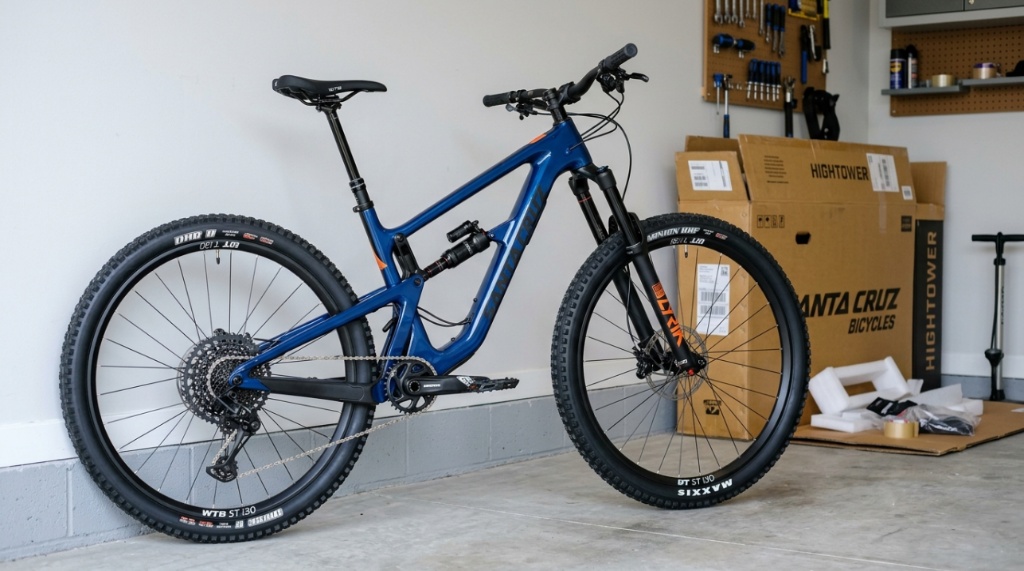
The most important factor is frame size, followed closely by intended use. You cannot adjust a frame that is too large or too small. A mismatched frame will ruin your riding experience, cause back pain, and reduce control on technical terrain. Before you look at suspension travel or wheel size, determine your correct frame size using the manufacturer’s geometry chart. Measure your inseam and reach against the bike’s standover height and effective top tube length. If the chart places you between sizes, size down for agility or size up for stability, depending on your riding preference.
The 90-Degree Rule for Sizing
A simple at-home test involves placing your heel on the pedal at the bottom of its stroke. If your leg is fully straight, the saddle is too high. When the ball of your foot is on the pedal, your knee should have a slight bend of about 25 to 30 degrees. This rule applies regardless of the bike you are looking at online.
Which Type of Mountain Bike Should a Beginner Buy Online?
A beginner should buy a hardtail mountain bike. Hardtails have suspension only in the front fork, making them simpler to maintain, lighter, and significantly cheaper than full-suspension bikes. They are excellent for cross-country trails, gravel paths, and light singletrack. A beginner does not need a complex rear shock that requires tuning. Focus on a bike with a solid frame, a reliable drivetrain like Shimano Deore or SRAM SX Eagle, and an air fork instead of a heavy coil spring fork. This combination offers the best value and easiest learning curve for a new rider.
How Do You Read a Mountain Bike Geometry Chart Online?
Reading a geometry chart is arguably more important than looking at the color of the bike. You must understand three key numbers: reach, stack, and head tube angle. Reach is the horizontal distance from the bottom bracket to the top of the head tube. A longer reach puts you in a more stable, aggressive position. Stack is the vertical height from the bottom bracket to the head tube. A higher stack is more comfortable for climbing. Head tube angle determines steering responsiveness. A slacker angle (65-67 degrees) is better for descending, while a steeper angle (68-70 degrees) is better for climbing. Compare these numbers to a bike you have ridden before or use an online bike fit calculator.
Standover Height Is Non-Negotiable
Standover height is the clearance between the top tube and your crotch when standing flat-footed. You need at least 2 to 4 inches of clearance for safety. If you have to tiptoe or touch the top tube when standing, the bike is too large.
Can You Trust Component Specs When Shopping Online?
Yes, but you must learn to decode marketing jargon. A “Shimano Deore” groupset is a solid mid-range option, while “Shimano Tourney” is entry-level and not intended for serious trail riding. Pay attention to the fork brand. Look for SR Suntour, RockShox, or Fox. Avoid generic “suspension forks” that have no branding. Check the brakes. Hydraulic disc brakes from Shimano or Tektro are ideal. Mechanical disc brakes are cheaper but require more hand strength to operate. Do not be fooled by “29-inch wheels” if the frame geometry is outdated. Wheel size matters less than the quality of the frame and suspension.
| Component | Good Spec (Look For This) | Bad Spec (Avoid This) |
|---|---|---|
| Fork | RockShox Recon, Fox 34 | Unbranded “Suspension Fork” |
| Drivetrain | Shimano Deore or higher | Shimano Tourney or Altus |
| Brakes | Shimano MT200, Tektro M275 | Linear Pull (V-brakes) |
| Wheels | Double-wall rims, sealed hubs | Single-wall rims, loose ball bearings |
What Should You Look for in an Online Bike Return Policy?
You must look for a no-questions-asked return window of at least 30 days. Some brands charge a restocking fee of 10 to 20 percent. Others cover return shipping, but many do not. Read the fine print regarding “test rides.” If you install the pedals and ride the bike outside, the bike is usually considered used and cannot be returned. To avoid regret, do your assembly inside on carpet. Sit on the saddle, spin the cranks, and bounce the suspension. If anything feels wrong, box it back up immediately. Never cut the zip ties on the fork or remove plastic protectors until you are certain the bike fits.
How Much Should You Spend on Your First Online Mountain Bike?
You should expect to spend between $800 and $1,500 for a quality entry-level hardtail that will not break or leave you stranded on the trail. Spending less than $500 often results in a bike with heavy components, poor brakes, and a fork that feels like a pogo stick. If you are a more experienced rider looking for a full-suspension trail bike, the entry point for durability is around $2,500. Cheap full-suspension bikes under $2,000 often use poor bushings that flex and fail quickly. Invest your money in the frame and fork. Those are the components that define the ride.
Which Online Retailers Are Most Reliable for Mountain Bikes?
Reliable online retailers include direct-to-consumer brands like Canyon and YT Industries, which have strong reputations, dedicated support teams, and established warranty processes. Large general retailers like Jenson USA and Competitive Cyclist offer excellent customer service and detailed product descriptions. Be very cautious when buying from third-party sellers on Amazon or Walmart Marketplace. These sellers often have no bike expertise, poor return policies, and may sell counterfeit or damaged goods. Always verify that the retailer is an authorized dealer for the brand you are buying. If you need a detailed breakdown of specific models, consult a reliable mountain bike buying guide + mountain bike review that examines real-world performance and component quality.
How Do You Assemble a Mountain Bike Bought Online?
Assembling a bike from a box is easier than most people think if you follow the correct sequence. First, remove all packaging carefully to avoid scratching the frame. Install the front wheel by inserting the axle and tightening the quick release or thru-axle. Install the handlebars and tighten the stem bolts to the torque spec listed on the stem. Install the seatpost and saddle. Finally, install the pedals (they are marked left and right). Pump the tires to the recommended PSI printed on the sidewall. Before your first ride, check that the brakes work, the gears shift smoothly, and all bolts are tight. If you feel uncertain, pay a shop to do a safety check.
Essential Tools for Assembly
- Torque wrench (critical for carbon components)
- Allen key set (metric, sizes 4mm to 8mm)
- Tire pump with pressure gauge
- Pedal wrench or hex key for pedals
- Grease for seatpost and pedal threads
Is It Better to Buy a Used Mountain Bike Online or New?
It is better to buy new for a beginner and used for an experienced mechanic. Buying new online gives you a warranty and a fresh drivetrain that will last for years without issues. Buying used saves significant money, but you must be able to inspect the frame for cracks, check for worn chainrings, and assess suspension wear from photos. On platforms like Pinkbike or Facebook Marketplace, scams are common. Demand a video of the bike being ridden. If the seller refuses, walk away. For your first bike, the peace of mind of a new bike with a warranty far outweighs the savings of a used bike.
Frequently Asked Questions
What size mountain bike should I buy if I am between sizes?
If you are between sizes, choose the smaller frame for a more playful and agile feel on tight trails. Choose the larger frame for more stability at high speeds and better climbing position on fire roads.
Can I return a mountain bike after riding it once?
Most direct-to-consumer brands allow a “test ride” in a parking lot or indoor space. However, if you ride on dirt or install pedals, the bike is generally non-returnable. Always check the return policy before riding.
Are 27.5-inch wheels better than 29-inch wheels for beginners?
Yes, 27.5-inch wheels are more maneuverable and easier to accelerate for shorter riders or beginners. 29-inch wheels roll over obstacles more easily but feel heavier and less responsive in tight corners.
How long does it take to assemble a mountain bike from a box?
It typically takes a beginner between 45 minutes and 90 minutes to fully assemble a mountain bike from a box. An experienced mechanic can do it in 30 minutes. Always allow extra time for tuning the brakes and gears.
Do I need to buy tools separately for online bike assembly?
Yes, most bikes come with a small multi-tool, but you will need a torque wrench, a floor pump, and grease for proper assembly. These tools are a worthwhile investment for long-term maintenance.
Is a full-suspension bike worth buying online as a first bike?
No. A full-suspension bike is more complex to set up and maintain. A hardtail is simpler, lighter, and teaches you better line choice. A hardtail also gives you more spec for your money at the same price point.
What is the best brand for a budget online mountain bike?
Brands like Vitus, Polygon, and Giant offer excellent value for online purchases. They provide quality frames and reliable component specs that compete with bikes costing hundreds more from premium brands.
Conclusion
Buying a mountain bike online does not have to end in frustration. By prioritizing frame size, understanding geometry charts, and focusing on component quality over flashy paint jobs, you can confidently purchase a bike that fits you perfectly. Remember to verify return policies, allocate a budget for assembly tools or professional labor, and always test the bike indoors before committing to a trail ride. The convenience and savings of online shopping are worth it when you approach the process with knowledge and caution. Do your research, ask questions, and trust the specifications over the marketing hype. Now is the time to stop scrolling and start riding. Find the bike that matches your terrain and your budget, and hit the dirt with total confidence.