

You just bought a wedge pillow hoping for relief from acid reflux or snoring, but instead you wake up with a stiff neck and a numb lower back. The problem isn’t you—it’s the pillow. Most wedge pillows fail because they use low-density foam that collapses under pressure or they have a steep, unyielding incline that forces your spine into an unnatural curve.
A high-quality memory foam wedge pillow solves this by contouring to your body while maintaining consistent support, but you have to know exactly what to look for in density, shape, and cover material. Let’s break down how to find one that actually works for your sleeping style.
What Density of Memory Foam Is Best for a Wedge Pillow?
The ideal density for a wedge pillow is between 4 and 5 pounds per cubic foot. This range offers enough support to keep your upper body elevated without sagging, while still allowing the foam to conform to your shoulders and hips.
Low-density foams (under 3 pounds) compress quickly and leave you lying flat after a few weeks. High-density foams (over 6 pounds) feel like concrete and won’t contour at all. The sweet spot is what manufacturers call “medium-firm” memory foam. Here’s what happens at different densities:
- Under 3 lbs/ft³: Feels soft initially but loses support within a month. You sink too deep, misaligning your spine.
- 4–5 lbs/ft³: Holds its shape for years. Provides gentle cushioning while keeping your head, neck, and torso elevated.
- Over 6 lbs/ft³: Extremely firm and heavy. Good for bariatric users but uncomfortable for side sleepers.
Test this by pressing your hand into the foam. It should slowly conform but push back with steady resistance. If your hand sinks immediately without resistance, the density is too low.
Which Incline Angle Works Best for Different Health Conditions?
The incline angle directly determines whether your pillow helps or hurts your condition. For acid reflux and GERD, an angle of 30 to 45 degrees is effective. For sleep apnea and snoring, a gentler 15 to 25 degree incline works better. Here is a quick breakdown of angles by condition:
| Condition | Recommended Angle | Why It Works |
|---|---|---|
| Acid reflux / GERD | 30–45 degrees | Keeps stomach acid down using gravity; prevents throat irritation. |
| Snoring / mild apnea | 15–25 degrees | Opens airway without sliding down; reduces tissue collapse. |
| Post-surgery recovery | 40–60 degrees | Reduces swelling; keeps incision sites elevated and dry. |
| Neck pain / herniated disc | 20–35 degrees | Aligns cervical spine; reduces pressure on nerve roots. |
| General back sleeping | 20–30 degrees | Supports natural lumbar curve; prevents hip hammocking. |
Most wedge pillows sold today have a fixed angle. If you have multiple conditions, look for a pillow with an adjustable incline. These use layered foam sections that you can remove or rearrange to change the angle by 10 to 20 degrees.
How Can You Tell If a Wedge Pillow Has the Right Shape?
The shape of a wedge pillow matters more than most buyers realize. Look for a pillow with a gradual, gentle slope rather than a sharp drop-off. The best designs have a curved or scalloped cutout for your head and a slight taper at the bottom.
A well-shaped wedge pillow does three things:
- Supports the natural curve of your neck. A flat, straight wedge forces your chin toward your chest, causing “text neck” while you sleep. A contoured top lifts the cervical spine without bending it.
- Prevents sliding. If the pillow has a sharp 90-degree drop at the bottom, your hips will slide off during the night. A gentle taper or a rolled bottom edge keeps you in place.
- Distributes weight evenly. Memory foam should cradle your shoulders and upper back, not just your head. A wedge that is too short (under 24 inches) leaves your shoulders unsupported.
When shopping, read user reviews that specifically mention neck comfort and sliding. Avoid pillows described as “rock hard” or “like a ramp.”
Why Does Cover Material Matter for Comfort and Cooling?
Memory foam traps heat. Without a breathable cover, you will wake up sweating within two hours. The cover should be removable and made from a cooling fabric like bamboo rayon, Tencel, or a phase-change material.
Standard polyester covers feel soft initially but hold heat and moisture. Here is what to look for in a cover:
- Bamboo rayon: Naturally moisture-wicking and breathable. Feels cool to the touch and resists dust mites.
- Tencel (lyocell): Made from eucalyptus fibers. More breathable than cotton and dries faster if you sweat.
- Phase-change material (PCM): Absorbs and releases heat to regulate temperature. This is the highest-end option.
- Zipper closure: Allows you to remove the cover for washing, which extends the life of the foam.
A cover that is not removable will trap dead skin cells and oils, leading to odors and foam degradation. Always check that the cover has a hidden zipper and is machine washable on cold.
What Size Wedge Pillow Should You Buy for Your Bed?
The width of your wedge pillow should match the width of your mattress. A full-size mattress needs a 27-inch wide wedge, a queen needs 30 inches, and a king needs 38 inches. Length matters too—your pillow should be at least 24 inches long to support your entire torso.
Most manufacturers sell wedge pillows in standard sizes, but you have options:
- Full width: Extends across the entire bed. Good for couples who both use wedge pillows or want to sit up in bed.
- Half width: Fits a single person. Great if your partner sleeps flat and does not want a slope.
- Tapered width: Narrower at the top, wider at the bottom. This allows shoulder movement while keeping hips centered.
Measure from your hips to the top of your head while lying flat. Your wedge pillow should cover that entire distance. If it is too short, your lower back will arch unnaturally, causing pain.
Is a Memory Foam Wedge Pillow Safe for Side Sleepers?
Yes, but only if the wedge pillow has a contoured cutout or a split design that accommodates your shoulder. A standard flat wedge forces side sleepers to bend their neck sideways, which strains the cervical spine and brachial plexus nerves.
For side sleeping, look for these features:
- Shoulder cutout: A scooped-out section on the bottom edge allows your shoulder to rest in the gap, keeping your head and spine aligned.
- Split or two-piece design: Each side of the pillow can be adjusted to a different height. This lets you sleep on your side while your partner sleeps on their back with a lower incline.
- Softer top layer: A plush topper (1–2 inches) that is separate from the firm base absorbs the pressure on your hip and shoulder.
If you are a strict side sleeper, avoid any wedge pillow taller than 6 inches at the top. That height forces your neck into an unnatural bend. Aim for 4 to 5 inches maximum.
How Long Should a Memory Foam Wedge Pillow Last?
A well-made memory foam wedge pillow should last two to three years with regular use. Lower quality pillows start losing shape after six months. The difference comes down to foam quality and core construction.
Here is how to estimate lifespan:
- Solid memory foam (4–5 lbs/ft³): 2–3 years. Holds shape well but may soften slightly over time.
- Shredded memory foam core: 1–2 years. Shredded foam shifts and settles, creating lumps and uneven support.
- Polyurethane foam with memory foam topper: 6–12 months. The base foam collapses, and the topper peels away.
- High-resilience (HR) foam base: 3–5 years. This is the gold standard—firm base that resists sagging with a memory foam top for comfort.
Rotate your wedge pillow every three months to prevent uneven wear. If it develops a permanent indent deeper than one inch, replace it immediately to avoid spinal misalignment.
Can a Wedge Pillow Help with Post-Surgery Recovery?
Yes, a wedge pillow is often recommended after abdominal, chest, or orthopedic surgeries because it keeps the upper body elevated without requiring you to stack multiple bed pillows that shift during the night. Elevation reduces swelling and takes pressure off incisions.
For post-surgery use, prioritize these features:
- High incline (40–60 degrees): Keeps the surgical site elevated above the heart, which reduces edema and promotes drainage.
- Non-slip bottom: A textured or rubberized base prevents the pillow from sliding when you adjust positions.
- Waterproof cover: Protects the foam from wound drainage, sweat, or accidental spills.
- Removable topper: Allows you to lower the incline gradually as healing progresses.
Avoid wedge pillows with deep memory foam that allows too much sinkage. You need a firm, supportive surface for post-surgery recovery. Test the density by lying on it for five minutes before committing.
What Are the Best Ways to Clean and Maintain a Wedge Pillow?
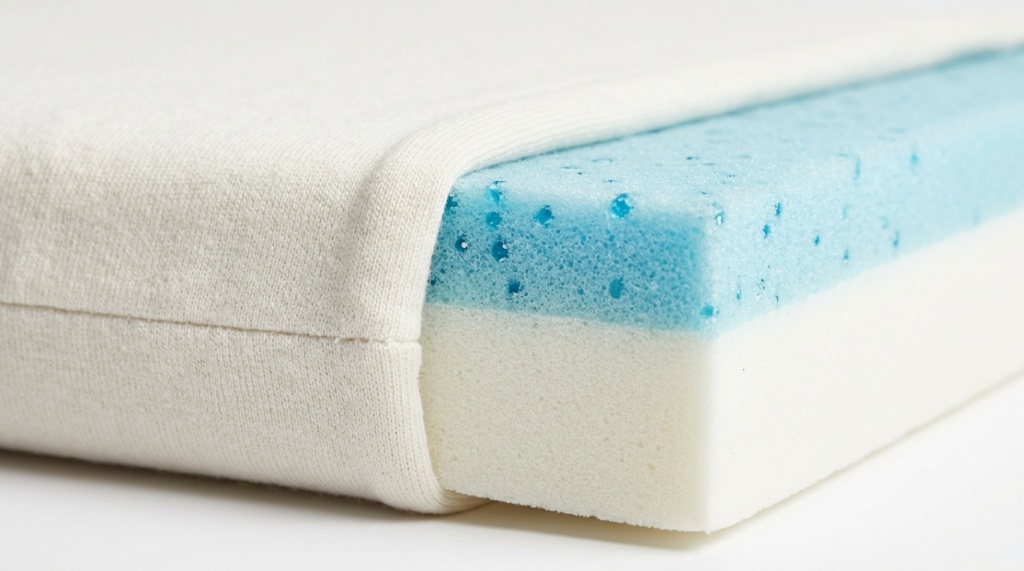
Spot clean the foam with mild soap and water, and machine wash the removable cover on a cold delicate cycle. Never submerge the foam in water or place it in a dryer, as heat destroys memory foam cell structure.
Follow this maintenance routine:
- Weekly: Strip the cover and wash it. Air dry the cover on a rack. Do not use fabric softener, as it clogs the fibers.
- Monthly: Vacuum the foam surface with a soft brush attachment to remove dust and dead skin cells.
- Quarterly: Sprinkle baking soda over the foam, let it sit for two hours, then vacuum it off. This neutralizes odors without chemicals.
- As needed: Blot stains with a cloth dampened in cold water and mild dish soap. Press—do not rub—to lift the stain.
Keep your wedge pillow away from direct sunlight, which breaks down the foam’s open cells and accelerates hardening. Store it in a cool, dry place if not in use.
Which Features Should You Avoid in a Wedge Pillow?
A good wedge pillow is a long-term investment for your sleep health, so knowing what to avoid saves you from a painful return process. Stay away from pillows with these red flags:
- Non-removable covers: You cannot clean them, and they trap bacteria and odors that degrade the foam.
- Firmness described as “plush” or “ultra-soft”: These terms on a wedge pillow usually mean the foam is low density and will collapse.
- Sketchy chemical smells: Strong “off-gassing” that lasts more than 72 hours indicates low-quality foam with high VOC levels.
- No return policy: If the company does not offer at least a 30-night trial, they likely know their product is uncomfortable.
- Exaggerated claims: Any pillow that promises to cure sleep apnea or eliminate snoring completely is overstating its capability. A wedge pillow reduces symptoms but is not a medical device.
Read the fine print on the return policy. Some companies charge a restocking fee or require you to pay return shipping, which can cost as much as the pillow itself.
How Do You Transition from a Flat Pillow to a Wedge Pillow?
Switching from a flat pillow to a wedge pillow feels unnatural for the first few nights because your body is used to a horizontal sleeping position. Ease into the change by using a gradual approach.
Follow this three-night transition plan:
- Night 1: Use the wedge pillow at its lowest incline. Place your regular flat pillow on top of the wedge to maintain some familiarity. Sleep on your back only.
- Night 2: Remove the flat pillow. Sleep on the wedge alone. If you feel neck strain, add a small rolled towel under your neck for support.
- Night 3 and beyond: Increase the incline slightly every few nights until you reach your therapeutic angle. Your body will adapt within one week.
If you wake up with back pain, your hips are likely sliding down. Place a rolled blanket or a small lumbar pillow at the bottom edge of the wedge to create a barrier. This keeps your pelvis anchored.
Frequently Asked Questions
Can I use a memory foam wedge pillow if I have allergies?
Yes, but look for CertiPUR-US certified foam, which is free of heavy metals, formaldehyde, and phthalates. Choose a cover made from bamboo or Tencel, which naturally resist dust mites and mold. Wash the cover weekly in hot water.
Is a wedge pillow good for lower back pain?
It depends on the cause. For lower back pain related to poor sleeping posture or herniated discs, a wedge pillow that keeps your knees slightly bent can reduce pressure on the lumbar spine. Pair it with a knee support cushion for best results.
How heavy is a typical memory foam wedge pillow?
Most queen-size wedge pillows weigh between 8 and 15 pounds, depending on density. High-density foam is heavier but offers better support. If weight is a concern for carrying or adjusting, look for a two-piece design that separates into lighter sections.
Can I sleep on my stomach with a wedge pillow?
It is not recommended. Sleeping on your stomach on a wedge pillow forces your neck into extreme rotation, which strains the cervical spine. If you are a stomach sleeper, try a flat, low-profile pillow instead.
Do wedge pillows help with pregnancy discomfort?
Yes, especially in the second and third trimesters. A wedge pillow placed under the belly relieves pressure on the lower back. Choose a softer density (around 3 lbs/ft³) and a lower incline (15–20 degrees) for pregnancy use.
What is the difference between a wedge pillow and a bed wedge?
There is no difference. The terms “wedge pillow” and “bed wedge” are used interchangeably to describe a triangular-shaped cushion that elevates the upper body or legs. Both are made from foam, but bed wedges may sometimes refer to larger, multi-purpose wedges used for sitting up in bed.
How do I know if my wedge pillow is too high?
If your chin touches your chest while lying on your back, the wedge is too high. A properly sized wedge should keep your head aligned over your shoulders, with your ears in line with your shoulders and hips. Adjust the incline or add a neck roll if needed.
Conclusion
Choosing a comfortable memory foam wedge pillow comes down to three non-negotiable factors: foam density between 4 and 5 pounds per cubic foot, a gradual incline that matches your specific health need, and a breathable, removable cover. Skip any pillow that lacks a return policy or uses vague marketing about “premium quality” without specifying foam density. Start by measuring your bed and your torso length, then test the incline angle against your condition. Your body will respond to proper spinal alignment within the first week of use, and the relief from acid reflux, snoring, or back pain makes the investment worthwhile. Do not settle for a pillow that feels like a ramp. Find one that cradles you and keeps you sleeping through the night without shifting or overheating.