
Every winter, millions of fruit trees quietly decide next season’s harvest long before the first blossom appears. The difference between baskets full of healthy fruit and disappointing yields often comes down to a few precise cuts made with the right pruning saw. This fruit tree pruning guide explains exactly how to prune fruit trees properly, when to do it, which saw to use, and how to avoid mistakes that reduce fruit production. Many homeowners either prune too aggressively or avoid pruning altogether, leading to overcrowded branches, disease problems, poor airflow, and smaller fruit. Understanding proper pruning techniques improves tree structure, encourages healthy growth, increases sunlight penetration, and helps produce larger, higher-quality fruit year after year.
What Is Fruit Tree Pruning and Why Is It Important?
Fruit tree pruning is the selective removal of branches to improve tree health, structure, sunlight exposure, and fruit production.
Pruning is one of the most important maintenance tasks for apple, pear, peach, plum, cherry, citrus, and other fruit-bearing trees. Without regular pruning, trees become crowded, weak, and less productive.
Proper pruning helps:
- Increase fruit size and quality
- Improve air circulation
- Reduce disease risk
- Remove dead or damaged wood
- Create stronger branch structure
- Allow better sunlight penetration
- Simplify harvesting and maintenance
Commercial orchards rely heavily on annual pruning because studies consistently show that light exposure directly affects fruit color, sugar development, and overall crop quality.
When Should You Prune Fruit Trees for the Best Results?
Most fruit trees should be pruned during dormancy in late winter or early spring before new growth begins.
The ideal timing depends on tree species, climate, and pruning goals. Dormant-season pruning allows gardeners to clearly see branch structure and encourages vigorous spring growth.
Choosing proper tools is equally important. Before making major cuts, reviewing a detailed guide to selecting the best pruning saws for home and garden projects can help ensure cleaner cuts and faster healing.
What Is the Best Time to Prune Different Fruit Trees?
| Fruit Tree Type | Best Pruning Time |
|---|---|
| Apple Trees | Late winter |
| Pear Trees | Late winter |
| Peach Trees | Late winter to early spring |
| Plum Trees | Late winter |
| Cherry Trees | Summer or dormant season |
| Citrus Trees | After harvest |
Can You Prune Fruit Trees in Summer?
Yes. Summer pruning helps control tree size and remove excessive growth.
Summer pruning is commonly used to reduce vigor, improve sunlight penetration, and maintain tree shape without stimulating excessive new growth.
Which Type of Saw Is Best for Pruning Fruit Trees?
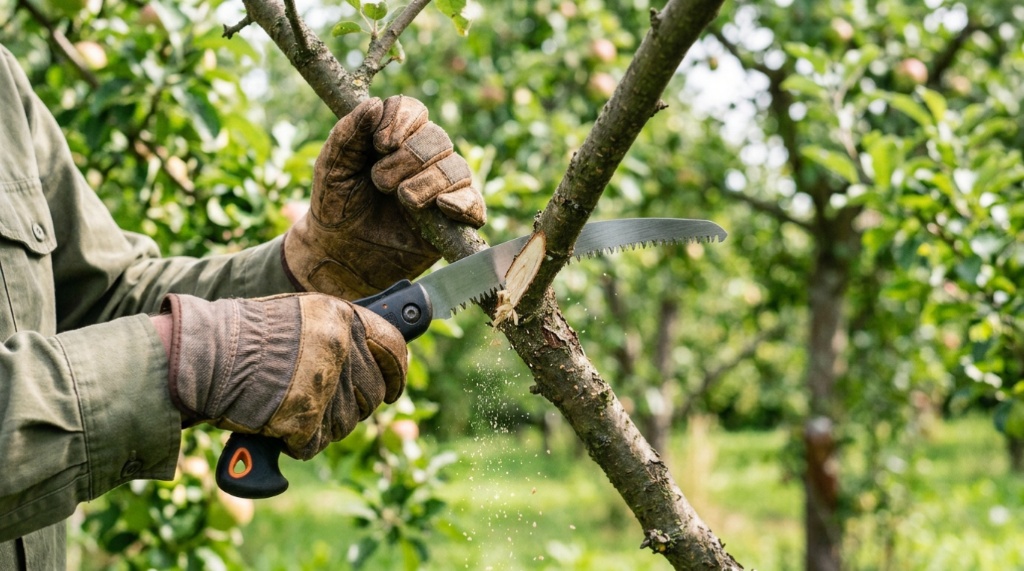
A curved-blade pruning saw is typically the best choice for removing medium and large fruit tree branches.
Not all cutting tools perform equally. Using the wrong saw can leave torn bark, ragged wounds, and slow-healing cuts.
What Features Should a Good Pruning Saw Have?
- Impulse-hardened teeth
- Curved blade design
- Rust-resistant steel construction
- Comfortable ergonomic handle
- Fast-cutting tooth pattern
- Lightweight construction
- Secure locking mechanism for folding models
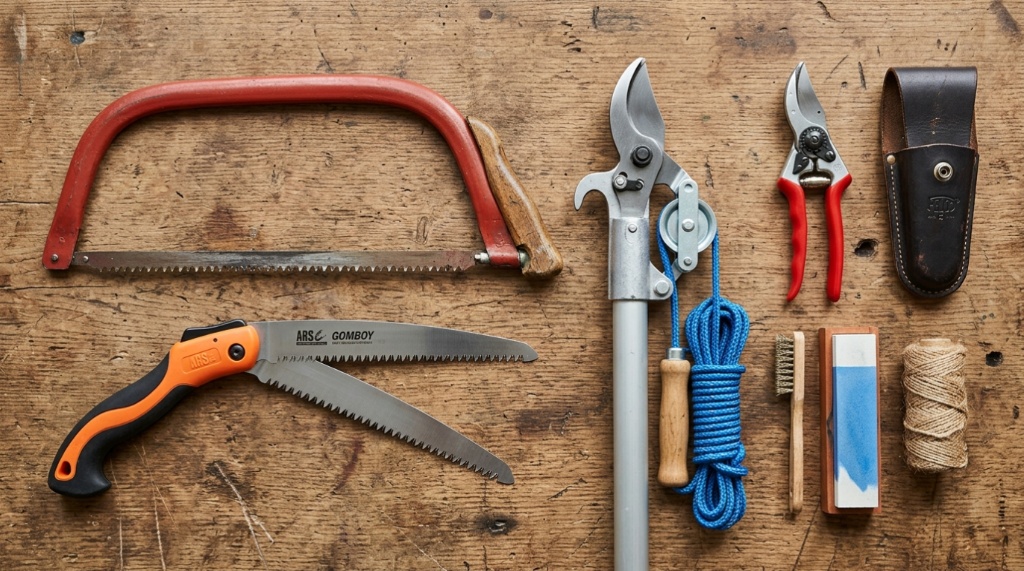
Pruning Saw vs. Loppers vs. Hand Pruners
| Tool | Best For | Branch Size |
|---|---|---|
| Hand Pruners | Small shoots | Up to ¾ inch |
| Loppers | Medium branches | ¾–2 inches |
| Pruning Saw | Large limbs | 2+ inches |
For mature fruit trees, a quality pruning saw often becomes the primary cutting tool because many structural branches exceed lopper capacity.
How Do You Prune Fruit Trees Step by Step?
Start by removing dead, damaged, diseased, and crossing branches before shaping the tree for airflow and sunlight.
Following a structured process prevents over-pruning and maintains long-term productivity.
Professional workshops and orchard management programs often emphasize that planning cuts before cutting is just as important as the pruning itself. Similar principles of tool organization and workflow efficiency are discussed in guides about creating an efficient professional tool setup, where proper equipment selection improves both safety and performance.
Step 1: Inspect the Entire Tree
Walk around the tree and identify:
- Dead branches
- Disease symptoms
- Broken limbs
- Crossing branches
- Water sprouts
- Suckers
Step 2: Remove Dead and Diseased Wood
Always begin with unhealthy growth. Removing diseased branches helps prevent pathogens from spreading throughout the canopy.
Step 3: Eliminate Crossing Branches
Branches rubbing against each other create wounds that invite pests and disease organisms.
Step 4: Open the Canopy
Create space for sunlight and airflow by selectively removing overcrowded branches.
Many orchard experts follow the principle that a bird should be able to fly through the canopy without hitting branches.
Step 5: Maintain Tree Shape
Different fruit trees benefit from different structures:
- Open center shape for peaches
- Central leader for apples
- Modified leader systems for pears
- Balanced scaffold branches for plums
Step 6: Make Proper Cuts
Cut just outside the branch collar without leaving stubs.
Branch collars contain specialized tissue that helps wounds close efficiently.
How Should You Cut Large Fruit Tree Branches Safely?
Use the three-cut pruning method to prevent bark tearing and branch splitting.
Large limbs can cause severe damage if removed improperly.
What Is the Three-Cut Method?
- Make an undercut 6–12 inches from the trunk.
- Make a second cut from the top slightly farther out.
- Remove the remaining stub at the branch collar.
This technique prevents bark stripping and protects the trunk from injury.
What Are the Most Common Fruit Tree Pruning Mistakes?
The biggest mistakes are pruning at the wrong time, removing too much growth, and making improper cuts.
Many fruit tree problems originate from avoidable pruning errors.
Common Mistakes to Avoid
- Topping the tree
- Leaving branch stubs
- Removing more than 25–30% of the canopy
- Ignoring diseased branches
- Using dull tools
- Pruning during severe freezing conditions
- Cutting too close to the trunk
Why Is Over-Pruning Harmful?
Excessive pruning stimulates vigorous water sprout growth, delays fruit production, and stresses the tree.
Healthy fruit trees require balance. The goal is strategic branch removal, not aggressive cutting.
How Does Pruning Improve Fruit Production?
Pruning directs the tree’s energy toward productive branches and improves fruit quality through better light exposure.
Fruit develops best when leaves receive adequate sunlight. Dense canopies reduce photosynthesis and limit fruit development.
Benefits include:
- Larger fruit size
- Better color development
- Improved sweetness
- Reduced fungal disease pressure
- More consistent annual production
- Easier harvesting access
Does More Pruning Mean More Fruit?
No. Proper pruning improves fruit quality, but excessive pruning can reduce yields.
The objective is maximizing productive wood rather than simply removing branches.
How Do You Maintain Pruning Tools for Cleaner Cuts?
Clean, sharpen, and disinfect pruning tools regularly to reduce disease transmission and improve cutting performance.
Even the highest-quality pruning saw loses effectiveness without maintenance.
Essential Tool Maintenance Tips
- Remove sap after each use
- Sharpen blades regularly
- Disinfect after cutting diseased wood
- Store tools in a dry location
- Inspect handles and locking mechanisms
- Apply protective oil to metal surfaces
Clean cuts heal significantly faster than rough cuts caused by dull blades.
Should Young Fruit Trees Be Pruned Differently Than Mature Trees?
Yes. Young trees require structural training, while mature trees need maintenance and production-focused pruning.
Young Tree Objectives
- Develop scaffold branches
- Create strong structure
- Establish desired shape
- Encourage balanced growth
Mature Tree Objectives
- Maintain productivity
- Improve sunlight exposure
- Remove aging wood
- Control height and spread
- Manage disease risk
Early training dramatically reduces corrective pruning requirements later in the tree’s life.
Conclusion: How Can You Keep Fruit Trees Healthy and Productive for Years?
Consistent annual pruning using the right saw is one of the most effective ways to improve fruit tree health, structure, and harvest quality.
Successful pruning begins with understanding tree biology, choosing proper timing, and making clean cuts that promote rapid healing. Removing dead, damaged, and overcrowded branches improves sunlight penetration, airflow, and fruit development while reducing disease pressure. Whether you’re maintaining apple trees, peach trees, pear trees, plum trees, or citrus varieties, following a proven pruning strategy each year creates stronger trees and better harvests.
Investing time in proper pruning techniques and reliable cutting equipment pays long-term dividends. Learning more about selecting durable pruning equipment through resources covering high-quality pruning saw options for gardeners can help ensure cleaner cuts and healthier trees. Start with small corrective cuts, monitor results each season, and build confidence through consistent practice. Your future harvests will reflect the care you invest today.
Frequently Asked Questions About Fruit Tree Pruning
What is the best month to prune fruit trees?
Late winter is generally the best time to prune most fruit trees. During dormancy, branch structure is easier to see, disease pressure is lower, and trees respond with vigorous spring growth.
Can pruning increase fruit size?
Yes. Proper pruning reduces competition among branches, allowing the tree to direct more resources toward fruit production and development.
How much of a fruit tree can be removed in one year?
Avoid removing more than 25–30% of the canopy in a single season. Excessive pruning can stress the tree and stimulate unwanted growth.
Should pruning cuts be sealed with tree paint?
In most cases, no. Modern arboricultural research generally supports allowing pruning wounds to heal naturally without wound dressings.
Can a pruning saw damage a fruit tree?
Only if used incorrectly. Dull blades, improper cutting angles, and tearing bark can create wounds that slow healing and increase disease risk.
What branches should always be removed first?
Dead, diseased, damaged, and crossing branches should be removed first. These branches provide little value and can negatively impact tree health.
How often should fruit trees be pruned?
Most fruit trees benefit from annual pruning. Regular maintenance prevents overcrowding and reduces the need for drastic corrective cuts later.