Opening your own auto repair garage is a bold and exciting move. For many mechanics, it is the dream — no more working for someone else, setting your own schedule, and building a business from the ground up. However, the difference between a garage that thrives and one that barely survives often comes down to preparation. Knowing what tools to buy, how to organize your space, and how to attract loyal customers gives you a real advantage from the very beginning.
This article walks you through each stage of the process. Whether you are just starting out or looking to improve an existing shop, these steps will help you build something that lasts.
Starting with a Realistic Business Plan
Every profitable garage starts long before the first car rolls in. It starts with a plan. A business plan does not need to be complicated. However, it does need to be honest.
Write down your goals. Think about how many cars you want to service each week. Consider what types of repairs you will specialize in. Will you focus on general maintenance, engine work, or electrical repairs? Knowing this early shapes every decision you make afterward.
Your plan should also include a budget. List every cost you expect in the first six months. Include rent, equipment, insurance, and marketing. Then add a cushion for the unexpected, because surprises always happen in the early months of any new business.
Additionally, research your competition. Find out what other shops in your area charge and what services they offer. Understanding the local market helps you find your place in it.
Choosing a Location That Works for You
Your location will either attract customers or push them away. A shop on a busy road with clear signage will always outperform one tucked behind a quiet street. Therefore, spend time scouting different areas before signing any lease.
Look for a space with at least two bays to start. Each bay lets you work on one vehicle at a time. More bays mean more revenue potential. If a larger space fits your budget, the extra capacity will pay for itself as your customer base grows.
Check local zoning laws before committing. Not every commercial property allows automotive work. Some areas have strict rules about waste disposal, noise, and chemical storage. Knowing these rules upfront protects you from costly problems later.
Think about parking, too. Customers need somewhere to wait or drop off their vehicles. A property without adequate parking can frustrate customers and hurt your reputation before you even get started.
Building Your Budget Around the Right Equipment
One of the most important parts of any auto repair setup is knowing where to spend and where to save. Equipment is not an area to cut corners. Poor-quality tools break down under daily use and cost more in replacements and lost time.
Here is a general list of equipment costs to plan for:
- Vehicle lift installation and permits
- Air compressor and pneumatic tools
- Diagnostic scanner and software subscriptions
- Hand tool sets and specialty tools
- Welding equipment if offering body work
- Fluid disposal system and storage containers
- Safety signage and fire suppression equipment
- Point-of-sale system and shop management software
The total will vary based on your location and the services you plan to offer. However, most new shops spend between $50,000 and $150,000 on initial setup. Phased purchasing is a smart strategy. Buy the essentials first and add more equipment as revenue grows.
The Core Tools Every Shop Must Have
Equipping your garage with the right business garage tools is the foundation of everything. The right equipment lets you work faster, take on more jobs, and deliver results that bring customers back.
Vehicle Lifts
A quality lift is the single most important investment you will make. Two-post lifts are ideal for most general repair work. They are versatile, space-efficient, and provide full access to the underside of a vehicle. Four-post lifts are better suited for alignment jobs and larger trucks.
Do not cut corners on a lift. A poorly made lift is a safety risk. Choose a brand with a solid track record and proper certifications.
Diagnostic Equipment
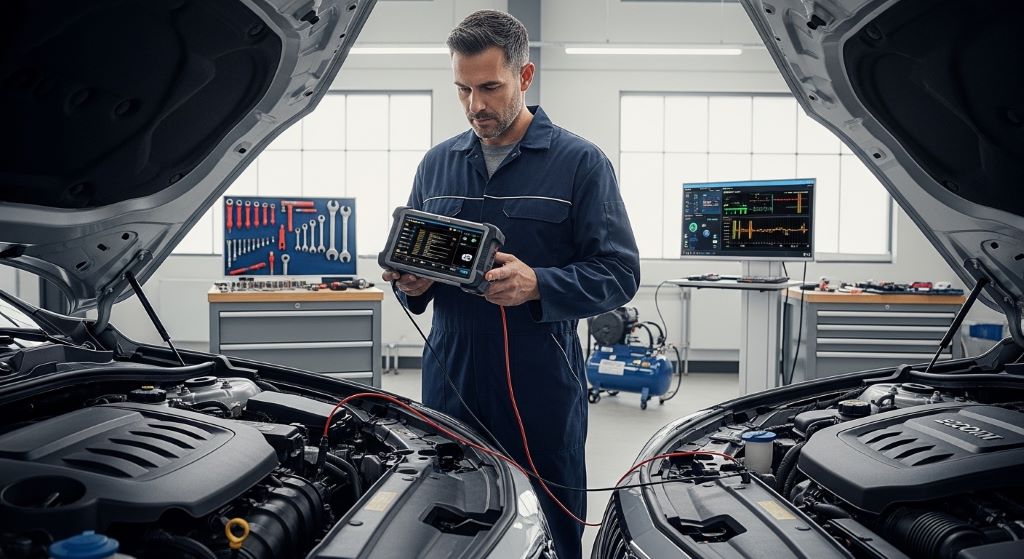
Today’s vehicles are packed with electronics. Without proper diagnostic tools, many modern problems are nearly impossible to solve. A professional OBD-II scanner is essential. It connects to the vehicle’s system and reads fault codes across every major component.
Additionally, a digital oscilloscope and a quality multimeter help with electrical diagnosis. These tools let you trace wiring issues and sensor problems with precision. Electrical repairs are in high demand, and shops that handle them well earn strong reputations.
Air Compressor and Pneumatic Tools
A large-capacity air compressor powers the majority of tools in a working shop. Impact wrenches, ratchets, tire inflators, and spray guns all depend on reliable air pressure. Buying a compressor that is too small for your needs creates constant slowdowns.
Therefore, invest in an industrial-grade unit from the start. Pair it with a full set of pneumatic tools to speed up repetitive tasks and reduce physical strain on your team.
Hand Tools and Specialty Items
A comprehensive set of hand tools covers the everyday basics. Metric and standard socket sets, torque wrenches, pliers, screwdrivers, and pry bars are all daily essentials. Specialty tools like brake presses, bearing pullers, and spring compressors handle specific jobs without wasted time or improvised solutions.
Build this collection based on the services you offer most often. Specialty tools are an investment, but they pay back their cost quickly in time saved.
Organizing Your Shop for Maximum Efficiency
How your garage is laid out affects how quickly every job gets done. A cluttered, poorly organized shop wastes time and creates safety hazards. A clean, well-planned space helps everything run smoothly.
Divide your workspace into clear zones. Keep the lift area clear for active repairs. Set up a clean bench area for parts, inspection, and assembly. Store tools centrally so any mechanic can grab what they need without crossing the entire shop.
Lighting deserves special attention. Poor lighting causes mistakes and eye strain. Install bright LED overhead fixtures throughout the shop. Add portable work lights for detail work and under-vehicle tasks.
Ventilation is equally critical. Exhaust fumes, chemical vapors, and dust are all health hazards. A proper ventilation system keeps the air safe and keeps your shop compliant with health and safety regulations. Additionally, it makes the space far more comfortable to work in throughout the day.
Defining Your Services and Setting Your Prices
Knowing exactly what you offer makes marketing simpler and helps customers choose you with confidence. Starting with a focused service list is smarter than trying to handle every possible job from day one.
High-demand services to consider include:
- Oil and fluid changes
- Brake inspection and replacement
- Tire rotation, balancing, and replacement
- Battery testing and replacement
- Air conditioning service and recharge
- Engine diagnostics and tune-ups
- Suspension and steering repairs
Once your service menu is set, research local pricing. Price your work competitively without undervaluing your time. Charging too little attracts bargain hunters rather than loyal customers. Furthermore, low prices make it very difficult to cover overhead costs and grow.
As your reputation builds, you can charge premium rates for specialty or complex work. Customers pay more for a shop they trust.
Marketing Your Garage to the Right People
A great shop with no customers is still a failing business. Marketing brings people through the door and keeps them coming back. Fortunately, effective marketing for a local garage does not require a large budget.
Start with a Google Business Profile. It is free, and it puts your shop in front of people searching for repairs nearby. Encourage every satisfied customer to leave a review. Positive reviews are the most powerful and least expensive marketing tool available to any local business.
Social media also works well for garages. Short videos of repairs, maintenance tips, and shop updates build trust and keep your audience engaged. People are more likely to choose a shop they already feel familiar with.
Additionally, form partnerships with local businesses. Fleet companies, car dealerships, and rental agencies can send you steady, high-volume work. These relationships take time to build but deliver consistent results once established.
Managing Finances and Staying Compliant
Profitable garages do not just earn money — they manage it well. From your first week, track every dollar that comes in and goes out. Good records make tax filing straightforward and help you spot problems early.
Work with an accountant who understands small business operations. They can help you choose the right business structure, manage tax obligations, and plan for growth. Additionally, proper financial records are essential if you ever want to apply for additional funding or bring in a business partner.
Stay current with licensing and compliance requirements in your region. Environmental laws govern fluid disposal. Labor laws apply the moment you hire staff. Shop safety inspections may be required annually. Staying ahead of these requirements protects your license and your reputation.
Conclusion
A profitable auto repair garage is built on smart decisions made early and maintained consistently. Begin with a clear business plan and choose a location that gives you visibility and room to grow. Invest in quality business garage tools from the start, because the right equipment makes every job faster and more reliable. Organize your workspace for safety and efficiency, build a focused service menu, and price your work to reflect your true value.
A well-planned auto repair setup does not produce results overnight. However, every correct decision builds momentum. Market actively, manage your finances carefully, and take compliance seriously. Treat every customer as someone you want to see again. Do these things consistently, and your garage will grow into a business that is genuinely worth owning.
Frequently Asked Questions
How much money do I need to open an auto repair garage?
Startup costs typically range from $50,000 to $150,000 depending on your location, shop size, and equipment choices. Phased purchasing and used equipment can reduce initial costs significantly.
What licenses do I need to open an auto repair shop?
Requirements vary by region, but most areas require a general business license, a sales tax permit, and an automotive-specific repair license. Check with your local government and state licensing board for exact requirements.
How many bays should a new garage have?
Two bays are a reasonable starting point for most new shops. More bays increase your daily capacity and revenue potential, so upgrade as soon as your budget and demand allow.
What is the fastest way to get my first customers?
Set up a Google Business Profile immediately, ask friends and family to spread the word, and offer a small discount for first-time customers. Ask every satisfied customer to leave an online review.
Should I buy new or used equipment when starting out?
Used equipment can save money, but always inspect it carefully before purchasing. Lifts, compressors, and diagnostic tools should be in verified working order. New equipment typically comes with warranties that provide added peace of mind.
Related Topics:
Choosing the Right Inverter for Your Truck: Everything You Need to Know
Common Reasons for Service Light Activation: What to Know and How to Respond