Setting up a thriving aquarium requires more than just filling a tank with water and adding fish. Water movement plays a crucial role in maintaining a healthy aquatic environment. Choosing between wave makers and submersible pumps can feel overwhelming, especially when you’re new to the hobby. Understanding the differences between these devices will help you make an informed decision that benefits your aquatic pets.
This comprehensive guide will walk you through everything you need to know about comparing these essential pieces of equipment. By the end, you’ll understand which option suits your specific tank setup and the needs of your aquatic inhabitants.
Understanding the Basics of Water Movement
Water movement in aquariums serves multiple critical functions. It distributes oxygen throughout the tank, ensuring fish can breathe properly. Additionally, it prevents dead zones where waste accumulates and harmful bacteria can thrive. Proper flow also helps maintain consistent temperature and distributes nutrients evenly for plants and corals.
Without adequate water movement, your aquarium becomes stagnant. Stagnant water leads to poor gas exchange at the surface, which reduces oxygen levels. Furthermore, it allows debris to settle in corners and behind decorations, creating pockets of decay that compromise water quality.
Different types of aquariums require different flow patterns. Reef tanks with corals need specific wave-like movements that mimic ocean currents. Freshwater planted tanks benefit from gentler, more uniform circulation. Fish-only systems have their own requirements based on the species you keep.
What Wave Makers Do for Your Tank
Wave makers create oscillating water movement that mimics natural ocean currents. These devices typically mount to the tank wall using magnets or suction cups. They generate pulsing flows that change direction periodically, creating a more dynamic environment.
The primary purpose of wave makers is to provide circulation rather than filtration. They move water around the tank without necessarily pushing it through a filter system. This movement benefits corals and other organisms that rely on water flow to bring them food and remove waste.
Modern wave makers come with programmable controllers that let you adjust flow patterns. You can create gentle waves, random turbulence, or synchronized patterns using multiple units. This customization allows you to replicate specific ocean environments with remarkable accuracy.
Most wave makers operate quietly and efficiently. They consume less power than traditional powerheads while providing superior water movement. However, they focus solely on creating flow patterns rather than moving water through filtration equipment.
How Submersible Pumps Function
Submersible pumps sit inside your aquarium and move water from one place to another. They come in various sizes and strengths, designed for different applications. These versatile devices can power filters, create waterfalls, or simply increase circulation.
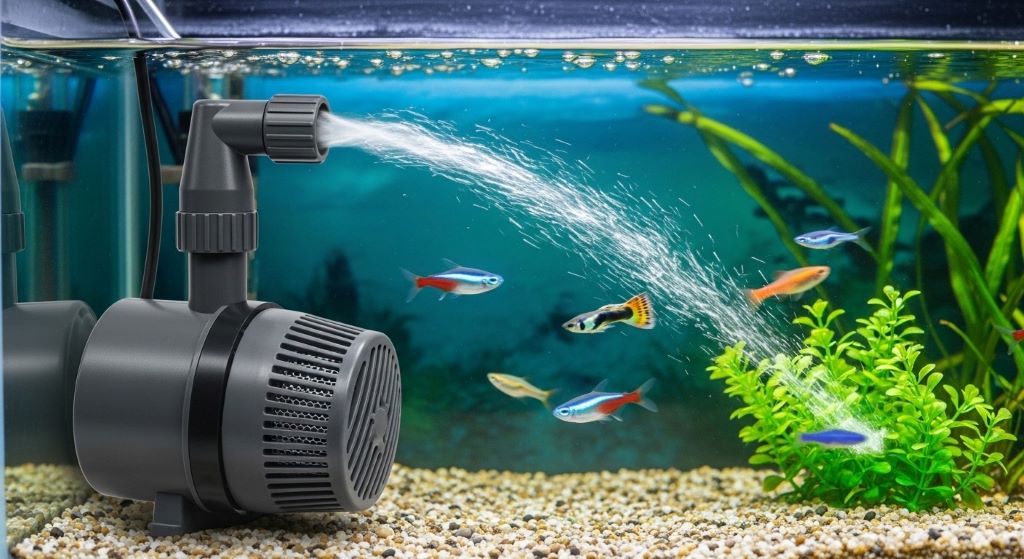
Unlike wave makers, submersible pumps typically move water in a single direction. They pull water in through an intake and push it out through an outlet. This directional flow makes them ideal for tasks that require moving water to specific locations.
Many aquarists use submersible pumps to power external filtration systems. The pump draws water from the tank, pushes it through filter media housed outside the aquarium, and returns the cleaned water. This setup keeps bulky filtration equipment out of sight while maintaining excellent water quality.
Submersible pumps also work well for creating surface agitation. Pointing the outlet toward the water surface increases gas exchange, which boosts oxygen levels. Additionally, surface movement prevents protein films from forming, which can block light and reduce oxygen absorption.
Key Differences in Design and Placement
When conducting an aquarium pump comparison, understanding design differences helps narrow your choices. Wave makers feature wide, flat outlets that spread water flow across a large area. Submersible pumps have narrow outlets that create focused, directional streams.
Placement flexibility varies significantly between these devices. Wave makers attach to tank walls at virtually any height or angle. This versatility lets you direct flow exactly where needed. You can position them near the surface for ripples or deeper for current throughout the water column.
Submersible pumps require different placement considerations. They typically sit on the tank bottom or attach to walls near the substrate. The intake must stay clear of sand and gravel to prevent clogging. Meanwhile, the outlet needs careful positioning to avoid creating excessive turbulence in specific areas.
Size considerations matter when choosing between these options. Wave makers generally take up less visual space because of their compact, streamlined design. Submersible pumps can be bulkier, especially higher-capacity models designed for large tanks or heavy filtration duties.
Evaluating Internal vs External Pump Options
The decision between internal vs external pump configurations affects both aesthetics and functionality. Internal pumps live entirely within your aquarium, making installation straightforward. You simply place them in the tank, plug them in, and adjust as needed.
External pumps sit outside the aquarium in a cabinet or sump area. They connect to the tank through plumbing that passes through drilled holes or over the rim. This setup keeps equipment out of sight and frees up space inside the tank for aquascaping.
Internal pumps offer simplicity and lower initial costs. They require no drilling or complex plumbing. However, they occupy valuable tank space and can become eyesores despite attempts to hide them behind decorations. Additionally, internal pumps add heat to the water, which can be problematic in warm climates.
External pumps provide more power and capacity than similarly priced internal options. They handle higher flow rates necessary for large tanks or demanding filtration systems. Nevertheless, they require more complex installation and typically cost more upfront. Maintenance also becomes slightly more involved because you need to access the external location.
Understanding Circulation vs Return Pump Functions
Distinguishing between circulation vs return pump purposes clarifies which device suits your needs. Circulation pumps focus solely on moving water within the tank to prevent stagnation. They create flow patterns that benefit fish, plants, and corals without necessarily connecting to filtration equipment.
Return pumps serve a different primary function. They move water from a sump or external filter back into the display tank. These pumps must overcome the resistance of plumbing and elevation changes, requiring sufficient power to maintain proper flow rates through your filtration system.
Wave makers excel as circulation pumps because they create varied flow patterns that mimic natural environments. Their oscillating movement prevents dead spots and promotes healthy conditions for marine life. However, they don’t work well for moving water through filtration systems.
Submersible pumps function effectively in both roles. Smaller models work wonderfully for simple circulation, while larger, more powerful versions handle return pump duties. This versatility makes submersible pumps popular among aquarists who need equipment that can adapt to changing requirements.
Flow Rate Requirements for Different Tank Sizes
Determining appropriate flow rates depends on your tank volume and inhabitants. Reef aquariums typically need 10 to 20 times the tank volume per hour in total water movement. A 50-gallon reef tank would require 500 to 1,000 gallons per hour of flow from all sources combined.
Freshwater planted tanks need gentler circulation, usually 3 to 5 times the tank volume per hour. Excessive flow can uproot plants and stress fish species that prefer calmer water. Therefore, careful calculation prevents creating uncomfortable conditions for your aquatic life.
Fish-only tanks fall somewhere between these extremes. Most fish appreciate moderate flow that provides oxygen and removes waste without creating exhausting currents. Species-specific research helps determine ideal flow rates because some fish come from fast-moving rivers while others prefer still waters.
Consider that total flow includes all sources: wave makers, return pumps, powerheads, and filter outlets. When planning your setup, calculate the combined output to ensure you meet requirements without exceeding them. Too much flow can be just as problematic as too little.
Energy Efficiency and Operating Costs
Modern aquarium equipment has become increasingly energy-efficient. However, differences exist between wave makers and submersible pumps that affect long-term operating costs. Wave makers typically use DC motors that consume less electricity while providing variable flow control.
Submersible pumps often use AC motors that draw more power for equivalent flow rates. However, newer models incorporate energy-saving technologies that narrow this gap. When comparing models, check the wattage requirements and calculate estimated monthly costs based on your electricity rates.
Energy efficiency becomes particularly important in larger tanks requiring multiple pumps. Running several devices 24 hours daily adds up quickly on your electric bill. Choosing efficient models can save hundreds of dollars annually while reducing your environmental impact.
Additionally, efficient pumps generate less heat. This matters because excess heat can raise water temperature beyond safe levels for your inhabitants. In warm climates or during summer months, cooler-running pumps help maintain stable temperatures without additional chilling equipment.
Noise Levels and Their Impact
Aquarium equipment noise can range from barely noticeable to annoyingly loud. This factor matters especially when tanks sit in bedrooms, living rooms, or offices. Wave makers generally operate more quietly than traditional submersible pumps because of their advanced motor designs.
High-quality submersible pumps run quietly when properly maintained. However, they can develop vibrations that transmit through tank glass and stands, creating humming sounds. Mounting them on rubber pads or using vibration-dampening materials reduces noise transmission significantly.
Cavitation causes another noise issue with submersible pumps. This occurs when the pump intake sucks air, creating gurgling or grinding sounds. Ensuring adequate water depth around the intake and keeping it clear of obstructions prevents cavitation problems.
Wave makers produce gentle whooshing sounds as water moves. Most people find this noise soothing, similar to ocean waves. However, individual sensitivity varies, so consider testing equipment during the return period if noise concerns you.
Maintenance Requirements Over Time
Regular maintenance keeps pumps functioning optimally and extends their lifespan. Wave makers require periodic cleaning to remove algae and calcium deposits from the propeller and housing. This typically involves removing the unit, disassembling it partially, and soaking parts in vinegar to dissolve buildup.
Submersible pumps need similar attention, though maintenance frequency depends on water quality and usage. Checking the impeller for debris every few months prevents reduced flow and motor strain. Additionally, cleaning the intake prevents clogs that force the pump to work harder.
Both types benefit from occasional lubrication using aquarium-safe products. This reduces wear on moving parts and maintains quiet operation. However, some newer models feature ceramic shafts and bearings that require no lubrication, simplifying maintenance.
Water changes provide good opportunities to inspect and clean pumps. Making this part of your regular routine ensures problems don’t develop unnoticed. Furthermore, early detection of issues prevents complete failures that could compromise your tank’s ecosystem.
Compatibility with Tank Types and Inhabitants
Reef aquariums benefit tremendously from wave makers because corals require specific flow patterns for feeding and waste removal. Many coral species extend polyps to catch food particles drifting past. Variable flow created by wave makers maximizes feeding opportunities while preventing detritus accumulation.
Freshwater planted tanks often work better with submersible pumps that create gentle, directional flow. Strong, chaotic currents can damage delicate plant leaves and uproot specimens with weak root systems. Therefore, carefully positioned submersible pumps provide necessary circulation without harming vegetation.
Fish-only tanks offer more flexibility in equipment choice. Consider the natural habitat of your fish species when deciding. Fish from fast-flowing rivers appreciate stronger currents, while species from calm lakes prefer minimal flow. Matching equipment to inhabitants promotes natural behaviors and reduces stress.
Breeding tanks require special consideration. Excessive flow can exhaust fry or prevent eggs from settling properly. Many breeders use submersible pumps on low settings or add flow restrictors to create gentle movement suitable for delicate young fish.
Price Considerations and Budget Planning
Wave makers typically cost more upfront than basic submersible pumps. However, they offer features and energy efficiency that justify the investment for many aquarists. Entry-level wave makers start around $40, while advanced controllable models can exceed $200.
Submersible pumps span a wider price range depending on capacity and quality. Small circulation pumps cost as little as $15, making them accessible for budget-conscious hobbyists. Heavy-duty return pumps for large systems can cost $100 or more.
Consider total system costs when budgeting. Multiple smaller pumps might cost more combined than one larger, more efficient unit. Additionally, factor in controllers for wave makers, which add $50 to $150 for advanced programming features.
Long-term costs include energy consumption and replacement parts. Cheaper pumps often fail sooner and cost more to operate. Investing in quality equipment upfront typically saves money over the life of your aquarium through lower operating costs and fewer replacements.
Advanced Features and Technology
Modern wave makers include impressive technological features. Wireless controllers let you program complex flow patterns from your smartphone. You can simulate tidal changes, feeding modes with reduced flow, or random patterns that prevent fish from becoming accustomed to predictable currents.
Some systems synchronize multiple wave makers to create realistic ocean environments. The devices communicate wirelessly, coordinating their patterns to generate waves that travel across the tank. This technology particularly benefits large reef systems where natural flow patterns promote coral health.
Submersible pumps have evolved as well. Variable speed models let you adjust flow rates without purchasing different pumps. This adaptability proves valuable as your tank matures and requirements change. Additionally, some pumps include automatic feeding modes that temporarily reduce flow during mealtimes.
Flow sensors represent another advancement, monitoring pump performance and alerting you to problems. If flow drops below expected levels, the system sends notifications to your phone. This early warning system helps prevent disasters caused by pump failures.
Making Your Final Decision
Choosing between wave makers and submersible pumps depends on your specific situation. Consider your tank type, size, and inhabitants first. Reef systems almost always benefit from wave makers, while freshwater setups often work well with submersible pumps.
Think about your budget and willingness to invest in advanced features. If you want programmable flow patterns and energy efficiency, wave makers make sense despite higher costs. However, if you need basic circulation or return pump functionality on a tight budget, submersible pumps offer excellent value.
Evaluate your technical comfort level with installation and maintenance. Wave makers provide simpler setup, while systems using external submersible pumps require more complex plumbing. Choose equipment that matches your skill level and available time for maintenance.
Finally, consider future expansion plans. Starting with quality equipment that can grow with your hobby saves money long-term. A slightly more expensive pump that handles future upgrades beats replacing undersized equipment as your ambitions expand.
Conclusion
Comparing wave makers and submersible pumps requires understanding their fundamental differences in design, function, and application. Wave makers excel at creating varied circulation patterns that benefit reef systems and organisms requiring dynamic water movement. Submersible pumps offer versatility, functioning effectively for both circulation and filtration duties across various tank types.
Your choice ultimately depends on tank requirements, budget, and long-term goals. Reef aquariums typically benefit most from wave makers with programmable features. Freshwater systems often thrive with appropriately sized submersible pumps providing gentle, consistent flow. Understanding circulation vs return pump roles helps match equipment to specific needs.
Remember that water movement quality matters more than equipment price. Investing in reliable, efficient pumps creates healthier environments for your aquatic life while reducing long-term costs. Take time to research options, read reviews, and consider how equipment fits into your complete system before making purchases.
By carefully evaluating your specific needs and comparing available options, you’ll select pumps that keep your aquarium thriving for years to come. Proper water movement forms the foundation of successful aquarium keeping, making this decision one of the most important you’ll make.
Frequently Asked Questions
Can I use both wave makers and submersible pumps in the same aquarium?
Absolutely. Many aquarists combine both types to achieve optimal results. A submersible pump might handle return duties from a sump while wave makers provide additional circulation within the display tank. This combination offers the benefits of both technologies. Just ensure total flow doesn’t exceed what your inhabitants can tolerate comfortably.
How do I know if my tank has enough water flow?
Observe your tank for signs of adequate circulation. You should see gentle surface movement across the entire water surface. Debris shouldn’t accumulate in corners or behind decorations. Fish should swim comfortably without struggling against current. If you notice dead spots where particles settle or cloudy areas with poor water clarity, you likely need additional flow.
What causes pumps to lose power over time?
Several factors reduce pump efficiency. Algae and calcium buildup on impellers create resistance that slows rotation. Worn bearings increase friction. Intake blockages restrict water flow. Regular cleaning and maintenance prevent most issues. However, all pumps eventually wear out and require replacement, typically after 3 to 5 years of continuous operation.
Are DC pumps worth the extra cost compared to AC pumps?
DC pumps generally offer better value despite higher purchase prices. They consume 30 to 50 percent less energy than equivalent AC pumps, reducing operating costs significantly. Additionally, DC pumps run quieter and typically last longer because of superior motor designs. For long-term aquarium setups, the energy savings and reliability justify the initial investment.
How often should I clean my aquarium pumps?
Cleaning frequency depends on your tank conditions. Most aquariums benefit from pump cleaning every 2 to 3 months. Tanks with heavy bioloads or hard water may require monthly attention. During routine water changes, inspect pumps for visible buildup. Clean them whenever you notice reduced flow rates or unusual noises. Consistent maintenance prevents major problems and extends equipment life.
Related Topics:
How to Fix Old Plaster and Lath Walls: A Step-by-Step Guide
Are air source heat pumps suitable for older homes?