Cooking meat to the right temperature protects your family from foodborne illness while ensuring delicious results. Many home cooks rely on guesswork, but using a thermometer takes the uncertainty out of the equation. This guide will teach you everything you need to know about checking meat temperature properly.
Why Temperature Matters in Meat Cooking
Raw meat can harbor harmful bacteria like salmonella, E. coli, and listeria. These microorganisms cause serious illness if consumed. However, heat destroys these pathogens when meat reaches specific internal temperatures. Therefore, measuring temperature accurately becomes your best defense against food poisoning.
Beyond safety, temperature determines texture and juiciness. Overcooking makes meat dry and tough. Undercooking leaves it chewy and unappetizing. The perfect temperature delivers tender, flavorful results every time.
Essential Tools for Temperature Checking
A reliable meat thermometer is non-negotiable for safe cooking. Several types exist, each with distinct advantages.
Digital instant-read thermometers provide quick results within seconds. Simply insert the probe into the thickest part of the meat and read the display. These devices work well for all meat types and cooking methods.
Dial thermometers cost less but take longer to register temperature. They require about 20 seconds to show accurate readings. Additionally, they need regular calibration to maintain accuracy.
Leave-in probe thermometers stay in the meat throughout cooking. A wire connects the probe to a digital display outside the oven. This design lets you monitor progress without opening the oven door repeatedly.
Infrared thermometers measure surface temperature only. While convenient, they cannot determine internal doneness. Therefore, they work better for checking grill grates than actual meat.
How to Use a Meat Thermometer Correctly
Proper technique ensures accurate readings every time. Insert the thermometer into the thickest part of the meat, avoiding bones, fat, and gristle. Bone conducts heat differently than muscle, giving false readings. Fat pockets also skew results.
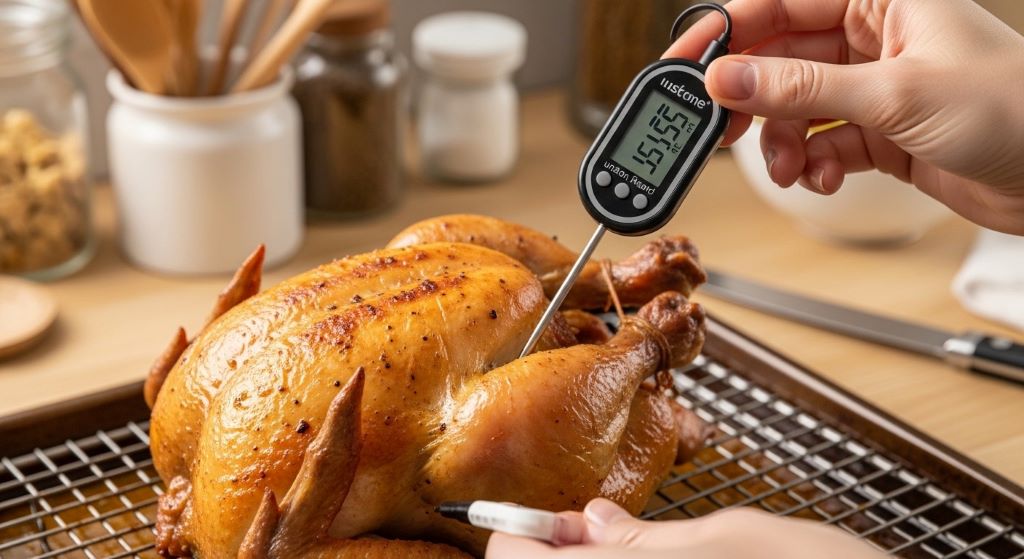
For whole poultry, check the innermost part of the thigh near the body. This area takes longest to cook. Similarly, test the thickest portion of the breast.
When checking thin cuts, insert the probe horizontally through the side. This method provides better contact with the meat than a vertical insertion.
Wait for the reading to stabilize before removing the thermometer. Most digital models beep or flash when ready. Clean the probe between uses to prevent cross-contamination.
Understanding Minimum Safe Temperatures
The USDA establishes minimum internal temperatures based on scientific research. A safe cooking temperature chart helps you remember these critical numbers.
Poultry requires 165°F throughout. This applies to chicken, turkey, duck, and goose, whether whole or ground. The higher temperature accounts for bacteria commonly found in bird meat.
Ground meats need 160°F to kill pathogens mixed throughout during grinding. This includes beef, pork, lamb, and veal burgers or meatballs.
Whole cuts of beef, pork, lamb, and veal reach safety at 145°F, followed by a three-minute rest. During resting, carryover cooking raises the temperature slightly while juices redistribute.
Fish becomes safe at 145°F when the flesh turns opaque and flakes easily. Shrimp, lobster, and crab should appear pearly and opaque.
Leftovers and casseroles must reach 165°F when reheated. This ensures any bacteria that grew during storage gets eliminated.
Exploring Different Doneness Levels for Beef
While safety requires minimum temperatures, many people prefer beef cooked beyond these levels. Steak temperature levels vary based on personal preference and cut characteristics.
Rare steak registers 125°F internally, with a cool red center. The exterior develops a seared crust while the inside remains soft and very juicy. Only high-quality, fresh beef should be served rare.
Medium-rare reaches 135°F, showing a warm red center. This level preserves moisture while developing more cooked flavor. Most chefs recommend medium-rare for optimal taste and texture.
Medium steak hits 145°F with a pink center that’s firm yet tender. More people enjoy this level than rare options. The meat stays relatively juicy with fuller flavor development.
Medium-well reaches 150°F, leaving just a hint of pink. The texture becomes firmer and less moist. Some cuts work better at this temperature than others.
Well-done steak exceeds 160°F with no pink remaining. The meat becomes quite firm and less juicy. However, some diners prefer this level for personal or cultural reasons.
Special Considerations for Different Meats
Each protein type presents unique challenges when checking temperature. Understanding these differences improves your cooking success.
Whole turkeys and chickens need multiple temperature checks. Test both thighs and the thickest part of each breast. All areas must reach 165°F before serving.
Pork chops and tenderloins can stay slightly pink at 145°F. Previous guidelines recommended 160°F, but updated research shows 145°F kills trichinella parasites. Nevertheless, let pork rest three minutes after cooking.
Large roasts continue cooking after removal from heat. Therefore, take them out when they’re 5 to 10 degrees below target temperature. Carryover cooking completes the process during resting.
Hamburgers need special attention because surface bacteria gets mixed inside during grinding. Always cook ground beef to 160°F, regardless of preference for whole steaks.
Stuffed meats require extra caution. The stuffing must also reach safe temperatures. Check both the meat and the center of the stuffing separately.
Common Temperature Checking Mistakes to Avoid
Even experienced cooks sometimes make errors that compromise safety or quality. Learning these pitfalls helps you avoid them.
Testing too early wastes time and releases valuable juices. Wait until you expect the meat is nearly done before checking. Multiple piercings create passages for moisture to escape.
Touching bone with the probe gives artificially high readings. Bone heats faster than surrounding muscle tissue. Always position the thermometer in pure meat.
Checking only one spot misses cold areas that might harbor bacteria. Large roasts particularly need multiple test points. Therefore, check several locations to ensure uniform cooking.
Reading temperature immediately after insertion produces inaccurate results. Give the thermometer time to equilibrate with the meat’s internal temperature. Patience ensures reliability.
Forgetting the rest period undermines both safety and quality. Resting allows temperatures to even out while reabsorbing juices. Never skip this crucial step.
Tips for Perfect Results Every Time
Mastering temperature checking transforms your cooking confidence. These strategies help you achieve consistent success.
Calibrate your thermometer regularly to maintain accuracy. Test it in ice water, which should read 32°F. If it varies, adjust according to manufacturer instructions or replace the device.
Keep a printed temperature guide in your kitchen for quick reference. Laminating it prevents grease stains and water damage. Additionally, smartphone apps provide convenient access to cooking temperatures.
Remove meat from refrigeration 30 minutes before cooking. Room temperature meat cooks more evenly than cold meat straight from the fridge. However, don’t leave it out longer than an hour for safety reasons.
Use visual cues in combination with temperature readings. Color changes, juice clarity, and texture provide supporting evidence of doneness. Nevertheless, always confirm with a thermometer.
Record your results in a cooking journal. Note the temperature, resting time, and final outcome. This information helps you refine your technique over time.
Advanced Temperature Techniques
Once you master basic temperature checking, these advanced methods take your skills further.
Reverse searing involves slow-cooking meat to target temperature before searing. This technique provides exceptional control over doneness. Monitor temperature throughout the low-heat phase, then finish with high heat for crust development.
Sous vide cooking maintains precise temperatures in a water bath. Meat reaches desired doneness uniformly throughout. Afterwards, quick searing adds surface color and flavor.
Temperature gradients affect large roasts differently than small cuts. The outside cooks faster, creating zones of varying doneness. Strategic probe placement helps you understand these patterns.
Resting temperature rise varies by size and cooking method. Smaller cuts gain 3 to 5 degrees, while large roasts can rise 10 degrees. Factor this carryover cooking into your timing.
Conclusion
Checking meat temperature properly protects your family while delivering consistently delicious meals. A reliable thermometer, correct technique, and knowledge of safe temperatures form the foundation of confident cooking. Remember that a safe cooking temperature chart serves as your guide, while understanding steak temperature levels helps you please every diner’s preferences. Practice these skills regularly, and soon temperature checking becomes second nature. Your efforts result in perfectly cooked meat every single time.
Frequently Asked Questions
What happens if I eat undercooked meat?
Undercooked meat may contain harmful bacteria that cause food poisoning. Symptoms include nausea, vomiting, diarrhea, and fever. Severity varies depending on the bacteria type and your immune system. Always cook meat to safe temperatures to avoid these risks.
Can I rely on color alone to judge doneness?
Color provides helpful clues but isn’t reliable by itself. Some meat appears pink even at safe temperatures due to myoglobin reactions. Conversely, other meat looks brown before reaching safety. Therefore, always use a thermometer for accurate results.
How long should meat rest after cooking?
Small cuts like chicken breasts or pork chops need 5 minutes of rest. Medium roasts benefit from 10 to 15 minutes. Large roasts like turkey or prime rib should rest 20 to 30 minutes. This period allows temperature to stabilize and juices to redistribute.
Do I need different thermometers for different meats?
One good quality instant-read thermometer works for all meat types. However, some cooks prefer separate thermometers to avoid cross-contamination concerns. Thorough cleaning between uses makes a single thermometer perfectly safe for everything.
What should I do if my thermometer gives inconsistent readings?
Inconsistent readings indicate calibration problems or battery issues. Test the thermometer in ice water to check accuracy. Replace batteries if needed. If problems persist, invest in a new thermometer since accurate temperature measurement is crucial for safety.
Related Topics:
Keep Onion Tears Away: Simple Tricks to Prevent Burning Eyes
STK Steakhouse Miami Beach: Reservations, Menu & Reviews