

A day at the beach is one of life’s greatest pleasures. The warm sun, the sound of waves, and the feel of sand beneath your feet are all wonderful. However, that beautiful sunshine carries risks that are easy to overlook. Ultraviolet radiation from the sun can cause serious damage to your eyes. The right pair of sunglasses is one of the most important accessories you can bring to the beach.
Many women focus on finding sunglasses that look stylish. Style is absolutely worth considering. However, it should never come before function, especially when your long-term eye health is at stake. This guide will help you understand exactly what to look for. Additionally, it will explain how to balance protection, comfort, and style so you never have to choose between looking good and staying safe.
Why the Beach Is Especially Hard on Your Eyes
Not all outdoor environments carry the same level of UV risk. The beach is one of the most intense settings for UV exposure. Several factors work together to make it uniquely demanding on your eyes.
First, sand reflects a large amount of UV light back upward. This means you are not just receiving UV radiation from above. You are also getting it from below and from the sides. Water has a similar reflective effect. The combination of direct sunlight, reflected light from water, and reflected light from sand can more than double your UV exposure compared to an inland setting.
Additionally, many people believe that clouds offer protection. This is a common misconception. Up to 80 percent of UV rays can pass through cloud cover. Therefore, even on overcast beach days, your eyes remain at risk. Wearing protective sunglasses is a smart habit regardless of how sunny the sky appears.
Understanding UV Protection Labels and What They Mean
When shopping for sunglasses, you will see various labels and certifications on the packaging. Knowing what these mean helps you make a genuinely informed choice rather than guessing.
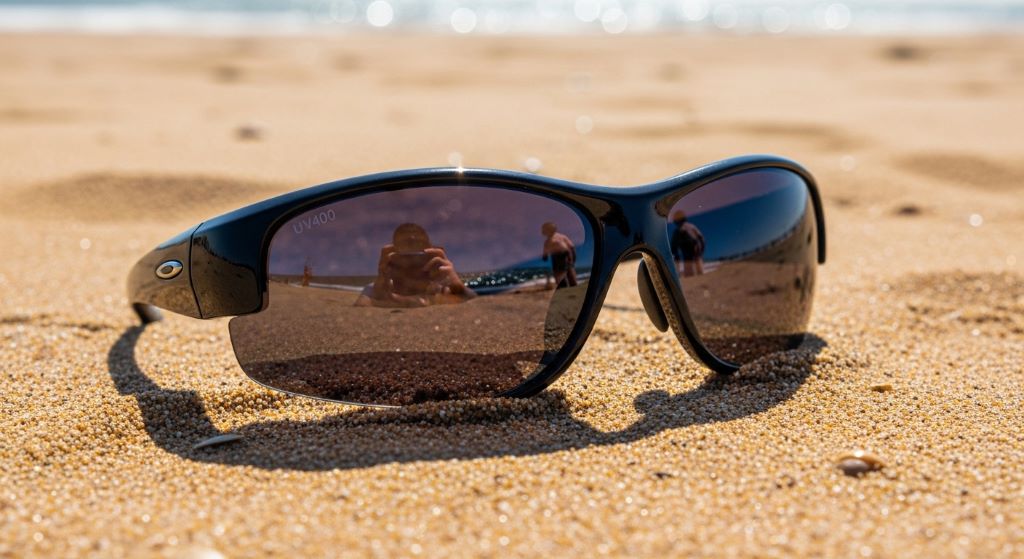
The most important rating to look for is UV400. This label means the lenses block all light wavelengths up to 400 nanometers. In practical terms, it means the sunglasses block 100 percent of both UVA and UVB rays. This is the standard you should always aim for when buying beach sunglasses.
Some sunglasses are labeled as blocking 99 percent of UV rays. This is still considered excellent protection. However, UV400 is the gold standard and is increasingly common even in affordable sunglasses.
Be cautious of sunglasses that simply say “tinted” or “sunglasses” without specifying UV protection. Dark lenses without UV filtering can actually be worse than wearing no sunglasses at all. The darkness causes your pupils to dilate, which allows more unfiltered UV radiation to enter your eyes.
Polarized Lenses: What They Do and Why They Matter at the Beach
You have likely heard the term polarized sunglasses before. However, many people are unsure of what polarization actually does. Understanding the polarized sunglasses benefits will help you see why they are so well-suited to beach environments.
Polarized lenses contain a special chemical filter that blocks horizontal light waves. When sunlight bounces off a flat, reflective surface such as water or sand, it creates a type of intense, scattered glare called horizontal glare. This glare causes visual discomfort, eye strain, and reduced clarity. Polarized lenses cut through this specific type of glare almost entirely.
At the beach, glare is everywhere. The water reflects sunlight in sharp, blinding flashes. The wet sand near the shoreline does the same. Therefore, polarized lenses are not just a luxury for beach-goers. They are a genuinely practical tool for reducing eye strain during a long day outdoors.
It is worth noting that polarization is not the same as UV protection. A lens can be polarized without offering UV400 protection. However, many quality sunglasses now combine both features. Always check that your polarized sunglasses also carry a UV400 or 100 percent UV protection rating.
Essential Eye Protection Tips for Beach Days
Choosing the right sunglasses is the foundation of beach eye care. However, there are several additional eye protection tips that will further reduce your risk and enhance your comfort throughout the day.
Wear Sunglasses Even in the Shade
Sitting under an umbrella or in the shade of a structure does not fully protect your eyes. Reflected UV rays from the sand and water can still reach your eyes from multiple angles. Therefore, keeping your sunglasses on even when you are out of direct sunlight is a wise habit.
Put Sunglasses on Before You Step Outside
UV exposure begins the moment you step into daylight. Many people wait until they feel uncomfortable before reaching for their sunglasses. However, damage can accumulate even before discomfort begins. Getting into the habit of putting your sunglasses on as soon as you leave indoors is one of the simplest yet most effective eye protection tips you can follow.
Avoid Looking Directly at the Sun or Water
This seems obvious, yet it is easy to do accidentally when lying on the beach. Gazing at the horizon over the ocean can expose your eyes to intense reflected light. Try to position yourself so that the strongest light source is not directly in your line of sight.
Stay Hydrated for Eye Health
Dehydration affects every part of your body, including your eyes. Dry, tired eyes are more sensitive to UV exposure and glare. Drinking enough water throughout the day helps your eyes stay lubricated and comfortable, especially in hot, salty beach air.
Lens Color and Tint: Does It Actually Matter?
The color of your sunglass lenses affects how you see the world around you. Different tints serve different purposes. Knowing which colors work best at the beach will help you choose more purposefully.
Gray lenses are widely considered the best choice for beach and water environments. They reduce overall brightness without altering the colors you see. This means the world looks natural, just dimmer. Gray is ideal for activities like swimming, lounging, or watching the waves.
Brown and amber lenses enhance contrast. They make objects appear sharper and more defined. However, they do alter color perception slightly. These tints are excellent for driving to the beach but may feel a little warm for extended outdoor lounging.
Yellow and rose lenses improve depth perception in low-light conditions. They are better suited for early morning or overcast days. Additionally, they are popular for sports that require quick visual tracking.
Mirror-coated lenses reflect light away from the lens surface. They look stylish and can reduce glare effectively. However, the mirror coating itself does not add UV protection. Always verify the UV rating separately when choosing mirrored sunglasses.
Frame Styles That Offer Better Coverage at the Beach
The frame style you choose directly affects how much protection you actually receive. A lens that covers more of the eye area blocks more UV radiation and more wind, sand, and glare.
Wraparound Frames
Wraparound sunglasses curve around the sides of your face. This design significantly reduces the amount of UV light that enters from the sides and above. They are one of the most protective styles available. Additionally, they stay in place better during active beach activities like beach volleyball or swimming.
Oversized and Cat-Eye Frames
Oversized frames have made a strong fashion comeback. Fortunately, their large lenses also offer excellent coverage. They protect not only your eyes but also the delicate skin around them, including the upper cheeks and the area near the temples. Cat-eye frames with wide lenses offer similar coverage with a more classic silhouette.
Avoid Very Small or Narrow Frames
Thin, narrow frames may look sleek, but they leave large areas of your eye exposed. This is especially problematic at the beach where light comes from multiple angles. Therefore, if UV protection is your priority, avoid frames where the lens coverage is minimal.
Lens Material: Glass, Polycarbonate, or CR-39?
The material your lenses are made from affects optical clarity, weight, durability, and impact resistance. Each material has different strengths.
Glass lenses offer the clearest, most scratch-resistant vision. However, they are heavier and can shatter on impact. At the beach, where sunglasses are subject to sand, drops, and splashing, glass lenses carry some risk.
Polycarbonate lenses are lightweight and virtually shatterproof. They are an excellent choice for beach use. Additionally, many polycarbonate lenses come with built-in UV protection rather than requiring a coating. However, they are more prone to scratching than glass.
CR-39 is a lightweight plastic that offers excellent optical clarity, almost matching glass. It is a middle-ground option and is widely used in mid-range sunglasses. It is not as impact-resistant as polycarbonate but is more scratch-resistant.
For beach use, polycarbonate is generally the most practical choice. The combination of lightweight comfort, impact resistance, and integrated UV protection makes it well-suited to an active, sandy environment.
How to Fit Sunglasses Properly for All-Day Comfort
Even the most protective sunglasses will not help if you take them off because they are uncomfortable. Fit is critical. A well-fitting pair of sunglasses should feel secure without gripping too tightly. They should not slide down your nose when you sweat or tilt forward when you look down.
Check that the nose pads sit comfortably. Adjustable nose pads allow you to customize the fit. The temples should apply gentle, even pressure on the sides of your head without squeezing.
Additionally, look for sunglasses with rubberized or grip-coated temple tips if you plan to be active at the beach. These help keep the glasses in place during movement. Some sports-oriented styles even come with a cord or strap to prevent loss in the water.
How to Care for Your Beach Sunglasses
Beach conditions are tough on sunglasses. Sand is abrasive. Saltwater can corrode certain metals and degrade lens coatings. Taking good care of your sunglasses extends their life and keeps the lenses performing well.
- Rinse your sunglasses with fresh water after each beach visit to remove salt and sand.
- Use a microfiber cloth to clean the lenses. Paper towels and clothing fabrics can cause micro-scratches.
- Store sunglasses in a hard case when not in use. A loose pair left in a beach bag will be scratched by keys, coins, and other items.
- Avoid placing sunglasses face-down on any surface. This is the most common cause of lens scratches.
- Keep sunglasses out of extreme heat, such as a closed car on a hot day. Heat can warp frames and degrade lens coatings.
What to Expect at Different Price Points
You do not need to spend a lot of money to get genuinely protective sunglasses. UV400 lenses and polycarbonate materials are available at very affordable prices. However, price does affect some aspects of quality.
Budget sunglasses in the $15 to $30 range can offer solid UV protection. However, the chamois quality, optical clarity, and frame durability may be limited. They are fine for occasional beach trips.
Mid-range sunglasses in the $40 to $100 range typically offer better optical clarity, more durable frames, and superior lens coatings. Many include polarized lenses with UV protection, making them a strong value for regular beach-goers.
Premium sunglasses above $100 usually feature top-tier optical glass, advanced coatings, and lifetime warranties. Additionally, the fit and finish of the frames tend to be noticeably better. These are worth considering if you spend a lot of time outdoors.
Therefore, match your budget to your frequency of use. A regular beach visitor will benefit from investing more. An occasional visitor can find reliable protection at a lower price point.
Conclusion
Protecting your eyes at the beach is just as important as protecting your skin. The combination of direct sunlight, reflective sand, and glittering water creates a uniquely intense UV environment. Choosing the right sunglasses can make a significant difference in both your immediate comfort and your long-term eye health.
Always look for UV400 protection as your baseline requirement. Consider the real-world polarized sunglasses benefits when choosing lenses for a beach setting, as polarization dramatically reduces the harsh glare that water and sand produce. Choose a frame style that offers broad coverage, and select a lens material that suits the active conditions of beach life.
Additionally, remember that good sunglasses are only effective when you actually wear them. Follow the simple eye protection tips in this guide, care for your sunglasses properly, and make wearing them a daily habit. Your eyes work hard for you every day. Give them the protection they deserve.
Frequently Asked Questions
1. Are polarized sunglasses the same as UV-protective sunglasses?
No, they are not the same thing. Polarization reduces glare from reflective surfaces, while UV protection blocks harmful ultraviolet radiation. However, many quality sunglasses now offer both features together. Always check that your polarized sunglasses also carry a UV400 or 100 percent UV protection rating before purchasing.
2. Can cheap sunglasses still protect my eyes at the beach?
Yes, they can, provided they carry a UV400 certification. The price of sunglasses does not determine their UV-blocking ability. However, budget options may have lower optical clarity, weaker frames, and less durable coatings. For occasional beach trips, an affordable UV400 pair is perfectly adequate.
3. How do I test if my sunglasses are actually UV-protective?
The most reliable way is to have the lenses tested by an optometrist using a UV light meter. Many optical shops will test your lenses for free. Alternatively, purchase sunglasses from reputable retailers that clearly label their UV ratings on the packaging.
4. Should children wear UV-protective sunglasses at the beach?
Absolutely. Children’s eyes are actually more vulnerable to UV radiation than adult eyes because their lenses are clearer and transmit more UV light to the retina. Getting children into the habit of wearing UV-protective sunglasses at the beach is one of the best long-term investments you can make in their eye health.
5. Can I wear contact lenses with UV protection instead of sunglasses?
Some contact lenses do offer UV protection. However, they only protect the cornea, the area directly under the lens. They do not protect the whites of your eyes, the eyelids, or the skin around the eye. Therefore, contact lenses with UV protection should always be used in addition to sunglasses, never as a replacement for them.
Related Topics:
Jomashop Sunglasses: Enhance Your Style with Powerful Eyewear
Keeks Handbags: Your Gateway to Luxury, Redefined