

Most people think of fishing as a hobby. However, it is much more than that. Fishing is a practice that quiets the mind, slows the body, and brings you back to the present moment. In a world full of notifications and constant noise, spending time near the water with a rod in hand can feel like a reset button for your entire well-being. This article explores how combining fishing with intentional wellness habits can sharpen your focus, ease your stress, and improve your overall quality of life.
The Surprising Connection Between Fishing and Mental Health
Science has long supported the idea that nature heals. Studies show that spending time near water lowers cortisol levels, which is the hormone linked to stress. The sound of moving water alone is enough to slow your heart rate and calm an anxious mind.
Fishing takes this a step further. It requires just enough attention to keep your mind engaged, but not so much that it overwhelms you. You watch the line. You feel the rod and listen to the water. This gentle focus is exactly what the brain needs to recover from mental fatigue. Over time, regular fishing sessions can become one of the most effective mental clarity practices available to anyone, at any age.
Why Modern Life Makes Relaxation So Hard
We live in an era of constant stimulation. Smartphones demand our attention every few minutes. Work emails arrive at all hours. Social media feeds refresh endlessly. Our brains were not designed to handle this level of input.
The result is a state of chronic low-grade stress that most people have simply accepted as normal. Concentration suffers. Sleep quality drops. Even leisure time starts to feel rushed. Therefore, finding activities that genuinely allow the brain to rest has become more important than ever. Fishing offers exactly this kind of relief — naturally and without effort.
How Fishing Acts as a Natural Digital Detox
One of the most powerful things about fishing is what it removes from your day, not just what it adds. When you are out on the water, you are away from your screens. You are not scrolling, clicking, or responding. This makes fishing one of the most accessible digital detox activities available today.
You do not need a spa retreat or a yoga studio. You simply need a body of water, a fishing rod, and the willingness to be present. Even a single morning session by a local lake can give your nervous system the break it has been craving. Additionally, the longer you fish, the deeper the relaxation becomes. The mental benefits build up gradually over the course of the session.
Mindfulness on the Water — Being Present While You Fish
Mindfulness is the practice of paying attention to the present moment without judgment. Fishing naturally creates the conditions for this. You cannot rush a fish. You cannot control the water. All you can do is stay present, stay patient, and stay aware.
Here are a few simple ways to bring more mindfulness into your fishing practice:
- Focus on the physical sensations — the weight of the rod, the feel of the line between your fingers, the temperature of the air
- Listen intentionally to the sounds around you — birds, water, wind
- Notice what you see — the surface of the water, the movement of light, the surrounding landscape
- Breathe slowly and deeply, especially during quiet stretches between casts
- Let thoughts pass without chasing them
These habits transform a simple fishing trip into a restorative wellness experience. Over time, this kind of awareness carries over into your daily life, improving your focus and emotional balance.
The Physical Benefits That Support Your Mental State
Wellness is not only about the mind. The body and brain work together. Fishing supports physical health in several quiet but meaningful ways.
First, it gets you outdoors. Natural sunlight boosts vitamin D levels and helps regulate your sleep cycle. Second, walking to a fishing spot, wading in shallow water, or casting repeatedly provides gentle low-impact movement. This keeps joints mobile and muscles active without the strain of intense exercise.
Third, fresh air improves oxygen flow to the brain. More oxygen means better cognitive function and a clearer head. Therefore, even the basic act of being outside during a fishing session contributes directly to mental clarity and a calmer emotional state.
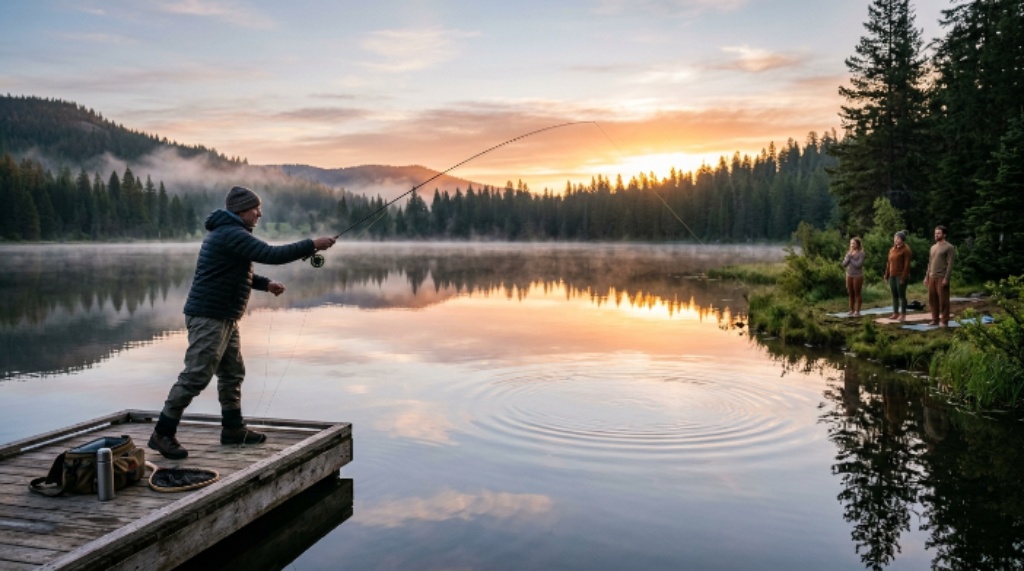
Creating a Wellness Fishing Routine That Works for You
The key to making fishing a true wellness habit is consistency. A single trip is enjoyable. A regular routine is transformative. However, you do not need to fish every day to feel the benefits. Even one or two sessions per week can make a significant difference.
Here is how to build a simple wellness fishing routine:
- Choose a location you find genuinely peaceful — a quiet river, a local pond, or a coastal shoreline
- Go at the same time each week to build a rhythm your body and mind will recognize
- Leave your phone in the car or switch it to airplane mode before you start
- Bring only what you need — simple gear, water, and perhaps a light snack
- Spend at least the first ten minutes simply sitting and breathing before you cast
- Reflect briefly at the end of each session on how you feel compared to when you arrived
This structure turns fishing from a casual outing into a meaningful wellness ritual.
Fishing with Others vs. Fishing Alone
Both approaches offer unique benefits, and choosing the right one depends on what you need that day.
Fishing with a friend or family member builds connection. Shared silence on the water is one of the most comfortable forms of companionship. Conversations that happen naturally while fishing tend to be slower, more honest, and more meaningful than those squeezed into a busy schedule. Additionally, social bonding has well-documented mental health benefits, including reduced feelings of loneliness and improved mood.
Fishing alone, however, offers something different. It gives you uninterrupted time with your own thoughts. You can decompress fully without needing to manage conversation or social energy. Many people find that solo fishing sessions are among the best digital detox activities they have ever tried, simply because there is nothing and no one competing for their attention.
The Role of Patience in Building Focus
Fishing teaches patience in a way that few other activities can. You cast the line and then you wait. Sometimes the wait is short. Often it is long. There is no shortcut and no cheat code.
In our fast-paced world, this forced patience is genuinely therapeutic. It trains the brain to stay engaged without needing constant stimulation. Over time, this translates directly into better focus in other areas of life — at work, in relationships, and during creative tasks. People who fish regularly often report that they feel more able to sit with discomfort, delay gratification, and concentrate for longer periods.
Simple Gear Tips for a Relaxing Experience
You do not need expensive equipment to enjoy the wellness benefits of fishing. In fact, simpler gear often leads to a more peaceful experience because there is less to think about and manage.
A basic spinning rod and reel setup is enough for most freshwater fishing. Use light to medium tackle so casting feels effortless. Bring a comfortable chair or a small blanket to sit on. Choose lures or bait that you already know how to use, rather than experimenting with new techniques on a session meant for relaxation.
The goal is to reduce friction so you can move smoothly into a calm, focused state as quickly as possible.
Conclusion
Fishing and wellness are a natural pair. The water provides calm. The practice demands presence. The time away from screens gives your mind room to breathe. Together, these elements create an experience that restores both mental and physical health.
By approaching fishing with intentionality — whether through mindfulness, routine, or simply leaving your phone behind — you unlock a level of mental clarity that is increasingly rare in modern life. As one of the most effective and accessible digital detox activities available, fishing asks very little of you and gives back enormously. All you have to do is show up, cast your line, and let the water do the rest.
Frequently Asked Questions
Do I need to be an experienced angler to get the wellness benefits of fishing?
Not at all. The mental and physical benefits of fishing come from the environment and the practice of being present, not from skill level. Beginners often find fishing just as restorative as experienced anglers.
How long should a fishing session be to feel a real mental difference?
Even 60 to 90 minutes is enough to notice a shift in mood and stress levels. However, longer sessions of two to three hours tend to produce deeper relaxation and a more lasting sense of calm.
Can fishing help with anxiety or depression?
Many people report that regular time outdoors near water significantly reduces feelings of anxiety and low mood. While fishing is not a replacement for professional mental health support, it can be a valuable and enjoyable complement to other treatments.
Is fishing a good activity for children who struggle with focus or screen overuse?
Yes. Fishing is an excellent way to help children develop patience, attention, and comfort with quiet. It also provides screen-free time in a natural setting, which research consistently links to improved mood and focus in young people.
What if I do not live near a lake or river?
Many towns and cities have stocked ponds, reservoirs, or coastal areas within a short drive. Even urban fishing spots offer meaningful mental benefits. The key is access to water and time away from screens, not a remote wilderness setting.
Related Topics:
Why Weighted Pillows Are Gaining Popularity in Luxury Beds