
How to Find the Right Equipment Supplier for Your Industry

A Complete Guide to Jool Baby Nova Nature Electric Swing Features
January 25, 2026Best Colours and Finishes for UK Garage Doors
January 26, 2026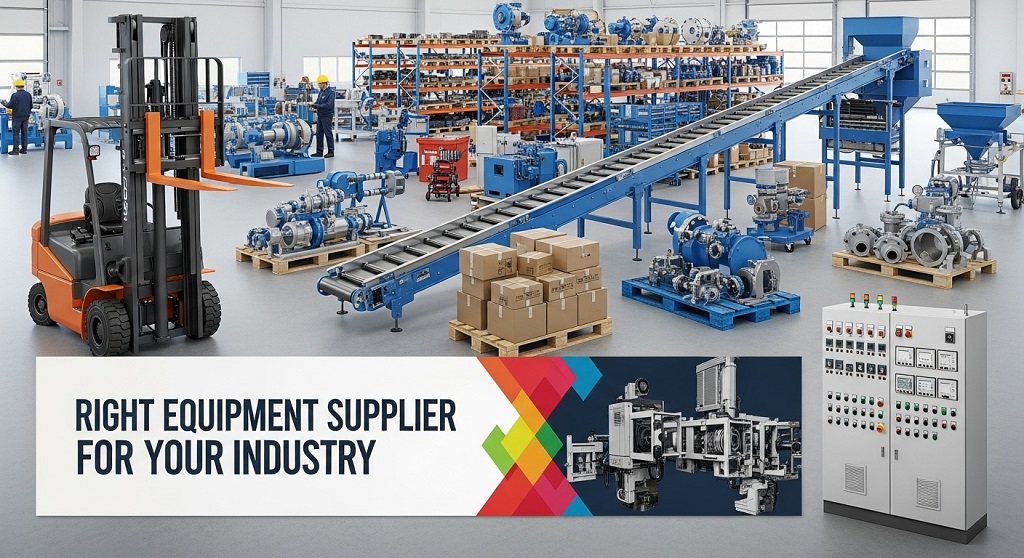
An equipment supplier partnership is a long-term working relationship with a supplier who consistently provides reliable equipment, fair pricing, technical support, and operational continuity for your business.
Choosing the wrong equipment supplier costs more than money. It causes delays, production downtime, quality issues, and constant stress. Many businesses fail not because demand is low, but because their equipment supply chain breaks under pressure.
Whether you operate in manufacturing, construction, healthcare, food processing, logistics, or retail, your equipment supplier directly affects output, safety, and customer satisfaction. According to industry data from McKinsey’s supply chain studies, companies with strong supplier partnerships experience up to 30% fewer disruptions and 15–20% lower operating costs over time.
This guide explains how to find the right equipment supplier using a practical, data-backed approach. You will learn how to evaluate suppliers, avoid costly mistakes, and build an equipment supplier partnership that scales with your business.
The goal is simple. Fewer problems. Better reliability. Long-term growth.
How do you define your equipment needs before choosing a supplier?
Short answer: You define your equipment needs by mapping operational requirements, usage volume, compliance standards, and future growth plans.
Many companies rush into supplier selection without documenting what they actually need. This creates mismatches that surface months later.
Start by answering these questions:
- What equipment functions are critical to daily operations?
- What capacity or output level is required?
- What safety, quality, or regulatory standards apply?
- How often will the equipment be used?
- What is the expected lifecycle of the equipment?
For example, a food processing company must consider hygiene certifications, cleaning ease, and downtime tolerance. A construction firm prioritizes durability, spare part availability, and on-site service speed.
Defining these parameters helps filter suppliers early and prevents costly revisions later.
How can industry experience help identify the right equipment supplier?

Short answer: Industry experience reduces risk because experienced suppliers understand your workflows, regulations, and failure points.
A supplier serving multiple industries may offer lower prices, but specialization often matters more than cost.
Suppliers with industry-specific experience:
- Anticipate compliance and certification needs
- Recommend proven equipment configurations
- Offer relevant maintenance schedules
- Respond faster to operational issues
A Deloitte manufacturing case study found that businesses working with industry-specialized equipment suppliers reduced equipment failure rates by 22% within the first year.
Ask potential suppliers for client examples from your industry. If they cannot explain common challenges your sector faces, consider it a red flag.
How do you evaluate equipment quality and reliability?
Short answer: Evaluate equipment quality through certifications, material standards, performance data, and real-world usage history.
Marketing brochures are not proof of quality. Data is.
Focus on these indicators:
- ISO or industry-specific certifications
- Mean Time Between Failures (MTBF)
- Warranty coverage and terms
- Replacement part availability
- Field-tested performance records
In a 2023 industrial maintenance study, companies that prioritized reliability metrics during supplier selection reduced unplanned downtime by 18% annually.
Request performance documentation. Ask how the equipment performs under peak load, not ideal conditions.
How important is supplier transparency in an equipment supplier partnership?
Short answer: Transparency builds trust, reduces surprises, and improves long-term collaboration.
Reliable suppliers are open about pricing, lead times, limitations, and risks.
Look for transparency in:
- Pricing breakdowns
- Delivery timelines
- Maintenance costs
- Service response times
- Contract terms
A Harvard Business Review analysis found that transparent supplier relationships improve contract renewal rates by 25%.
If a supplier avoids clear answers or pushes vague assurances, the partnership will likely fail under pressure.
How do service and after-sales support affect supplier selection?
Short answer: Strong after-sales support prevents downtime and extends equipment lifespan.
Equipment failures are inevitable. How fast they are resolved determines business impact.
Evaluate suppliers on:
- On-site support availability
- Response time guarantees
- Remote diagnostics options
- Training programs for staff
- Maintenance contract flexibility
A global logistics company reported a 40% reduction in downtime after switching to a supplier with 24/7 technical support.
An equipment supplier partnership without service support is a short-term transaction, not a strategic asset.
How should you compare pricing without sacrificing value?
Short answer: Compare total cost of ownership, not just upfront price.
Low initial pricing often hides long-term expenses.
Consider:
- Installation costs
- Energy efficiency
- Maintenance frequency
- Spare parts pricing
- Downtime costs
According to PwC procurement data, businesses focusing on total cost of ownership save an average of 12–15% over five years.
A higher upfront investment may deliver lower lifetime costs and higher reliability.
How do supplier references and reviews influence decision-making?
Short answer: References validate real-world performance and service quality.
Do not rely solely on online reviews. Speak directly to existing clients.
Ask references:
- How often equipment fails
- How fast support responds
- Whether promises were kept
- If they would choose the supplier again
Consistent feedback patterns matter more than isolated complaints.
How can long-term scalability impact your equipment supplier partnership?
Short answer: A scalable supplier grows with your business without service degradation.
As your operations expand, your equipment needs change.
Assess whether the supplier can:
- Handle higher order volumes
- Support multi-location operations
- Offer upgraded equipment models
- Maintain service quality during growth
Companies that planned scalability during supplier selection reported 20% faster expansion cycles in a BCG operations study.
How do contracts protect both parties in an equipment supplier partnership?
Short answer: Clear contracts set expectations, reduce disputes, and ensure accountability.
Strong contracts include:
- Defined service-level agreements (SLAs)
- Delivery and installation timelines
- Warranty and liability terms
- Termination clauses
Legal clarity strengthens trust and long-term collaboration.
How do you build a strong equipment supplier partnership for long-term success?
Short answer: Build partnerships based on clarity, reliability, and shared growth goals.
Finding the right supplier is not about chasing the lowest price. It is about reducing risk, improving efficiency, and supporting long-term performance.
A strong equipment supplier partnership delivers consistent quality, dependable service, and operational stability. Businesses that invest time in supplier evaluation outperform competitors who treat procurement as a quick decision.
If you are reviewing suppliers or planning an upgrade, start by auditing your current equipment performance. Identify gaps. Ask better questions. Choose partners, not vendors.
CTA: Want a checklist to evaluate your next equipment supplier partnership? Subscribe to our newsletter or leave a comment with your industry, and we will share a tailored framework.
Frequently Asked Questions About Equipment Supplier Partnerships
What is an equipment supplier partnership?
An equipment supplier partnership is a long-term collaboration focused on reliability, service, and shared operational success rather than one-time purchases.
How long should an equipment supplier partnership last?
Most successful partnerships last 3–10 years, depending on industry, equipment lifecycle, and service agreements.
How do you know when to change equipment suppliers?
Frequent breakdowns, poor support response, hidden costs, and missed delivery commitments are key warning signs.
Is it risky to rely on one equipment supplier?
It can be if contingency planning is ignored. Many companies use a primary supplier with secondary backup options.
How do small businesses find the right equipment supplier?
Small businesses should prioritize service support, scalability, and transparent pricing over brand size.
What documents should you request from an equipment supplier?
Request certifications, warranty terms, service SLAs, performance data, and client references.
How often should supplier performance be reviewed?
Quarterly reviews help identify issues early and improve partnership outcomes.
Related Topics: A Complete Guide to Jool Baby Nova Nature Electric Swing Features
Related Topics: How to Outline a Real Estate Business Plan for Long-Term Hold Strategies